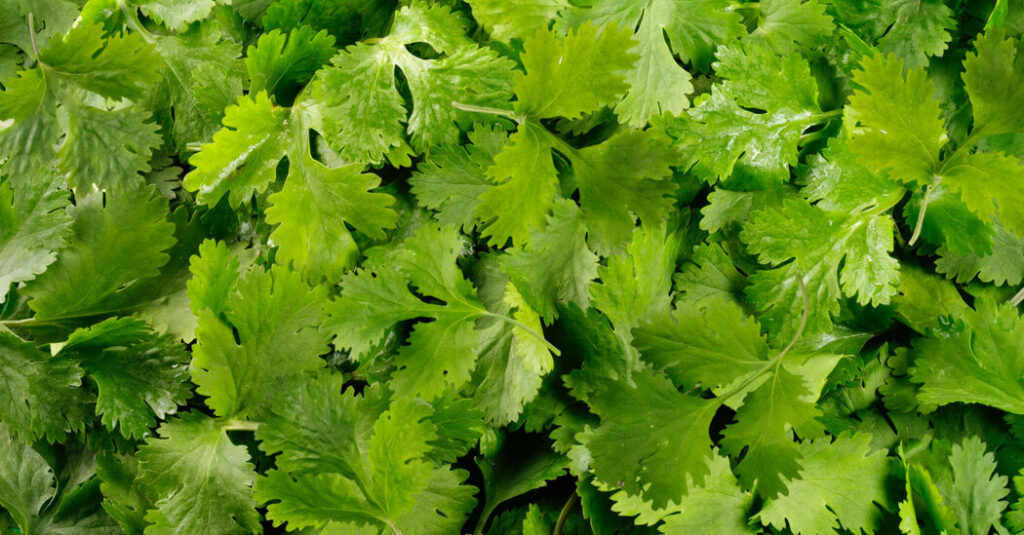
The leading suspect, it seemed, was the cilantro.
Weeks before an outbreak of cyclosporiasis, now traced at least in part to iceberg lettuce, laid low thousands of Americans this summer, the New York City Health Department investigated a smaller outbreak. Testing labs and doctors notified the city that people were coming down with the intestinal illness, which is caused by a parasite and can result in explosive diarrhea and other types of gastric distress.
The New York investigation back in April — one of multiple case clusters the city’s disease detectives have pursued this year — led to cilantro.
But how exactly do health authorities figure out how people got sick?
City officials shared details of the cilantro case with The New York Times. The city’s work is only one link in a chain that also involves state and federal disease surveillance efforts, but it helps illustrate how complicated it can be to pinpoint sources of contamination in a global food-supply system. The C.D.C. says it is continuing to investigate cyclosporiasis cases unrelated to the iceberg lettuce contamination.
So far this year, 442 cases of cyclosporiasis have been diagnosed in the city — far above the average of 216 cases for an entire year during the period 2019 to 2024.
Cyclosporiasis is tricky to trace because it can incubate inside you for up to 14 days before producing symptoms. “People may not put two and two together that it was something I ate two weeks ago that got me sick,” said HaeNa Waechter, the team lead for enteric disease in the City Health Department’s Bureau of Communicable Disease.
“First you have to have gotten sick, then you sought care, then you were reported to us, and then we’re interviewing you. That could be weeks, so by the time we’re asking ‘What did you eat the 14 days before you got sick?’ it can be really challenging to remember,” she said.
The health department’s investigators guide people through reconstructing their recent dietary histories, a task made harder by the fact that the city has 28,000 restaurants and 17,000 food retailers.
“You may go to a lot of different markets to pick up different things,” Ms. Waechter said. “So we ask about all of that and try to help the patients remember.”
In the April case, the Health Department determined that everyone in the cyclosporiasis cluster had eaten at the same Brooklyn restaurant, which the department declined to identify.
Everyone who fell ill seemed to have had guacamole or salsa, or cilantro, an herb that is added raw to many dishes in Mexican cuisine. The department’s Office of Environmental Investigations paid the restaurant a visit.
“We’ll walk through with the manager or food handler and ask them to go through a food prep review with us about those menu items, which is basically a step-by-step, ingredient-by-ingredient review of how those menu items are prepared,” said Joanne Casarella, the chief of food-borne illness investigations in the Office of Environmental Investigations.
The investigators also interviewed the sick people’s dining partners. “That allows us to try and find our control group — people who didn’t get sick — to see if we can compare what they ate or we find additional ill folks,” Ms. Waechter said.
They called other customers from the restaurant’s reservation list and found more patients. Between five and 10 people were sickened altogether.
The guacamole and salsa also turned out to contain cilantro. Genomic sequencing by the city’s Public Health Laboratory confirmed that all the patients in the cluster had the same strain of cyclospora, the parasite that causes cyclosporiasis, in their systems.
The Health Department sent its findings to the C.D.C., along with records from the restaurant like invoices from its food suppliers.
“We recommended that they look into the cilantro, so that’s what they did the ‘traceback’ for,” said Shama Ahuja, assistant commissioner in the City Health Department’s Bureau of Communicable Disease. The C.D.C., Dr. Ahuja said, told the city that the local supplier that had sold the cilantro to the restaurant had bought it from a national supplier that in turn had obtained it from an international supplier. The C.D.C. has not announced any results or any actions it may have taken, the city said.
‘It sounded delicious’
A few weeks after the cilantro case, the city received a 311 complaint: Several dozen employees at a company got sick after attending a catered luncheon in Manhattan. At least 18 tested positive for cyclosporiasis.
This investigation presented a different set of challenges: Everyone who had gotten sick had eaten a bowl containing a base of the same raw vegetables and fruits. (“It sounded delicious,” Ms. Waechter said.)
The investigators narrowed their inquiry to five ingredients: cucumbers, pears, snow peas, carrots and cilantro. They sent the list, and the caterer’s invoices from its suppliers, to the C.D.C. to determine the provenance of each item and see if any were linked to other cases elsewhere.
“We can’t be 100 percent certain about what we’re saying,” Dr. Ahuja said. “We can just tell you where the data pointed us.”
The post Before Lettuce Felled Thousands, an Herb Sickened Some New Yorkers appeared first on New York Times.