Subscribe here: Apple Podcasts | Spotify | YouTube
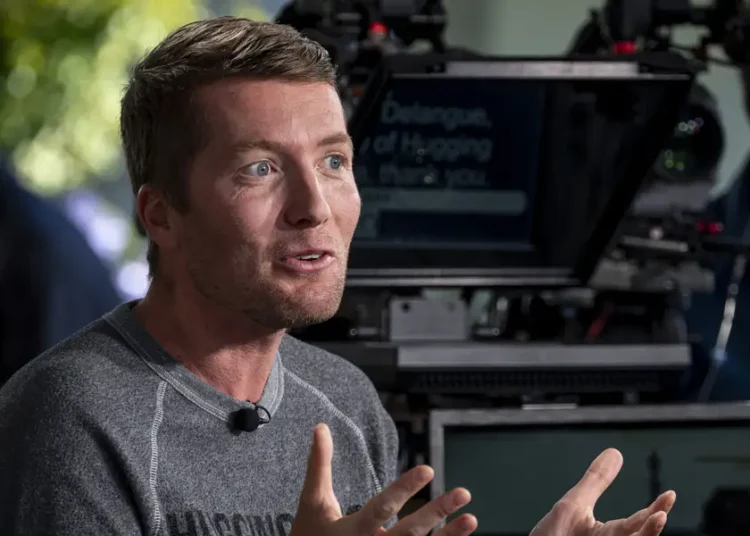
Why does the World Cup endure in an age of fractured attention? Is FreddyLA7 a real person? Charlie Warzel speaks with Men in Blazers founder Roger Bennett to chart how the World Cup has become far more than a sporting event and how this year’s tournament marks a turning point for soccer in the United States. They talk about how social media is transforming fandom into an endless thread of storytelling—amplifying goals, celebrations, memes, local rituals, and fan “bits” across the world. On the eve of the final, Bennett breaks down what the World Cup has taught us about national pride, collective memory, and the internet in 2026.
The following is a transcript of the episode:
Roger Bennett: When two teams take the field, their nations’ histories, their nations’ politics, their nations’ cultures take the field alongside them. So the World Cup is actually a mirror, complete and utter mirror, to the world that surrounds it.
[Music]
Charlie Warzel: I’m Charlie Warzel, and this is Galaxy Brain, a show where today we’re going to talk about the World Cup.
Over the past month, I’ve seen strangers in the airport rapturously celebrating over last-second goals. I’ve watched gaggles of men and women kicking soccer balls on city streets, clad in a veritable United Nations of jerseys. There are people in my life who are normally allergic to sports, and they’ve come over for marathon World Cup viewing sessions. At one point I found myself—a man originally from Cleveland, Ohio—wearing a Senegal jersey, sweatily embracing a Senegalese man after a spectacular volley sent a ball into the back of the net. It all felt like a dream.
But heading into the tournament, the vibes were, it should be noted, pretty bad. There were concerns about ticket prices, about the Trump administration’s immigration policies or the war in Iran interfering with the event. Or, at the very least, casting a long shadow over what is, in a perfect world, supposed to be a triumphant global fusion of cultures around the world’s most popular sport.
And then, something happened. Even before the tournament started, as kilted Scots marched on Boston and the Algerians were welcomed by Lawrence, Kansas, as the South Koreans shared tequila with Mexican fans in Guadalajara, the mood lifted. The infectious spirit of the World Cup was, it seemed, undeniable. And then there were the matches. The thrilling, unexpected rise of Cape Verde; Germany and the Netherlands’ early exit. Stellar performances from Argentina’s Lionel Messi, France’s Kylian Mbappé, England’s Jude Bellingham, and Norway’s imminently meme-able Viking Erling Haaland.
Here in America, I experienced something that I hadn’t felt in a long time, maybe ever. This universal enthusiasm: not just for the tournament, but for the cultural spectacle that surrounds it.
And maybe the timing had something to do with it; the World Cup taking place during America’s 250th birthday, an anniversary that, for many, is quite complicated. National pride is a tricky thing for some people to access these days, as our political divisions overshadow almost everything else. As America’s 250th approached, I just kept hearing people lament how different and muted this anniversary felt, compared to the bicentennial in 1976.
But think back on this last month. Hundreds of thousands of foreigners coming to our country, joining in common cause, learning about our abundant varieties of Mountain Dew. Deliriously tweeting about the size of our truck-stop stores. These people were reflecting back the quirks that make this country unique. Americans basking in and giddily accepting new cultures, all while donning their own stars and stripes and cheering on the U.S. men’s team with an irrational hope and confidence. It all felt like a very fitting America 250 celebration.
So what has the World Cup taught us over the last month? To try and understand, I spoke to the man who taught me to love soccer, and who I argue is America’s Chief Soccer Evangelist: Roger Bennett. Rog is the founder and CEO of the Men in Blazers media network—a Liverpudlian who, from an early age, was so enamored with America that he made it his life’s mission to 1.) become an American citizen, and 2.) teach Americans to love soccer the way so many around the world do.
I first wrote about Bennett 12 years ago. And since I have known him, he’s been traveling around the country, hosting TV shows, recording thousands of podcast episodes that view soccer through an emotional lens. The sport, he argues, is a way to talk about all the big stuff in life: community, love, agony, joy. Also poetry and ’80s movies.
Bennett isn’t just a soccer pundit; he’s also a media executive and a keen observer of how information travels and how spectacle and memory are made in the internet era. The World Cup is one of only a few monocultural events that we have—the World Cup final, which will take place on Sunday, will likely be viewed by more than a billion people at the same time. But it’s also been changed profoundly, both by the internet and by social media.
We are days away from the final match, and there is so much to unpack. What has the World Cup taught us about ourselves, about the rest of the world? Why does this event seem to grow more important as the world’s attention continues to fracture into niche subgenres? Is any of this possible without the internet? And, of course, is FreddyLA7—the anonymous German tourist who became an internet celebrity overnight—even real? Roger Bennett joins me now to talk about it all.
[Music]
Warzel: Roger Bennett, welcome to Galaxy Brain.
Roger Bennett: Charlie Warzel, you legend. It’s lovely to be with you.
Warzel: So, Men in Blazers’ mantra is that football is more than just a game; it is “a lens to understand the world, feel human emotion, experience a sense of global connection, and make memories together.” What do you think this World Cup has taught you that you didn’t know about football and also the world?
Bennett: Yeah; I mean, the premise is really true, Charlie. The World Cup is the world’s last global billboard. It’s like a global eclipse that sweeps the nation for 39 straight days, holds everybody in its sway. It’s like watching an enormous telenovela acted out live by 22 dudes at a time wearing polyester, sweating away under the crucible of extreme human pressure. That’s what really makes it fascinating on the surface. They’re making these decisions in real time. Some are glorious and ecstatic and transcendent. Others are just humanly disastrous. But we get to live every step of the way vicariously through them, and then make the memories with this enormous audience who are following every step.
But what’s been different about this? I mean, there’s a number of things. The first is, I think in terms of the American context, it’s been fascinating to watch global football discover America in the most beautiful, really enriching, I think, important way. I think we really needed this as a nation, to see fans from all over the world. They weren’t going to come—you know, the tickets, the political [unrest], everything. They came, they saw, and they didn’t conquer. But ate every single chicken wing, every single Waffle House, every single nugget from Buc-ee’s, and were utterly enraptured. And, you know, often in life we love what other people love about ourselves. It’s very validating. I think America needed that validation.
There’s a second story that I love, which we can talk about, which is America falling in love with global football, which has really been the story of my life. But the third and final thing is that this has been a World Cup of love—which the world really needs, and it’s been beautiful. And we’ve all been enraptured. I was just in Boston reliving on stage with the mayor and with Pedro Martinez, that incredible 12-day period when Boston temporarily became the capital of Scotland. And we were enraptured by Lawrence, Kansas, falling in love with the Algerian team, which is a really nuanced story, a really beautiful human story. The Norwegians, the Colombians, the Congolese, the diasporas of their fans traveling. The Egyptians from all over the United States, coming together to cheer their team.
The point I’d make is—when I grew up, you can tell I’m not American originally. I am now very American, but I was born in Liverpool, England. And football fandom was violent. It was full of hate. It was us against them. And the thing that’s been so beautiful—and I’ve really never seen before, to this mass and this impact, and social media has no doubt had a lot to do with it—is: These fan bases are welcoming. They are warm. They are loving. They have porous boundaries. The Scottish fans, if you want to focus on them, they said: Come be with us. Come seize this moment. The worst parts of our journey are going to be the football matches we actually have to sit through, because our team is terrible. But either side of that, we welcome you. Come and join our joy. Come and march with us. The Dutch fans in Kansas City, marching behind their bus. And that kind of warmth and that joy and that openness and that fluid identity. And that has been one of the greatest changes in football, and I think an antidote for the United States right now. It’s very much what we all needed.
Warzel: You talk about falling in love—America falling in love—with global football as the project of your life and your work. What made you so confident that Americans would? ’Cause I think they have in this Cup, really truly. But what made you so confident Americans would?
Bennett: Yeah, I wrote a book about this, We Are the World (Cup). It came out ahead of the World Cup. And it was really about reliving the World Cups that I’ve lived. So that, if you haven’t lived them, you could watch this World Cup with like a deeper sense of context. Almost like on Game of Thrones, if you joined Season 4 when they have, “in case you missed Game of Thrones …”
Warzel: “Previously, on the World Cup …”
Bennett: Yeah, yeah. But, you know, also if you had lived it, then I hoped it would rekindle a sense of the powerful memory for those who’d seen [Diego] Maradona and [Roberto] Baggio and had actually seen [David] Beckham as a footballing figure outside of the incredible array, dizzying array of commercials that he’s put into the world for our viewing delight.
It really is the sub-theme, ultimately. I didn’t intend it to be, but the growth of the game in the United States and what I’ve witnessed. Look, I moved here in 1994 when the men’s World Cup was last here. I was a kid. I was obsessed with John Hughes movies—we’ve talked about this, Charlie—you know, Chicago Bears Super Bowl–winning team. Public Enemy. And I moved here, and football was not here. I had been on summer camp the World Cup before, 1990. And the bars of Maine—if you’re listening now, sports bars of Maine—when England were in the semifinal, biggest game of my life to that point. One after the other refused to put the game on in empty bars. Just so they could enjoy my misery; that on my day off, I couldn’t watch the bigger. They want to watch minor-league baseball, whatever the Portland Sea Dogs were back in those days. So people hated it.
I wrote in my book that when I moved here, right before the World Cup, there was a study done where they revealed that soccer was America’s 67th-biggest sport, and tractor pulling was No. 66. And I don’t know where tractor pulling is now, but the economist has just revealed that soccer—football, all forms, men’s, women’s—is America’s third-most-popular sport. Just pushed baseball into fourth, which is food for thought.
And it was 2006. I used to watch Premier League football in D.C., where I lived, early on Saturday morning. They played one game. It’s a terrible game, but we’d feast upon it as if it was the NFL playoffs, because we were so hungry and we was expats. It was a group of 12, 13, 14 expats, not an American voice in the room. And I happened to be back for the World Cup 2006 in D.C. with my wife. And we went to the bar that I used to watch kind of lonely football with, and it was mobbed. The line was around the block. And I turned to my wife; I was like, Holy crap; this, this is the audience. This is what I’ve been waiting for. This is what I’ve been hungering for.
Warzel: So the gateway into this tournament for so many Americans, I think, as you said, has been those moments. You know—the Scots in Boston, the people of Lawrence, Kansas, rolling out the red carpet to the Algerian team. And especially the way that they were packaged on social media, the way that social media played that. And I’m curious, because you are both running a media company dedicated to capturing these moments. What makes the World Cup so perfect for the internet and social media? Do you think this could have happened—this connection that Americans have had this year with it—without the internet?
Bennett: No, absolutely not. You know, the World Cup: I’ve lived, and I’ve loved. I want to say the World Cup is incredibly powerful. It was always very powerful. When two teams take the field, their nations’ histories, their nations’ politics, their nations’ cultures take the field alongside them. So the World Cup is actually a mirror, complete and utter mirror, to the world that surrounds it. So, you know, it contains multitudes. And so the levels of storytelling, the levels of feeling, the levels of wonder.
And when you have the scale of audience also, and you know, Brené Brown quotes [Émile] Durkheim about football: “collective effervescence.” The feeling when you watch Lionel Messi play football; you’re fully aware you’re watching somebody. I actually was blessed to watch Argentina beat Egypt. They were down, two nil down. They seemed down and out. We were watching the end of this casual demigod’s World Cup career. But no: They came back, so late, roared, and ended up winning 3-2, with Messi scoring a sensational goal.
And you were aware that you were watching, as if you’re watching Mozart compose. You’re aware as if you’re watching Michelangelo sculpt. Watching Lionel Messi, you’re watching with the world. People were weeping. I sat by someone who’d never been to a football game before, that was not Argentinian. She wept. I said, “Why are you crying?” I didn’t mean it aggressively. She said, “It’s just it’s like an incredible evangelical church in here, in this moment.” The raptures.
People are aware they’re making incredible memories. And we’ll be talking about Lionel Messi in 100 years, 150 years, in the same way as we do, just as I said, Michelangelo, Mozart, Picasso, the like—he is that man. But social media has taken that, Charlie, and just turned it up. The noise, the storytelling, the feeling, the multiple angles of everything, by a thousand. Any game now, there’s a rhythm that my social team have to follow. Where there’s the game; there’s the goal. And then that’s like a stone in a beautiful pond, rippling out. And immediately, the game’s over. There’s just a rhythm. There’s UGC shots from fans in there. Then the players go up and meet their fans as a song plays. Everyone weeps. Then you have, boom, what’s the scene like in Rosario in Argentina, where Messi’s from? The shot you get is the empty street, completely empty—the noise exploding from every single room when Messi scores. Then people flood out onto the street. Then you’ve got Bangladesh, where they’re obsessed with Argentina as if they are Argentinian. There will be genuinely a shot then: 20,000 Bangladeshis almost rioting with joy. Then you get into the locker room, the players, the individual players.
It goes on forever. The storytelling—that’s what’s changed. When England would lose in 1982 and kid Roger would just feel sad, the final whistle ended. And then you’d wait for the newspapers in the morning to relive your shame. That was it. But what’s happened now is multiple—dozens and dozens of angles. Dozens of feelings, dozens of experiences, dozens of refractions. And it is almost endless and exhausting and wonderful. And the noise that this is making is something that is a cacophony of the world enraptured. And that, part of me—it’s very long, 39 days.
Warzel: Yeah.
Bennett: The end is within touching distance. I’ve not slept in a long time. I’m in a post-sleep world. We’re laughing, Charlie, when you were with us. I’m in a post-sleep world right now. And part of me can’t wait for it to end, humanly, because it is so humanly shattering. But part of me never wants this to end—because it is the good vibe around the world in the moment. The shared sense of experience is the shared sense of wonder at this stage. It’s an all-too-rare commodity in our day and age.
Warzel: Well, and it’s so interesting, because as you describe how the World Cup and all these teams—they bring their politics, they bring their histories, they bring in some ways all the baggage to the table. And that’s part of the stakes of it, and what keeps us rapt. That is happening, and we’re feeling that.
But at the same time, it also feels like this reprieve, right? It feels a little bit like geopolitics without all of the messy politics. You know, you get to have a little bit of—it’s felt like a vacation. It’s felt like a time to get away from the more difficult parts of the whole world being mashed together and talking to each other all the time, and to enjoy the better parts of the world being put together, and talking to each other all the time.
Bennett: Yeah; I mean, I want to be clear there have been dark moments, very dark moments. Like if it was Iranian Charlie Watzel and Iranian Rog doing this podcast, we would not be as relaxed. What happened to them was unprecedented in World Cup history—that a team who were at conflict with the host were meant to be living and playing in the United States, and they ultimately had to move after some geopolitical brinksmanship. Move to Mexico. And then were only allowed by the United States to come in and out for very small windows. Same time—their relationship with Mexico. I mean, Mexico is very much a fascinating winner of this whole World Cup. The way their fans, the way their nation have welcomed; not just the Iranians.
But by and large, you’re right, Charl. It has been absolutely rhapsodic. And then from your POV—and you’ll understand this better than I do—part of the reason it’s been so positive and rapturous, and I’m fascinated by this, sports fandom itself has been contorted by the internet. You can’t be fans now without a bit. And we all see the Dutch fans; they have an orange bus. They deliver this bus wherever they’re playing. They had to ship it over from the Netherlands via Galveston and then drive it up. They have a bit. They march to the match. Lynx and Rex in their orange, you know, 20,000, 30,000. They got bigger and bigger each time, I think as more and more Americans joined in. The Norwegian fans with their Viking row, row, row.
Warzel: The row. Right.
Bennett: You know, starting it in the game. Then they took over Times Square. But fans become deeply performative in beautiful ways, really beautiful ways. You know, the Japanese fans tidy up after themselves.
Warzel: Right.
Bennett: Which is the antithesis of a football fandom, where you go to fight, you go to smash things, you go to break everything. Football fandom is contorted by the internet now to put out beauty and vibe and wonder. And again—your brain will understand it more than I do, but there’s something, I use the word performative. I don’t mean it in a disparaging way, but the internet itself has changed the way we fan.
Warzel: Speaking of performative and the internet, I’ve been meaning, wanting to ask you about FreddyLA7. Freddy7LA? I can’t remember which it goes. Do you think he is real?
Bennett: So this has been an ongoing argument. I have a partner, one of our many voices on the Men in Blazers media network, Rory Smith. This is probably the thing we’ve argued about the most. He thought it was just beautiful. He’s kind of a Scots Englishman who loves travel and is really open-minded. And I think does travel the world just with a sense of wonder, one great ice cream at a time. And he, you know, and I argue about this. I’m fairly cynical. I’m a fairly dark human being. I did not understand from the very beginning. When Freddy did his first post—I love the Waffle House. I adore the Waffle House. I feel like it’s a place of real American wonder. And I think one of his first posts was about the Waffle House. And I reached out and said, Hey, man, that’s really beautiful. I got no reply. It didn’t make a lot of sense to me, to be honest.
Warzel: You got snubbed. You got snubbed by Freddy.
Bennett: Yeah, yeah. A lot of people got snubbed by Freddy, because I spoke to a lot of people who’d reached out from some pretty sizable outlets. And I mean, that was fascinating because if you just do one great tweet—you’re seeing now, today’s sensation is a Norwegian super fan who refuses to do the Viking row, because it’s ahistorical. Vikings didn’t row. They sailed. And so there’s all this footage of 20,000 Norwegian fans, row row. And there’s one very large-looking, very Viking-looking man who’s just sitting there with his arms crossed. I think Franklin Leonard just tweeted that he’s “Norwegian Larry David.” He’s doing a round of media.
This gentleman, for whatever want, is completely free to decide to avoid the media. You kind of avoid the media if you know where you’re going, if you have a master plan, if you know you don’t need it. So it’s kind of fascinating to me. The covering the face was another very odd thing. And the fact that he’s never been uncovered, despite where he’s gone. They’re going to stadia, gonna meet people. The fact that there’s no 16-year-old with a cell-phone camera, who’s been like, Oh my god, this is Freddy. It’s kind of fascinating. So I don’t know.
Warzel: But you lean psyop.
Bennett: Well, I don’t really know what a psyop is, to be honest. Can you just tell me what a psyop is? Tell the world, because I use the word all the time, and I don’t know what the hell it means, Charlie Warzel.
Warzel: Yeah—it’s sort of a government-orchestrated plan to, you know, to indoctrinate people with some sort of idea, right? People are saying he might be a great way to reflect the core values of America, right, through this guy, and he might not be who he says he is.
Bennett: Yeah. When he’s going to Eastern Ohio towns, he’s been like, These are beautiful. This is just the greatest beauty I’ve ever seen. I’m like, cool family. I mean, I love America, man. I do. I share his—you go to Minnesota, you go to Matt’s Bar, you eat a Juicy Lucy. It is life changing. But we will see. I’ve got a feeling that somebody who won a Pulitzer Prize for his reporting on a show that maybe—
Warzel: A guest on our show here, yes. Pablo Torre, yeah.
Bennett: Yeah, I have a feeling that in the next couple of weeks we will learn more from someone much smarter than me.
Warzel: So talking about America, in that sense. You are an American citizen. You’re one of the most patriotic people that I know. Truly someone who has those types of values and expresses them very publicly. Without getting too political about it, it’s been a tough, divisive time to be an American. And the Cup has felt like it is this reprieve. It’s felt like the actual America 250 celebration, right? What lessons can we take away from this? How can we harness that national pride on days when we’re not putting on the American-flag jersey and going down to the bar to sing the national anthem with people and root on the team? How do we keep this type of positive patriotism going in our everyday lives?
Bennett: I do want to say—this U.S. story, the U.S. journey, the U.S. team. That was an agony, you know, the beginning. Just swaggy, buccaneering football, watching the nation rise up behind its team. I found it incredibly moving. I really did, Charlie. When they do well, seeing people take interest, beyond interest, but learn that the true joy of football is to be in a huge space with thousands of strangers throwing beers in the air when your team scores. That’s the good stuff, man. I’ve got this John Madden bus. I’ve been driving it across America. We’ve been doing these match day lives, these college game days. We did one in Seattle for the second game, and we had 5,000 people on the waterfront listening to us. And Marshawn Lynch was one of the guests. It was really beautiful. And afterwards we marched to the match, 15,000 fans from all over America. Just talking to them—where have you come from, why you’re here, what’s brought you a sense of joy, sense of optimism, sense of wonder. It was dashed too soon.
You know, U.S. women kick ass and take names. You know, we love a dream team. The U.S. men are very much a dream-on team, and they kind of self-sabotage. They strapped on a pair of wax wings and just Balogun themselves onto the—back down to, you know, in a very self-harming way, back to Earth. But those scenes of coming together joyously around this team, this diverse team, this remarkable team from all points, [Folarin] Balogun himself a birthright citizen leading this. I do, I think, ultimately—look, football by 2030, the fan base will be the perfect refraction of American demography. U.S. Soccer did a study and found that out. I think that’s beautiful. And that’s what excites me. The football fandom is a refraction of who we are, in a unified and remarkable way. But I do think the last thing, the self-love that we’ve garnered from this—and I know it sounds funny to your listeners, because I’m saying this in an English accent. But you’re right. I do care; I care deeply. When England played the United States, I support the United States. I’m all in. But those are the memories.
I think that I really do believe that often when you’re feeling down in life, when you’re feeling challenged, seeing what other people love about you is the greatest pick-me-up that there can be. And I think those are the memories. And it’s also been fascinating; the things that people love about us are the most accessible, the most democratized. I think that’s why it’s been so funny seeing Japanese fans go to a taco restaurant and be completely confused and almost like bewildered, in the most joyous way, by the free chips and salsa that constantly were refilled. And they kept eating them, dozens of bowls, because they felt obliged to honor the gift that was being brought. We live in an incredible society. We really do. The Waffle House. It’s an incredible institution. But by the way, the Waffle House—you and I tried to go into the Waffle House late night in Atlanta.
Warzel: We did.
Bennett: It was mobbed. It is hard to get in. The Waffle House has been the hardest restaurant to get into in Atlanta.
Warzel: Atlanta’s hottest club.
Bennett: I know; it’s like beautiful. That’s the America that we want to live in.
Warzel: At midnight, by the way.
Bennett: And there’s been almost like a democratizing of joy, a democratizing of wonder. And I hope that we can see what the world has loved. And they really have. Erling Haaland—I’ll leave you with this. Erling Haaland, who’s essentially Shaquille O’Neal if he was a Viking and he chose to wear football cleats instead of basketball high-tops. He’s a deeply charismatic man in a singular way. His message is: I just love America. I love America. I love the people. I’m blown away by how warm, how welcoming, how funny, how different, how joyous they are. And I think hearing these things, I hope, will be the legacy of this. And we can feel some self-love and some self-worth and some real joy through this.
Look, I’m talking as if it’s over. There’s still a couple more games to play. And so there’s still a lot of story to be written, Charlie. And hopefully we can talk afterwards and really decompress and talk in a more articulate way.
Warzel: Well Rog, I know you gotta go. Thank you for sharing the Cup for us, but also giving us a lens to look at it through, to make it something bigger. I think we all feel it. I think it’s difficult. We have to be reminded of what we’re witnessing, and why it’s special.
Bennett: Charlie, man, it is just genuinely the honor to have lived in America. That America that didn’t want to know, that almost protested too much, that genuinely hated it. Watching World Cup to World Cup, the internet has connected us to these teams in between, in a way as if we lived in Liverpool and not Los Angeles. The power of the video game, EA Sports, which has sensitized an entire generation. The rise of the women’s game, which is something we’ve not talked about—the women’s World Cup is coming next summer, I can’t wait. We’re one of the only populations where football has become popular largely, and one of the great drivers is the success of our women’s team. That’s an incredible story in its own right. And we owe a debt of thanks to the U.S. women’s national team and the rhapsodic moments of pride they’ve given us.
But to see that journey from 1990—those Maine bars, you know, 67th-favorite sport in the world—to now is the journey of a lifetime. And I do believe the impact of this World Cup on home turf—please God, if we can stick the landing, I believe this is kind of the moment. We always joke on my show, and you know this, Charl. Soccer: America’s sport of the future, as it has been since 1972. You know, this is the beginning of the next phase, where ultimately football is going to enter the whole American century.
Warzel: Roger Bennett, thank you for coming on Galaxy Brain.
Bennett: Big, big love.
[Music]
Warzel: That’s it for us here. Thanks again to my guest, Roger Bennett. If you liked what you saw here, new episodes of Galaxy Brain drop every Friday. You can subscribe on The Atlantic’s YouTube channel, or on Apple or Spotify or wherever it is that you get your podcasts. And if you want to support this work and the work of my colleagues, you can subscribe to the publication at TheAtlantic.com/Listener. That’s TheAtlantic.com/Listener. Thanks so much, and I’ll see you on the internet.
This episode of Galaxy Brain was produced by Renee Klahr and engineered by Miguel Carrascal. Our theme is by Rob Smierciak. Hadley Robinson is our senior supervising producer. Claudine Ebeid is the executive producer of Atlantic audio, and Andrea Valdez is our managing editor.
The post How the World Cup Finally Won Over America appeared first on The Atlantic.