This is an edition of The Atlantic Daily, a newsletter that guides you through the biggest stories of the day, helps you discover new ideas, and recommends the best in culture. Sign up for it here.
You know that conspiracy theories have gotten out of hand when even Donald Trump thinks so. Yesterday in the Oval Office, reporters asked the president about FBI Director Kash Patel’s statement that his agents were assisting in an investigation into Senator Lindsey Graham’s death. Trump said the matter was simple: Graham had fallen victim to a heart problem.
“What happened is actually something that’s very hard to detect,” he said. “I don’t see a lot of evil there. I know there’s all sorts of conspiracy theories going along. And I don’t think the FBI—I think the FBI’s wasting their time if they’re doing that.”
Despite Trump’s effort to tamp down rumors, speculation about Graham’s death continues to spread, especially among Republicans. The MAGA influencer and self-proclaimed McCarthyite Laura Loomer suspects that Graham was murdered, but Marc Thiessen, a Washington Post columnist and former George W. Bush speechwriter, has questions as well. Patel is a MAGA insider and veteran conspiracist, but John Cornyn—an establishment senator who lost Trump’s support and then a primary in May—also wants to see a toxicology report “to rule out any foul play.”
At the same time, Mitch McConnell’s prolonged absence from the Senate is inspiring conspiracy theories as well. The senator’s office released a photograph Sunday night that was intended to quell rumors, and it even included a copy of that day’s Washington Post, like a proof-of-life picture of a hostage. The image was immediately dissected by would-be sleuths who wondered whether it was an AI-generated deepfake or some other kind of fabrication. (The Post acquired the original photo from McConnell’s office and says that metadata appear to show it was taken Sunday.) Senator Ron Johnson, a Wisconsin Republican who has seldom met a wild hare he won’t chase, went on the right-wing channel Real America’s Voice and said, “I’ve just heard from some other sources that was an older photo. So I really don’t know.”
One can hardly be surprised that so many MAGA-aligned voices are leaping to unproven theories. (I have seen members of the public and media on the left also casting doubt on McConnell’s status, but no comparable remarks by Democratic lawmakers.) A conspiratorial bent has long suffused the right, but Trump made it core to his appeal. His 2016 campaign centered on the ideas that foreign countries were sending criminals to the United States and that Hillary Clinton was engaged in an elaborate uranium scheme with Russia. More recently, his rallying cry is the false claim that the 2020 election was stolen from him. The president can scarcely complain about the FBI wasting its time when Patel espoused conspiracy theories before his appointment, and when agents have been reinvestigating (yet again) the 2020 election results in Georgia. Fringe ideas find fertile territory in Congress, where roughly two-thirds of House members have joined the chamber since Trump won in 2016.
This MAGA tendency has exacerbated a broader trend toward low trust in American society, which both preceded and contributed to Trump’s rise. “When people in a society lose faith or trust in their institutions and in each other, the nation collapses,” my colleague David Brooks warned in a 2020 essay. “In periods of distrust, you get surges of populism; populism is the ideology of those who feel betrayed. Contempt for ‘insiders’ rises, as does suspicion toward anybody who holds authority. People are drawn to leaders who use the language of menace and threat, who tell group-versus-group power narratives. You also get a lot more political extremism.”
In such an environment, many people are slow to believe official explanations, whether they take the form of medical examiner’s reports or photographs issued by senatorial offices. Distrust has been further exacerbated recently by the rise of artificial intelligence. Disinformation and misinformation experts who spent years telling the public to be on guard against deepfakes are now trying to convince the public that the McConnell image is real. They weren’t wrong to be concerned before, but it’s easy to see how years of warning, combined with a social-trust deficit, contribute to the proliferation of doubt.
I see this even in people around me whom I’ve never known to be suspicious or susceptible to baseless rumors. I see it in myself at times. The situation reminds me of a famous old bit called “Of Course—But Maybe” by the comedian Louis C.K. “I have, like, the thing I believe—the good thing, that’s the thing I believe—and then there’s this thing and I don’t believe it but it is there.” That has become the modern American condition. Skepticism of authority is prudent; excessive skepticism is corrosive. But it’s hard to tell when you’ve crossed that barrier, especially when everyone around you is wrestling with the same question.
Trump’s attempts to soothe suspicions about Graham’s death are unlikely to make much difference. One reason is that the atmosphere of distrust has broken containment. Trump may have risen by exploiting that feeling, but now he’s just another authority figure to be doubted. Meanwhile, he continues to feed the problem elsewhere. The president is scheduled to give a speech tomorrow night in which he’s expected to speak about supposed threats to election integrity. Trump’s claims about noncitizen voting and other fraud have all been nonsense. For those who believe what he says, these comments encourage distrust in election officials and democracy broadly; for those who reject what he says, they create reasons not to trust the government he leads. Believe it or not, we are condemned to distrust.
Related:
Here are three new stories from The Atlantic:
- Inside Trump’s reversal on ICE
- The forever negotiation
- You don’t need to vote for socialists to get universal health care, Jonathan Chait argues.
Today’s News
-
The United States struck Iranian cruise-missile storage and launch sites on Greater Tunb, a small island in the Strait of Hormuz that has been in dispute between Iran and the United Arab Emirates since 1971.
- In his Senate confirmation hearing, Todd Blanche, President Trump’s nominee for attorney general, defended his handling of the Jeffrey Epstein files and of the president’s January 6 pardons. Blanche’s nomination faces a tougher path after Senator Lindsey Graham’s death narrowed Republicans’ margin on the Senate Judiciary Committee.
- Smoke from wildfires burning in Canada and Minnesota is expected to spread across the Midwest, Northeast, and mid-Atlantic United States through Friday, potentially exposing about 100 million people to unhealthy air quality.
Dispatches
- The Weekly Planet: All the cool kids are birding, Rachel Gutman-Wei writes. A younger crowd is flocking to a hobby once dominated by retirees—and transforming it along the way.
Explore all of our newsletters here.
Evening Read
The Social Ritual That Made Me a Better Man
By Thomas Chatterton Williams
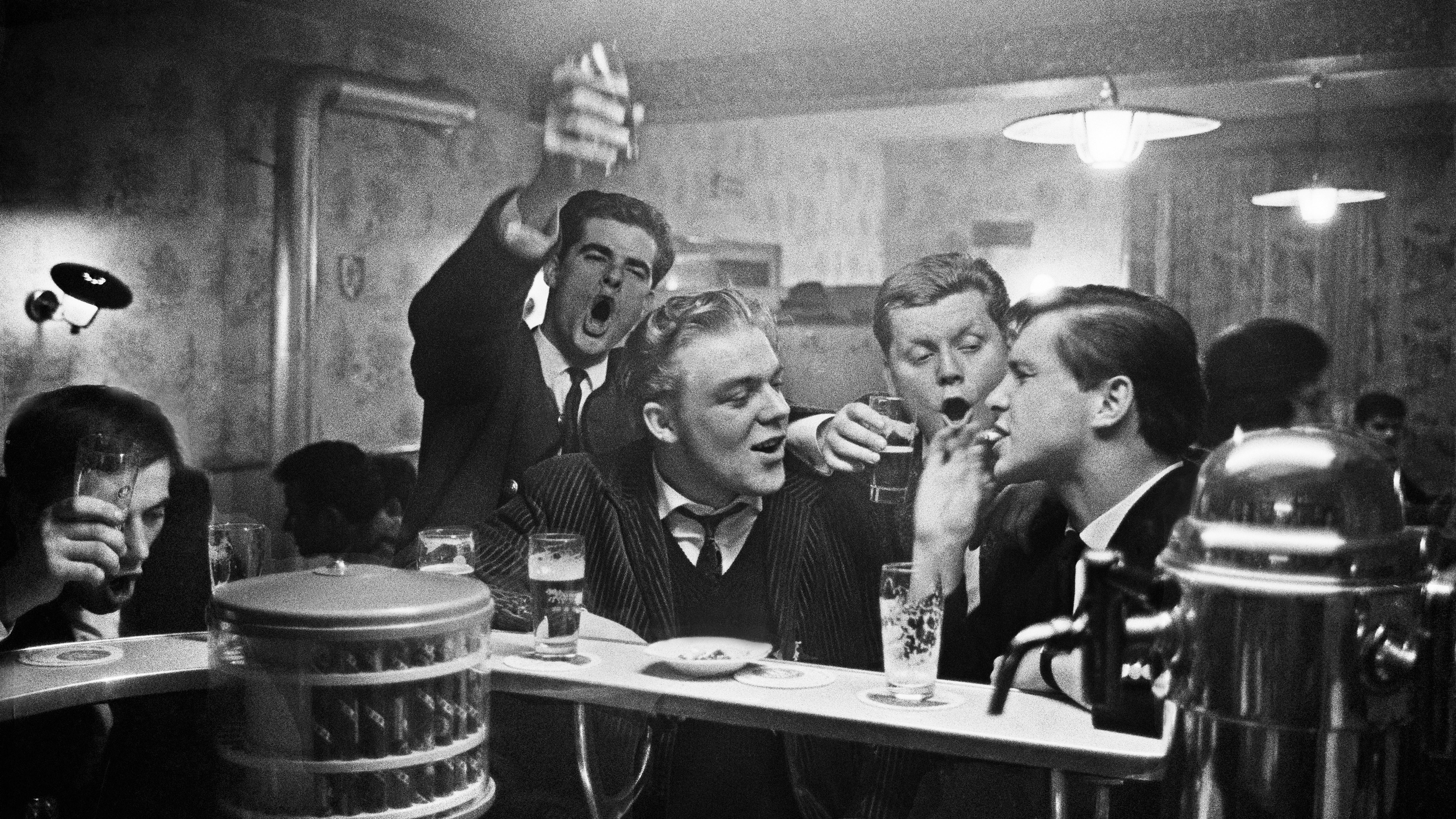
My early days of expatriation were disorienting. It was 2011, and I had recently gotten married and moved to Paris. Although I didn’t realize it at the time, my friendships to that point had depended on proximity: Once I crossed the Atlantic, many of them dwindled to digital approximations of intimacy. I went long stretches without talking to Carlos, my closest confidant since high school, even though we’d been like family when we lived in Brooklyn.
At the age of 30, I was learning just how fragile friendship becomes in adulthood. A jungle of solitude is the norm, and it grows back when we’re inattentive. In 1990, Gallup found that one-third of men reported having 10 or more close friends. By 2021, according to polling from the Survey Center on American Life, just 13 percent did—a figure that has barely budged even since the pandemic. The number of men who said they had no close friends rose from 3 percent in 1990 to 17 percent last year.
More From The Atlantic
- The David Frum Show: Social Security is running out of time.
- 90 seconds that encapsulate the AI industry
- America’s homegrown-parasite problem
- The thinking about kids and heat has flipped.
- Marco Rubio’s disappearing Signal chat
Culture Break
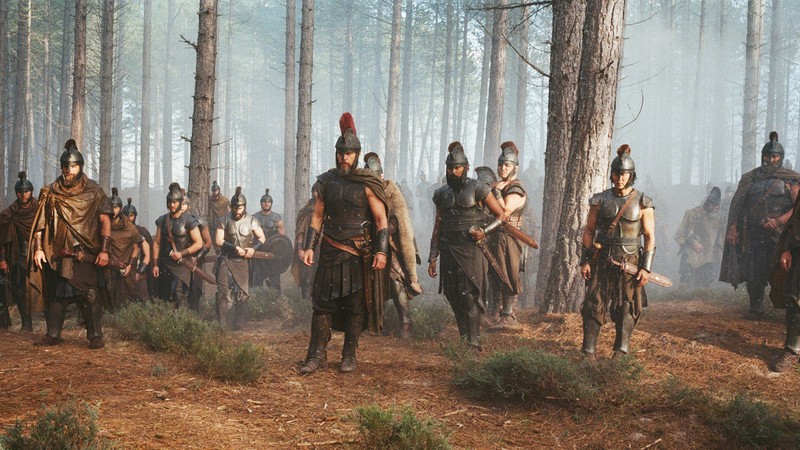
Watch. Christopher Nolan’s take on The Odyssey (in theaters Friday) manages to find an intimate side to one of the best-known stories in human history without losing its epic scale, David Sims writes.
Read. Last year, Xochitl Gonzalez recommended seven books for people figuring out their next move.
Rafaela Jinich contributed to this newsletter.
When you buy a book using a link in this newsletter, we receive a commission. Thank you for supporting The Atlantic.
The post United States of Disbelief appeared first on The Atlantic.