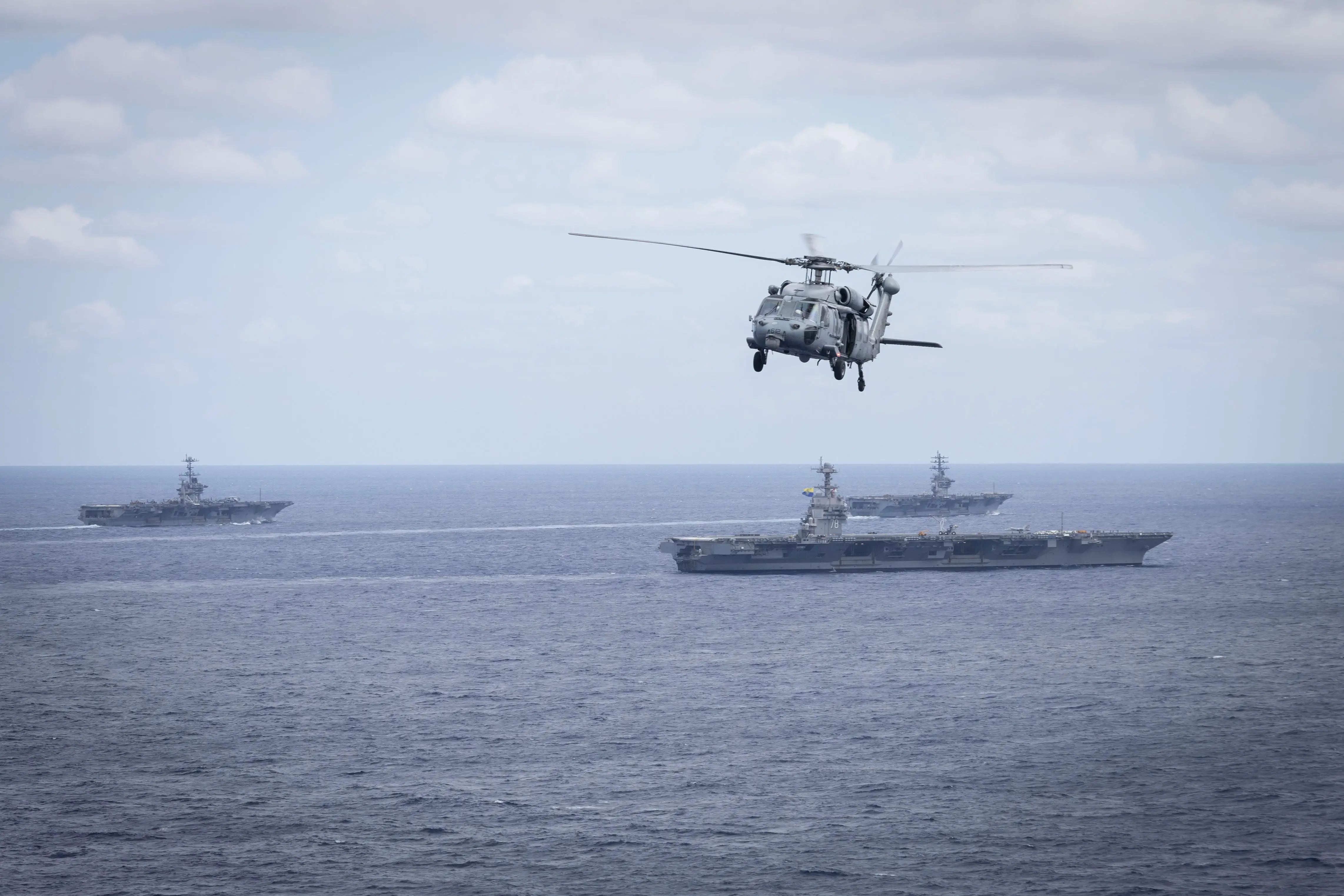
The US Navy wants to build a new “AI-first” fleet, and it’s betting that better data, faster technology adoption, and more tech-savvy sailors will help make it happen.
The service’s newly released strategy focuses on using AI and data in more ways and relies on ensuring sailors are proficient with the technology and can keep up with the quickening pace of its development. The Navy’s approach is just one example of the broader transformation across the US military as it adopts AI across operations, missions, and systems.
The push matters because future naval fights may hinge on which force can collect, process, and act on information fastest. Speed can be a decisive factor.
This week, the Navy released information regarding its roadmap for “weaponizing data and artificial intelligence,” which includes building a data-ready and AI-enabled force, after more than a year of work.
“This strategy positions the Department of the Navy to out-learn and out-fight any adversary by rapidly deploying data and artificial intelligence,” said acting secretary of the Navy, Hung Cao, per the press release. “It is our roadmap to building an ‘AI-first’ Fleet, one that turns information into warfighting advantage and enables faster, better decisions.”
The plan focuses on six core areas. The Navy will accelerate its use of AI by deciding which projects are most promising for full-scale implementation. The service also plans to streamline how it gathers, organizes, and interprets data so that the service’s sailors can understand it more easily and quickly, a critical concern for new technologies being brought into the armed services.
The Navy will also upgrade its hardware so that it can better support data and AI capabilities. And organizational processes within the service will be optimized so that more people have input and authority over data and AI use. Partnerships with industry, academia, the larger federal government, and US allies and partners will also be a focus.
The sea service is also planning to build out its workforce to be more capable when it comes to data and AI technologies. This will include recruiting personnel with specific skills, building expertise across the workforce, and helping its workers prepare for the rapid pace of change in these technologies.
The plan will ultimately lead the Navy to what Cao described as an “AI-first” fleet.
US Navy spokesperson Lt. Jake Ryan told Business Insider that the envisioned “AI-first Fleet deliberately integrates artificial intelligence across the entire fabric of naval operations to enhance the US warfighting advantage in the digital age, where the speed of information gathering is now the decisive variable in maintaining dominance.”
The Navy’s AI plan aligns with broader US military strategies for using these technologies. The service has been investing in automation and AI in shipbuilding, including an AI program that cut a 160-hour submarine-planning job down to 10 minutes, as well as automated factories to build parts for top nuclear submarine programs.
The Army has been testing using AI in its new warfighting software, Next Generation Command and Control, identifying specific use cases for the technology while still keeping soldiers in the loop. AI and automation have helped synthesize and process data, as well as predict ammunition, supply, and maintenance issues.
While the US armed forces are exploring AI opportunities in weapons like uncrewed systems, intelligence, and target analysis, the Pentagon has also seen the value of using AI in its more monotonous paperwork jobs, reducing the cognitive load on service members. The US Department of Defense’s AI program clocked in at 1.5 million daily users last month, up from 80,000 in December 2025.
Read the original article on Business Insider
The post The US Navy wants to ‘weaponize’ data for a new AI-first fleet, and it wants tech-savvy sailors to make it happen appeared first on Business Insider.