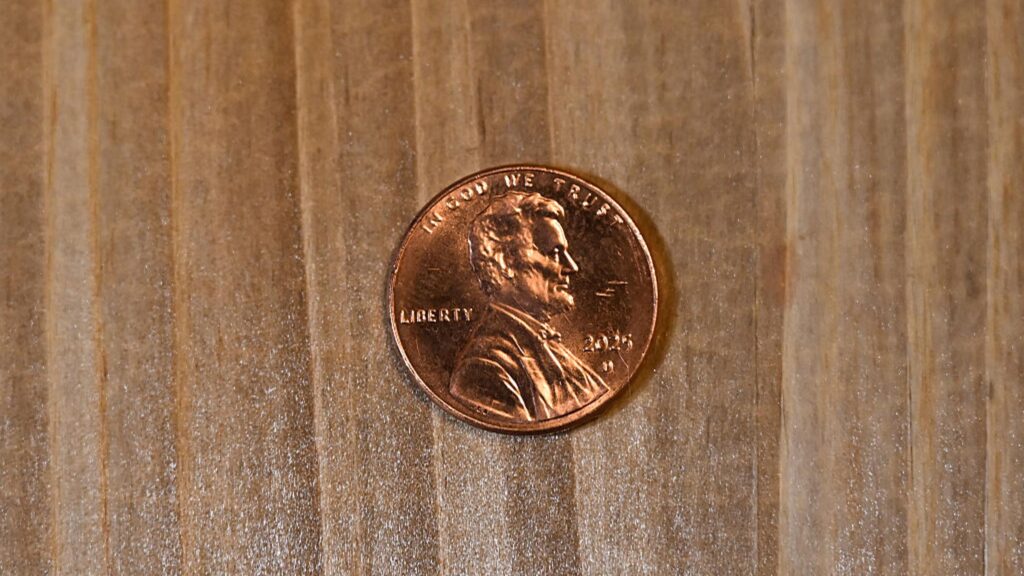
Since the final batch of American pennies for circulation was minted in November last year, consumers and businesses across the country have resorted to various ways of managing transactions pennilessly. A bipartisan proposal, however, offers to standardize the process in support of the smallest-value coin’s phaseout.
On Tuesday, the House of Representatives passed the Common Cents Act, which would introduce rounding guidelines for cash transactions when exact change is unavailable and would legally end penny production other than for sale as numismatic or collection items.
Under the bill, the penny would remain legal tender and would keep its one-cent value, but the bill outlines how persons and businesses may—but are not required to—round cash transactions if exact change cannot be provided. Generally, if an amount has 1, 2, 6, or 7 as the last cent digit, it can be rounded down to the nearest nickel. On the other hand, if an amount ends with 3, 4, 8, or 9 as the last cent digit, it can be rounded up.
For small-amount transactions worth $0.01 or $0.02, the amount may be rounded up to $0.05 for those seeking to pay with cash.
Electronic transactions and other non-cash payments like checks and gift cards would still use the exact amount to the last cent for the transaction.
The U.S., under President Donald Trump, bid the penny goodbye last year, as the cost to make one cent is nearly 3.7 times its face value. But while the government has stopped manufacturing new pennies for circulation, the Treasury Department said the Federal Reserve will still recirculate roughly 114 billion pennies “for as long as possible.”
Because of the phaseout, however, some businesses and consumers raised concern over increased costs related to rounding transactions to the nearest nickel.
The National Restaurant Association argues that many restaurant operators, out of fear of possible litigation, have opted to round down costs to the nearest nickel when exact change wasn’t available. A prolonged period of rounding down could cost restaurants up to $168 million yearly, the association added.
Meanwhile, the Federal Reserve Bank of Richmond projected in a July brief last year that rounding to the nearest nickel could cost U.S. consumers about $6 million annually.
Industry groups lauded the passage of the Common Cents Act, a bipartisan effort sponsored by Reps. Robert Garcia (D, Calif.) and Lisa McClain (R, Mich.). The bill now heads to the Senate.
“The House recognized the need for certainty to protect cash transactions, support consistency across the country, and resolve an issue that has been negatively impacting millions of businesses nationwide,” Evan Armstrong, the senior vice president of government affairs of the Retail Industry Leaders Association, said in a statement.
Sean Kennedy, chief advocacy officer at the National Restaurant Association, said in a statement that the bill’s passage could reduce “unnecessary friction between restaurants and the guests they serve” and inject “a degree of uniformity into the most basic transactions involved in running a restaurant.”
The post House Passes Common Cents Act to Help Phase Out Penny appeared first on TIME.