People in many countries around the world now view China more positively than they do the United States, a new international survey has found, in a significant reversal of public opinion that comes as the two superpowers increasingly vie for global influence.
The poll, conducted by the Pew Research Center, found that China was favored over the United States in 25 out of 36 countries that it surveyed between February and May, according to a report the organization released on Wednesday. It was the first time in the two decades that Pew has conducted the survey that China beat out the United States in a majority of the countries polled, according to experts.
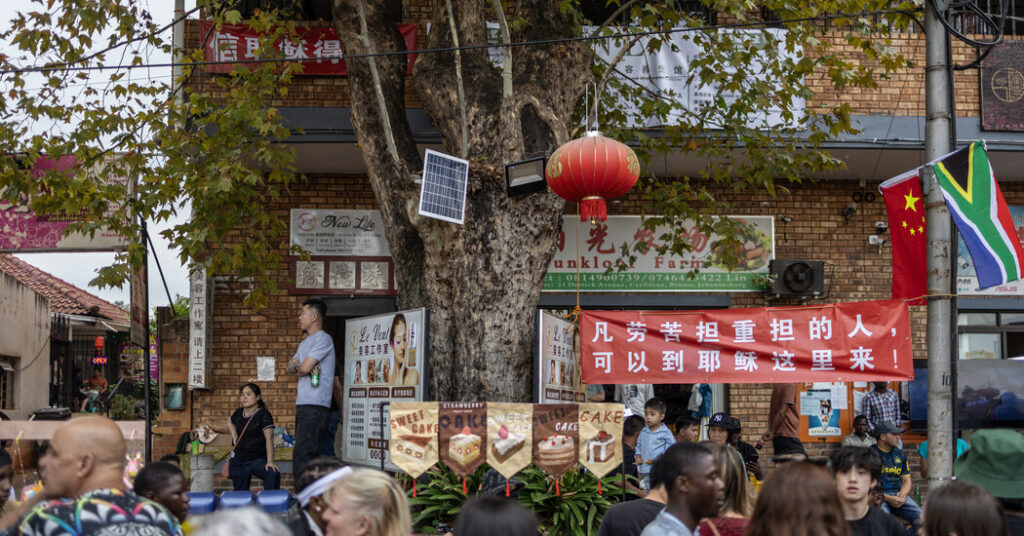
The result reflects, in part, a concerted effort by China to expand its soft power, with cultural and economic influence campaigns in Africa, the Americas and beyond. The Pew Center cited China’s strengthened economic and security ties with countries like Brazil and Peru and its zero-tariff policy in Africa as drivers of its improved ratings.
But the shift was “especially due to deteriorating opinions of the U.S.,” the Pew report said. The United States’ aggressive foreign policy under President Trump, including imposing sweeping tariffs and slashing foreign aid, has soured many countries on American partnership.
The findings “confirm the collapse of U.S. soft power under President Trump’s leadership, driven by his administration’s use of force and economic coercion,” said Susannah Patton, a nonresident fellow at the Lowy Institute, an independent research center in Sydney.
Global opinion of the United States had already been suffering a steady decline over recent years, according to past Pew reports. But this year’s survey shows a precipitous drop-off. The United States’ median favorability — the median percentage of people across all surveyed countries who viewed it positively — dropped to 36 percent from 48 percent in last year’s poll. In contrast, China’s rose to 46 percent from 38 percent over the same period.
Most of the countries that viewed the United States more positively than China were among China’s traditional rivals in the Asia-Pacific region, like Japan and South Korea, or had leaders close to Mr. Trump, like Israel. Notably, respondents in Canada and Mexico — the United States’ immediate neighbors and two of its closest allies — reported a greater affinity for China than the United States.
The poll also found that people in most of the surveyed countries had more confidence in President Xi Jinping of China than in Mr. Trump, although global opinions of both leaders remained low, the report said.
Some experts, like Chin-Hao Huang, an associate professor of political science at the Lee Kuan Yew School of Public Policy in Singapore, cautioned against reading too much into what the report could mean about China’s long-term popularity. Still, he said, the poll could serve as a “report card on the world, assessing how the Trump administration is faring in global affairs.”
An earlier Pew report, released in June, that assessed public opinion of Mr. Trump in 36 countries noted that the United States’ involvement in military conflicts was a major factor in the decline of his global favorability. A median of 74 percent of adults disapproved of how Mr. Trump was prosecuting the war in Iran, and 76 percent disapproved of his handling of the conflict in Gaza, the report found.
Since the outbreak of the war in Iran in February, shipping through the Strait of Hormuz has all but come to a halt, severely disrupting global oil supplies and driving up prices on energy and a host of other goods. Last week, the International Monetary Fund predicted an uptick in global inflation, forecasting a rise of 4.7 percent in 2026, up from 4.1 percent in 2025, because of higher prices for key items like energy, metals, fertilizer and food.
The post Global Opinion Shifts Toward Favoring China Over the U.S., Poll Finds appeared first on New York Times.