Not long ago, a student at my school forgot to submit a homework assignment. Before the school day even began, my colleague received an email from the parent — to ask if they could upload the assignment on the student’s behalf. The student was 17 years old.
We are in the midst of a parenting and educational crisis. Students are increasingly shielded from discomfort, failure and responsibility. As a result, they’re entering adulthood anxious, incredibly risk-averse and ill-prepared to face life’s inevitable challenges.
Now, with artificial intelligence offering instant shortcuts around thinking, writing and problem-solving, we risk raising a generation even more disconnected from creativity, resilience and independent thought.
Many parenting and educational norms, though well-intentioned, have shifted toward overprotection and hyper-management. The typical childhood once was “free range,” full of unstructured play, conflict resolution and hard-earned independence. Now, it’s often a carefully curated experience dominated by adult intervention. Helicopter parenting has evolved into “snowplow parenting,” in which parents proactively remove any obstacle in their child’s path. A recent survey found that 75% of parents remind their children of school deadlines, and 16% of parents of college students admit to waking their children up for class. These behaviors rob young people of essential life skills.
As educators, we see the downstream effects: students who fear failure, lack initiative, and turn to adults to manage even minor problems. Professors report students calling parents to negotiate grades. Employers describe young hires who can’t make independent decisions without excessive guidance. The ability to cope with and endure discomfort, once considered a basic developmental milestone, is rapidly eroding.
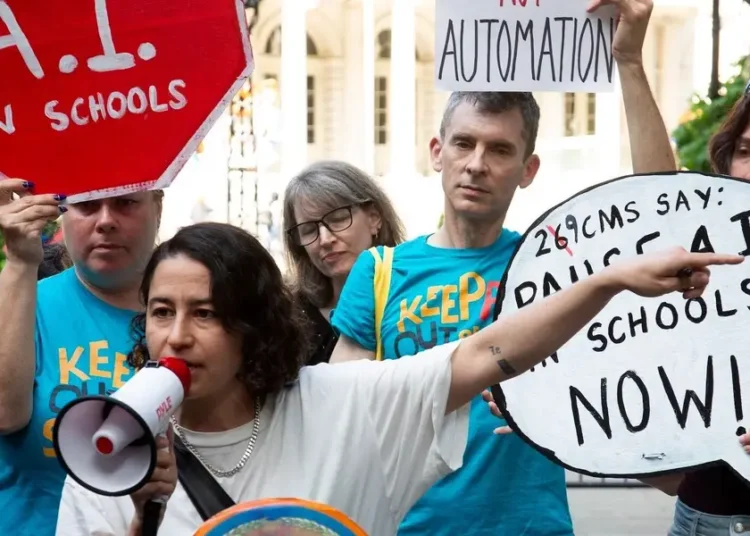
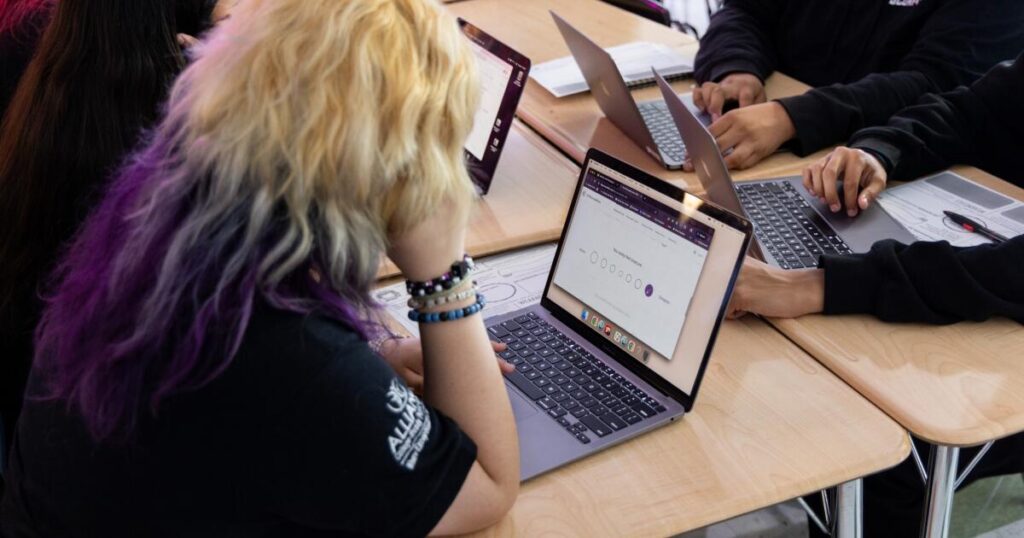
Now, another force threatens to accelerate this trend: artificial intelligence. As AI becomes increasingly integrated into classrooms and everyday life, students may feel even less inclined to engage in creative thinking or struggle through complex problems. Why wrestle with a blank page when an AI tool can write the essay? Why brainstorm ideas when algorithms can generate solutions in seconds?
Although AI holds promise as a tool to support learning, it also poses real risks to student growth. Creativity, originality and perseverance — the very skills that will set students apart in an AI-driven economy — require practice. They require friction. And friction requires failure. If students are not equipped with the internal motivation and emotional resilience to persist through difficult tasks, AI will become a shortcut that further stifles rather than supports growth, much like snowplow parenting.
This makes the role of schools even more urgent. We must resist the pressure to treat students and families like customers, catering to short-term satisfaction rather than long-term development. Instead, we must reclaim our position as experts not only in academics but also in character formation.
As educators at a private school here in Los Angeles, my colleagues and I strive to prioritize self-advocacy, independence and student-led initiatives. We create intentional opportunities for students to face intellectual, social and emotional challenges and to grow through them. We don’t shield students from failure; we guide them through it, helping to teach and model for them the “how” of grit and resilience. That’s where real enlightenment happens.
While schools nationwide agonize about AI, I fear many in the profession are missing the bigger picture. The risk this technology poses to students is not so new; it is fundamentally the same risk that overweening parents have posed for a generation or more. It is the risk of leaving students unprepared and, in the most basic sense, uneducated.
As educators we must stop trying to solve every student’s problem. We must stop responding to every parental concern with concession. Instead, we must build school cultures that promote grit, curiosity and independent thought — the very things AI cannot replicate.
And we need parents as partners. That means encouraging their children to make mistakes, to learn from them and take responsibility for them, and to recover on their own. It means modeling how to handle setbacks and uncertainty with maturity and resilience. And it means trusting educators to challenge students in ways that foster these important qualities.
The goal at school is not to make life easier for students. It is to prepare them to be successful in a life that won’t always be easy. That requires a cultural shift away from overprotection and instant solutions and toward discomfort, struggle and growth.
Our children’s future will be shaped by rapid change, automation and technological disruption. Confronting this reality will demand adaptability, creativity and emotional fortitude. These qualities cannot be offloaded to AI. They must be nurtured and developed.
So let students fail. Let them struggle. Let them grow.
Mark Shpall is head of school at de Toledo High School in West Hills.
The post AI, like a hovering parent, protects students from the failures they need appeared first on Los Angeles Times.