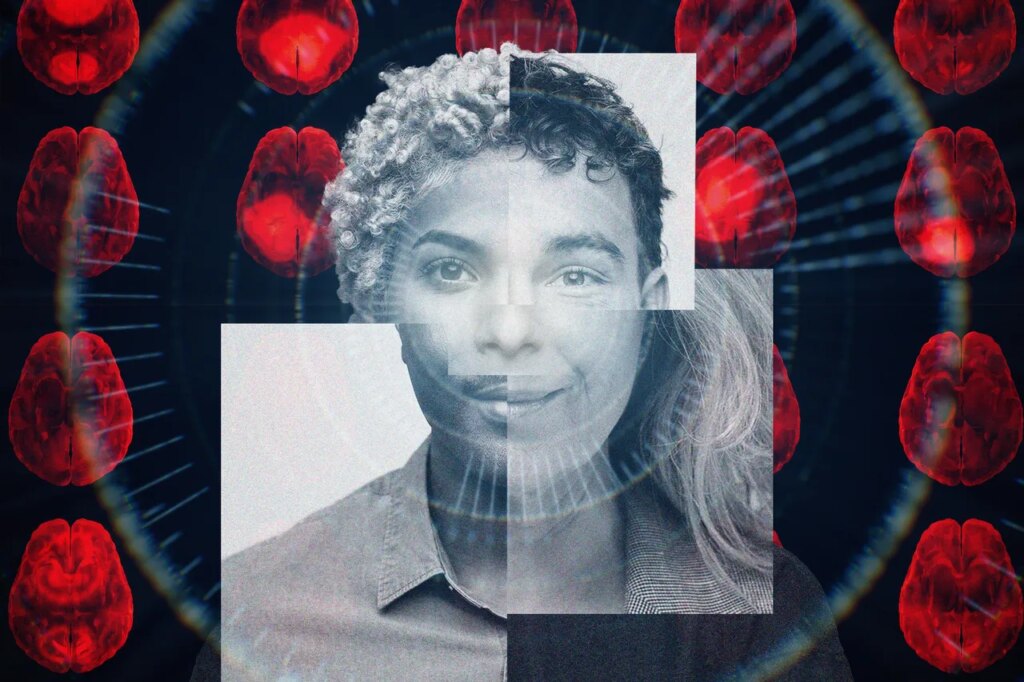
The co-inventor of Apple’s FaceID and Vision Pro technology has spent the last six years building a frontier artificial intelligence model that could one day help decode electrical activity in the brain to diagnose cognitive disorders.
Now, Gidi Littwin’s startup, Hemispheric, has raised $52 million in funding after gathering data on 100,000 people’s brains to train deep learning models to examine the brain without the need for invasive procedures.
Littwin left Apple in 2020, looking for a change. He found it when his Hemispheric cofounder Hagai Lalazar cold-messaged him on LinkedIn. Lalazar had begun to develop artificial intelligence to study the brain without the need for surgery, and was looking for a commercially minded cofounder to drive the company forward. By the time he found Littwin, he had spoken to around 75 candidates.
Littwin had helped develop FaceID, and at that time was working on hand-tracking for an augmented reality product, the Vision Pro. As part of this, he had to collect what he told WIRED were “hundreds of thousands of subjects’ worth of data” to train the deep learning models powering the technology.
“There were massive data collection operations behind these projects and we knew we had to build something very similar at Hemispheric,” Littwin says, “and we have.”
Because each individual’s brain activity looks different, doctors have largely had to rely on subjective questionnaires and behavioral observations to diagnose depression, Alzheimer’s, and Parkinson’s. To get around that, Littwin and Hagai collected their “most prized possession:” a quarter of a million hours of brain data from 100,000 paid volunteers across Asia, as well as Tel Aviv, and Boston. Subjects undertook a series of activities that look like games but activated different parts of their brains.
That data helped train a frontier model, which infers brain function from electrical activity within the skull in the same way that large language models deduce meaning by statistically analysing text. They then tested the generalised model on subsets of people, including those diagnosed with PTSD, schizophrenia, and depression and said the model made accurate deductions about the individuals’ brain health. The team is currently working on a clinical study to test whether their model can diagnose and even predict Alzheimer’s.
The team will submit their first product, which will be used to study PTSD, to the FDA for approval early next year. They hope that will allow them to roll the product out to the public later in 2027.
To help diagnose a cognitive disorder, a patient wears a lightweight EEG headset that measures electrical activity in the brain for around 15 minutes while interacting with an app on a tablet. Hemispheric says its AI model will then help clinicians decode the signals to make diagnoses, select the most effective intervention by making predictions about treatment, and monitor progress.
“The future that we envision is one where this is akin to a blood test,” Lalazar tells WIRED in an interview. “The device is going to be very, very cheap; it will be able to be sold and distributed throughout mental health clinics, hospitals, and even psychologists’ offices.”
AI-assisted diagnostic tools for conditions like lung cancer are already in clinical use and speeding up access to treatment across Europe. Meanwhile, AI giants including OpenAI and Anthropic are expanding into healthcare, intensifying competition for the raft of startups in the space.
Hemispheric has raised early-stage funding from investors including American and Israeli venture capital firms and individual investors, among them early Uber-backer Howard Morgan. They will use the money to advance partnerships with governments, healthcare organizations, and pharmaceutical firms, hire more in the US, and work towards regulatory approval. They also plan to measure more brain data from millions of people in an effort to improve their model
The pair are also developing their own brain scanners to obtain information that the company believes can provide more useful data for its models than traditional EEGs. “These devices were never built for machine learning and definitely not deep learning,” Littwin says.
The post The Apple FaceID Co-Inventor Building a Frontier AI Model for the Human Brain appeared first on Wired.