The Roberts Court accelerated its assault on the freedoms guaranteed by the Reconstruction amendments this term, leaving only the Fourteenth Amendment’s guarantee of birthright citizenship intact—and that by only one vote. Across multiple cases dealing with voting and immigration, a consistent theme has emerged from the Roberts Court’s jurisprudence: a determination to ignore, rationalize, or misrepresent the explicit animus of government officials—and the president in particular—toward the groups that have been targeted.
This trend began in the first Trump administration, and has grown only more apparent as Donald Trump’s attacks on immigrants and ethnic minorities in the United States have become more brazen. The Court’s approach echoes one of the most notorious decisions in American history: the 1944 ruling in Korematsu v. United States, which upheld the forced relocation of tens of thousands of Japanese Americans in the middle of World War II. With apologies to Fred Korematsu, a brave and honorable man who resisted internment, we could call the Roberts Court’s “See no evil” approach to overt bigotry the Neo-Korematsu Doctrine.
Writing on behalf of the majority in Korematsu, Justice Hugo Black—a former Klansman—rebuked his colleagues for suggesting that racism or bigotry was behind the internment of Japanese Americans. “To cast this case into outlines of racial prejudice, without reference to the real military dangers which were presented, merely confuses the issue,” Black wrote. “Pressing public necessity may sometimes justify the existence of such restrictions; racial antagonism never can.”
Black had disavowed the Ku Klux Klan years before he wrote those words, but time has not redeemed them. In his dissent, Justice Frank Murphy accurately described the government’s policy as having fallen “into the ugly abyss of racism.”
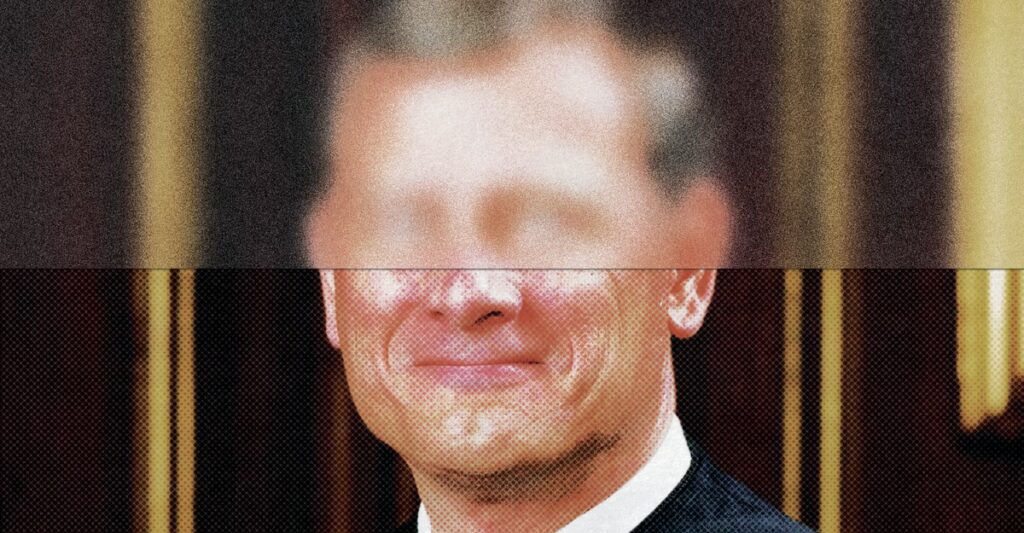
Korematsu was never technically overturned, though Korematsu’s conviction for violating the military order creating the camps eventually was, after new information showed the government had withheld exculpatory evidence—namely that the U.S. government and its law-enforcement and intelligence agencies had no evidence that Japanese Americans were a threat. In 2018, Chief Justice John Roberts repudiated Korematsu, describing the decision as “gravely wrong the day it was decided” and “overruled in the court of history,” adding that it “has no place in law under the Constitution.”
Those words appear in Roberts’s majority opinion inTrump v. Hawaii, the case challenging the Trump “travel ban” targeting mostly Muslim countries. Despite what Roberts wrote, he upheld Trump’s ban, out of deference to the president’s powers over immigration and national security. This, Justice Sonia Sotomayor noted in her dissent, actually replicated the logic of Korematsu: the idea that the government is owed deference even when it engages in obvious racial bigotry. Neo-Korematsu Doctrine holds that if any other motive can be found—say, national security—then it’s not racism, and, as Black suggested, it’s actually a little rude to suggest otherwise.
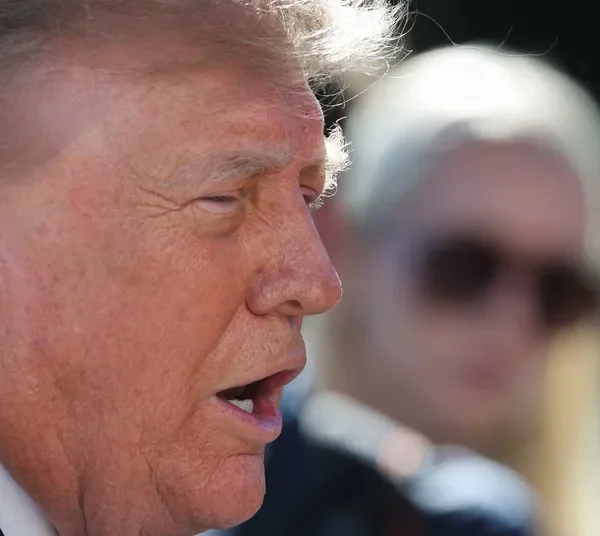
“The text says nothing about religion,” Roberts wrote about Trump’s order, waving away the president’s expressions of anti-Muslim animus. (This was true of Franklin D. Roosevelt’s executive order as well. It never named Japanese Americans, but it didn’t have to: General John DeWitt had already recommended removing “Japanese and other subversive persons,” and began doing so as soon as the order was issued.) “The issue before us is not whether to denounce the statements,” Roberts argued. “It is instead the significance of those statements in reviewing a Presidential directive, neutral on its face, addressing a matter within the core of executive responsibility.” In response, Sotomayor noted that Trump himself had (positively) compared his Muslim ban to Japanese internment, saying that Roosevelt “did the same thing.”
One might argue that the justices have a difficult job—shutting out the political noise in order to properly interpret the law and the Constitution—and that job remains the same even if the president himself is erratic. But when the president is using his official powers to act on his personal hatred towards particular groups of people, that erratic nature becomes legally relevant.
“A president who acts on unconstitutional animus to effectuate policy through the presidency is not executing institutional power. Rather, he is laundering personal animus through the institution of the presidency,” writes Daphna Renan, a professor at Harvard Law. In such circumstances, “Roberts has it backwards: The question is not the ‘authority of the presidency itself,’ but the potentially unconstitutional conduct of ‘a particular president.’”
In Trump v. Hawaii, Roberts at least had the integrity to refer to Trump’s explicit statements about Muslims, even while arguing that the president had statutory authority to ban travelers from particular countries. In more recent cases, the right-wing justices have stopped doing that, and in fact begun arguing that such evidence would be unfair to consider—except in cases involving groups they sympathize with.
In Louisiana v. Callais, the majority opinion, written by Justice Samuel Alito, asserted that the drawing of a second Black congressional district out of six, in a state where about one third of the population is Black, was an “unconstitutional racial gerrymander.” If Republicans wanted to pack Black voters into a single district, however, that was permissible because they had a partisan interest in doing so. In other words, Black voters can be disenfranchised because they vote for Democrats—in the same way that Japanese Americans in Korematsu could be confined not because of their race, but because they were associated with the Empire of Japan.
The Supreme Court followed Callais with a shadow docket ruling on redistricting in Alabama, where a lower court had found that the state had deliberately discriminated against Black voters, by chiding the lower court for not following its guidance. The Neo-Korematsu Doctrine of justifying racial discrimination so long as it could be excused by any nonracial explanation was reinforced yet again inMullin v. Doe, the case involving the Trump administration’s attempt to revoke temporary protected status for Syrian and Haitian immigrants. Trump had spent much of his preceding decade in public life slandering Haitians in Ohio as pet-eating savages, referring to Haiti as a “shithole country,” and saying that letting Haitian immigrants into the U.S. would be a “death wish for our country” and that they “all have AIDS.” His administration has suspended travel from “third world” countries, allowing in only whites from South Africa as refugees, and repeatedly suggested that people from the “third world” are unsuited for American citizenship, a slander that makes no distinction among potential immigrants and Americans of African, Asian, or Latin American descent.
In his majority opinion siding with the Trump administration, Alito dismissed these statements, writing that none were “overtly racial, and in substance all expressed policy views that could rest on race-neutral justifications.” The assertion that Trump’s statements were not “overtly racial” is absurd, but the reference to hypothetical race-neutral justifications is pure Neo-Korematsu Doctrine: If there’s any other motive, even a hypothetical one, the racism doesn’t count.
This appears to be a Trump-era standard, invented for a president who regularly says racist things. If the justices ruled against him every time he did so, a lot of right-wing policies wouldn’t be upheld. So the statements must be ignored or rationalized.
The justices have not always been so averse to acknowledging the speech of government officials as evidence of discrimination. In the 2018Masterpiece Cakeshop case, the justices were happy to cite in their majority opinion a Colorado civil-rights commissioner who said “it is one of the most despicable pieces of rhetoric that people can use to—to use their religion to hurt others.” The majority called this evidence of “a clear and impermissible hostility toward the sincere religious beliefs” of a baker who did not want to provide a cake for a same-sex wedding. Why was this case different? Perhaps the justices saw discrimination here because they sympathized with its white, Christian, conservative target. The baker’s rights would be protected by this Court; Black voters’ rights would not be.
In Trump v. Hawaii, Roberts wrote that “the forcible relocation of U. S. citizens to concentration camps, solely and explicitly on the basis of race, is objectively unlawful and outside the scope of Presidential authority.” But the author of the Korematsu opinion, having exchanged his white robe for a dark one, would have agreed. After all, Hugo Black wrote that “pressing public necessity”—not “racial antagonism”—motivated the Japanese-internment policy. Black upheld Fred Korematsu’s conviction because he argued that the presence of a national-security motive meant the racism against Japanese Americans didn’t count. And that is exactly the logic the Roberts Court has followed in so many cases. This reasoning—Black’s reasoning—has been reiterated again and again by Roberts and his right-wing colleagues to sanction discrimination against the vulnerable populations targeted by the Republican Party.
The Korematsu decision may be overturned by the “court of history.” But its legacy lives on in the Roberts Court.
The post The See-No-Evil Supreme Court appeared first on The Atlantic.