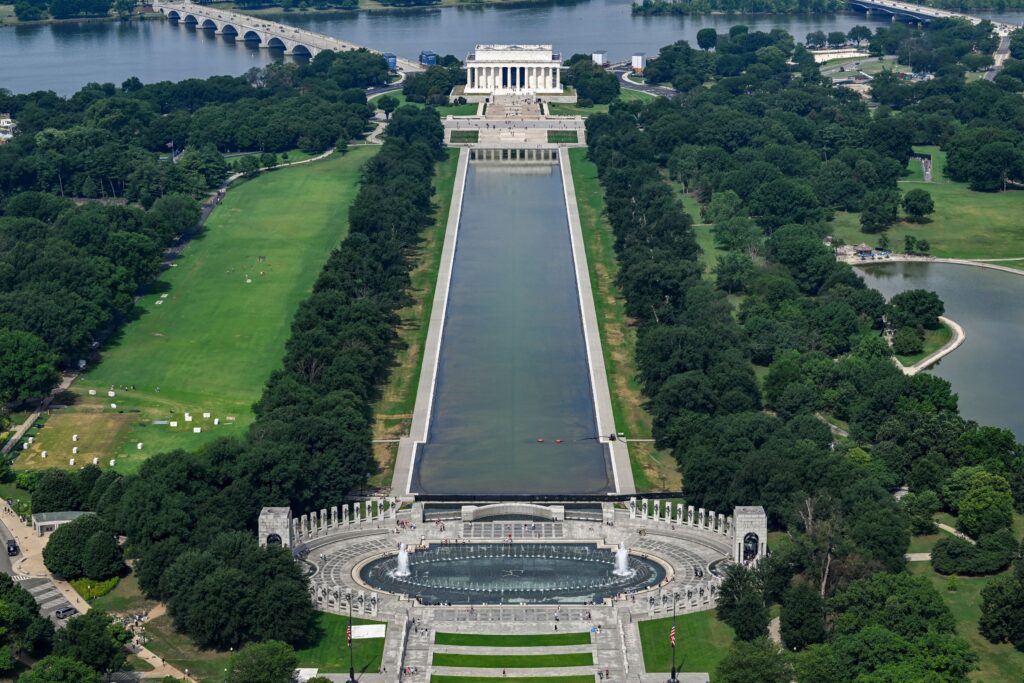
The July 11 front-page article “Trump aimed to finish these projects by July 4. Many are not done.” was illustrated by a photo of the National Mall and Reflecting Pool in the foreground, with the Potomac River beyond them.
The Trump administration has devoted extraordinary attention and $14 million to making the Reflecting Pool cleaner and more attractive. The Potomac deserves the same care and attention given to the monuments that line its banks.
Long before it was a backdrop to our monuments, the Potomac helped build a young nation. Today, the river sustains commerce, supplies drinking water to about 5 million people across the D.C. metropolitan area and shapes the capital literally and culturally.
Yet the nation’s river remains neither reliably swimmable nor fishable. The Potomac’s health was given a “B” grade for water quality last year, which was the fifth B-level mark in a row, but emerging threats led American Rivers to designate it the country’s most endangered river this spring. Polluted runoff, forest loss, climate extremes and data-center sprawl are stacking stress on the Potomac. And January’s catastrophic sewer-pipe collapse, which released more than 240 million gallons of untreated sewage into the Potomac, exposed just how vulnerable the river, and therefore D.C.’s drinking-water supply, is.
The clearest reflection of America’s values isn’t in a pool. It’s found in the health of the Potomac and the communities that depend on it. Investment in the Potomac should reflect its importance to the nation’s history, health and future.
Hedrick Belin, Silver Spring
The writer is president of Potomac Conservancy.
Where Americans are moving
The July 8 front-page article “Trans people are fleeing red states for Seattle. The city can’t keep up.” reported that a Seattle nonprofit has seen a more than twentyfold growth in cases of trans people it has helped flee from red states to Seattle since 2024 — that’s growing from 70 to 1,500 people.
This is interesting, but it’s hardly emblematic of migration trends between states today. On the whole, Seattle has experienced a sharp decline in domestic migration in recent years. According to a Census Bureau data analysis by National Review, between 2020 and 2025, red states, or the ones Trump carried in 2020, gained 3.3 million people, and blue states as well as D.C., or the ones Harris carried in 2024, lost 3.8 million. Where are those people moving? The bureau’s Vintage 2025 estimated that the top states with the highest internal net migration were Florida and Texas — reliably red states.
Many factors could be contributing to these trends, but trans protections are likely low on the list.
Derek Tresner, Coeur d’Alene, Idaho
Taxpayers’ time is money
Michelle Singletary’s July 8 Color of Money column, “Missing this July 10 deadline could cost you a tax refund,” was useful reading. But the onus for refunding penalties should really be on the IRS. This is especially the case for most taxpayers in salaried jobs whose federal tax withholdings are determined by employers using minimal information.
It is already unfair for the IRS to impose penalties for slightly delayed tax payments, and the current process for applying for refunds is cumbersome and irrational.
The conversation of reforming the U.S. tax system is often focused on the many exemptions for the wealthy. But too much time is wasted by hardworking citizens with modest financial means in dealing with the idiosyncrasies of the U.S. tax system. That must be addressed as well.
Alok Bhargava, College Park
The writer is a professor of public policy emeritus at the University of Maryland at College Park.
The causes of Metro’s summer slog
The July 9 Metro article “Facing a summer slog” about the inconvenience to Red Line commuters this summer echoed similar coverage from past years when various lines were shut down to accomplish necessary repair, maintenance and improvements.
Growing up in New York City, I was spoiled by its largely four-track systems on all lines. Four tracks allowed express service between many popular destinations and, more importantly, continuous service even when repairs were needed or subways broke down. Trains in each direction could continue to run if a track became unusable. Ideally, Metro should have been built as a three-track system to allow for express service and disruption workarounds.
Due to shortsighted economic and political concerns, D.C.’s Metro system was congenitally hobbled by having only two tracks, one in each direction. Riders are used to “single-tracking” and bus relays for system breakdowns and necessary heavy maintenance. And as the region has grown, Metro has been unable to provide express service from its outermost stations to more central locations.
Though much of this cannot be easily fixed, there is still a valuable lesson to be learned: Large infrastructure projects should invest more in forward-thinking designs and long-term economic value than in short-term compromises.
Gary A. Michel, North Potomac
Letter submissions
Send letters to [email protected].
Submissions must be exclusive to The Post and should include the writer’s address and day and evening telephone numbers. Letters are subject to editing and abridgment. Please do not send letters as attachments. Because of the volume of material we receive, we are unable to acknowledge submissions; writers whose letters are under consideration for publication will be contacted.
Post Opinions wants to know: What do you wish you had known earlier? What nuggets of wisdom, gleaned from years of experience, would you share with your younger self? Send us your response, and it might be published as a letter to the editor.
The post The Potomac River deserves monumental attention appeared first on Washington Post.