The federal agents who fatally shot immigrants in Maine on Monday and Texas last Tuesday were reportedly not wearing body cameras, despite the Department of Homeland Security announcing plans in February to equip all officers with the devices. The agency can continue to make excuses, but everyone involved loses the longer it takes to equip every agent with this critical technology.
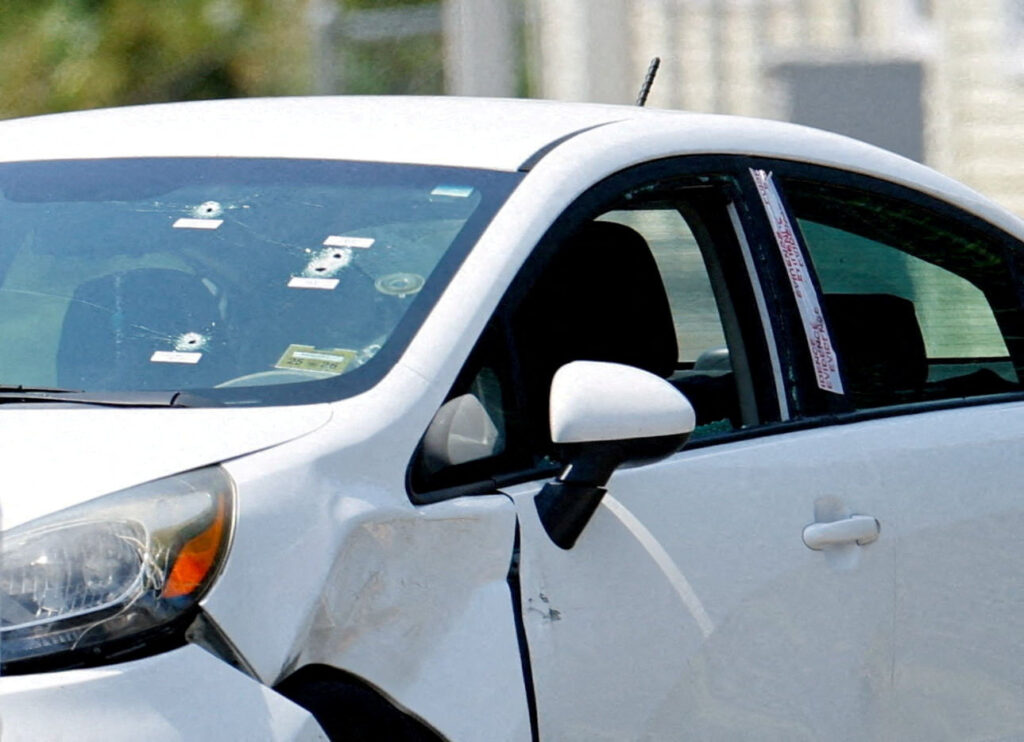
On Monday, an Immigration and Customs Enforcement officer killed a 26-year-old Colombian man in Biddeford while he was driving. Sen. Angus King (I-Maine) said DHS Secretary Markwayne Mullin initially told him the individual was the target of a warrant but later called to clarify that he was not.
Six days earlier in Houston, an ICE agent shot Lorenzo Salgado Araujo in the abdomen after he allegedly attempted to flee agents who were in unmarked vehicles, which were not equipped with dashboard cameras.
DHS claims that Salgado Araujo “weaponized” his van “in an attempt to run over” an officer, who fired his gun in “self-defense.” Other passengers in the vehicle dispute that account. One said DHS’s “self-defense” claim is a “lie,” claiming “there were no officers in front of or behind the vehicle. They were on the sides.”
The Post attempted to piece together the incident using surveillance video but has found no footage that can definitively show what happened.
All of this argues for more cameras. Footage could corroborate the accounts of officers, clearing them of wrongdoing, or bolster claims by eyewitnesses.
Any person who actively interferes with law enforcement officers performing their duties ought to face criminal consequences, regardless of their legal status. Likewise, anyone who flees a police stop does so at great physical risk to themselves and others. Federal officers have the right to defend themselves with deadly force when their safety is threatened.
Even if the government is telling the truth, however, most Americans no longer give the Trump administration the benefit of the doubt. DHS has made these situations more combustible by squandering credibility in previous cases when force was used.
The highest profile example was the fatal shooting of Minneapolis resident Renée Good in January. Then-DHS secretary Kristi L. Noem immediately claimed that Good had weaponized her car against agents in “an act of domestic terrorism.” Yet video footage dispelled that narrative.
Days later, government officials similarly mischaracterized details leading up to the killing of Alex Pretti while he was protesting ICE actions, claiming he approached officers with a gun. While he was armed, video footage did not support that account.
The subsequent backlash led the government to recalibrate. The administration announced that immigration officers would begin to wear body cameras, and Congress appropriated $20 million for the technology.
A DHS spokesperson says the department is still in the process of issuing the cameras and attributed delays to the shutdown. But ICE had access to historic levels of funding throughout that shutdown, thanks to last year’s One Big Beautiful Bill.
In recent months, the administration has adopted a quieter approach to its deportation policies. But what just happened in Maine underscores that, despite this shift, transparency remains essential.
The post The Maine ICE shooting appeared first on Washington Post.