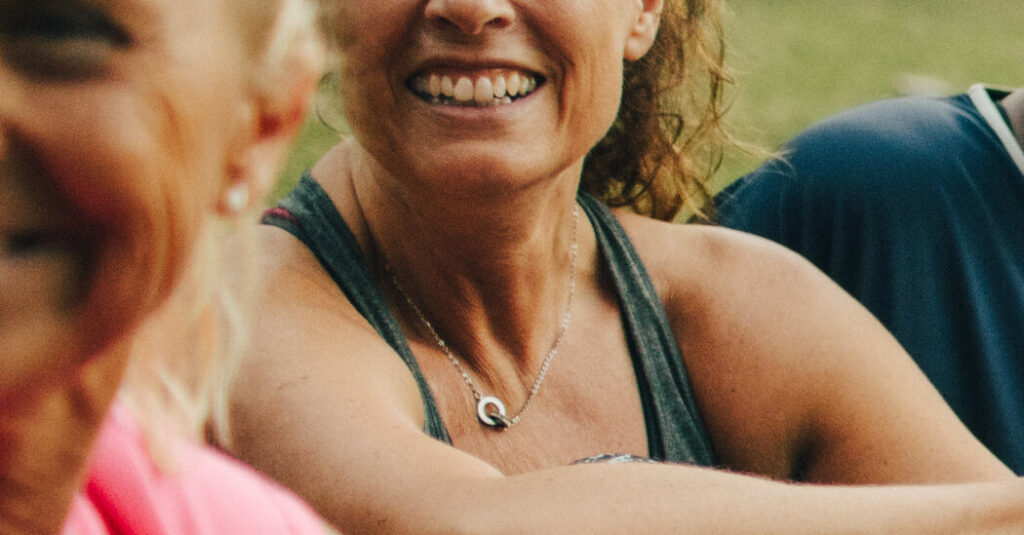
Why is it so difficult to find fashionable clothes that have sleeves? I know it’s hot out, but the skin on my upper limbs is no longer something I want to show off, and increasingly I feel there is no alternative. What is someone to do if they want to survive the current temperatures and look stylish but aren’t happy about revealing their arms? — Rebecca, Savannah, Ga.
You are correct in noting the growth of sleeveless clothing. According to Cognitive Market Research, the global sleeveless market is “projected to grow from $24.36 billion in 2021 to over $51.39 billion by 2033.” Moreover, Alexandra Van Houtte, the founder of the fashion search engine Tagwalk, said it had seen a 133 percent increase in sleeveless looks in the spring 2026 collections versus spring 2025. The most obvious reason for this is environmental: In increasingly sweltering summers, everyone’s fancy lightly turns to thoughts of less fabric. Fitness culture also plays a role, as do changing gender norms.
But whatever the reason, said the designer Willy Chavarria, who recently showed a lot of sleeveless dresses during Paris Fashion Week, “the past two seasons our sleeveless has outperformed sleeved substantially.” Watch any news program and odds are that at least one female anchor will be in a sleeveless dress.
So what’s a woman who doesn’t buy into the current trend to do? She can sit out the current phenomenon or figure out how to hack the system. I vote for the latter.
Begin by thinking about why, exactly, you don’t like a sleeveless look. The question of baring arms is a complicated one, especially for women. In all of the discussions about body positivity and loving the different parts of you, including the parts of you that decades of social conditioning have deemed potentially problematic, arms, especially the upper arms, are often overlooked.
Yet arms reveal more about you than just skin. Like the neck and hands, they are an age giveaway at a time when many faces no longer seem remotely attached to chronological time.
You can fight back with exercise and treatments, but there’s only so much anyone can do about the batwing droop of the skin around the triceps, the little accumulation of fat at the back of the armpit, the stringy way ligaments and muscles seem to rearrange themselves for the skinniest among us, the crepey appearance of older flesh. I remember talking to a famously chic (and thin) retailer who told me she stopped wearing anything that showed her arms after she turned 40.
Yet arms are a sign of strength. (There’s a reason biceps are referred to as “guns.”) For years that was a gendered stereotype; women whose biceps were too sculpted were dismissed as being too manly. Simply consider the scandalized, racialized reaction to Michelle Obama’s preference for sleeveless dresses, which culminated in her first official White House portrait — she wore a (yes) sleeveless sheath — and the ensuing debate over whether it was inappropriate or empowering.
Little wonder that women were often counseled to cover their arms, especially in professional settings. Only in 2017 did the House of Representatives change its rules after a “sleeveless protest” by congresswomen; it took two more years before the Senate followed suit.
Little wonder sleevelessness and insecurity are often intertwined. Maybe it’s time to rethink the issue.
“I think the aging body can be beautiful,” Antonin Tron, the designer of Balmain, said when I raised the subject with him. “There is this idea that women’s sexuality stops when they get older, and I don’t agree with that.”
He suggested some practical strategies for trying on, literally, a different idea.
First, test the waters by wearing a simple sleeveless look with a more eye-catching necklace or bangles. The point is to draw the eye away from the body part you don’t like and focus on something you do.
Second, opt for a top that occupies a sort of middle ground between sleeves and sleeveless, like a cold-shoulder style or one with open arms. Or try a cap sleeve. Chavarria proposed wearing a sheer or transparent top over a sleeveless one to provide a scrim of sorts.
Finally, the armhole matters. Look for a top that’s cut high under the arm but not tight. You want to avoid gaping sides and material that cuts into your body.
And you never know, you may learn to love your arms. They are, after all, the part of you that may have given PowerPoints; hefted children, boxes and furniture; typed your papers, hugged your family, paid the bills. Seems to me that’s worth showing off.
Your Style Questions, Answered
Every week Vanessa will answer a reader’s fashion-related question, which you can send to her anytime via email or X. Questions are edited and condensed.
The post I Hate My Arms. Where Are All the Sleeves? appeared first on New York Times.