Maine Democrats do not have to look far for a primer on what it is like to replace a deeply flawed nominee forced off the ballot weeks before a deadline to be stuck with him.
Two Julys ago, former President Joseph R. Biden Jr. succumbed to political reality following his debate meltdown and ended his re-election bid. Party officials had just two weeks to choose a replacement.
Now with Graham Platner planning to remove his name from the Maine Senate ballot before Monday’s deadline, after a rape allegation that he denies, the state party’s officials have to find a new candidate and convince voters that the selection process was fair.
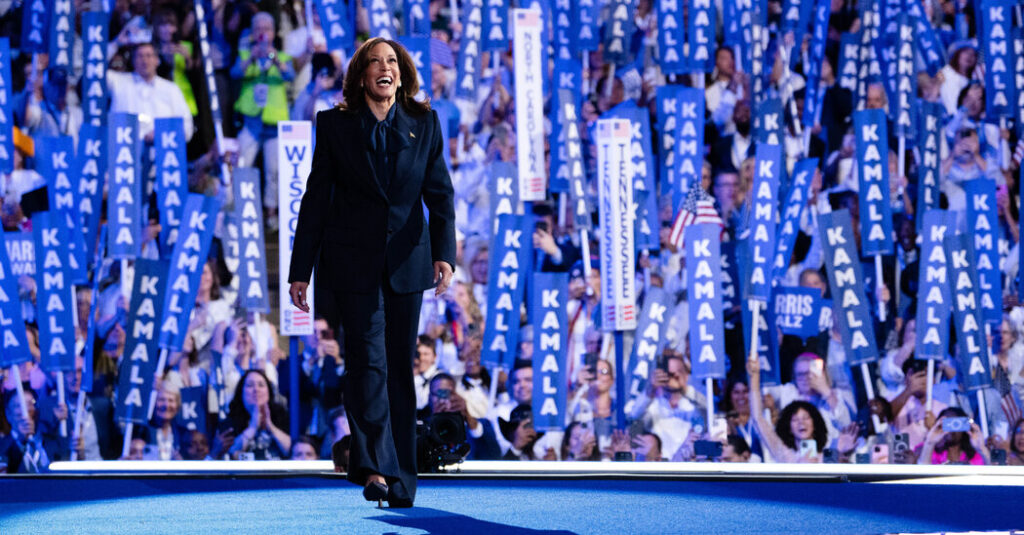
Recent history suggests neither task is easy. The 2024 anointment of Vice President Kamala Harris left a trail of hurt feelings and second-guessing that has not stopped and political scars that have yet to heal.
“It would be really awesome if they didn’t Kamala Harris us,” said Michael Rowell, 45, a Democrat of Sullivan, Maine. “A lot of people were disappointed by the way they handled that transition.”
Last-minute switches are difficult, said Jaime Harrison, who in 2024 was the Democratic National Committee chairman who oversaw the transition from Mr. Biden to Ms. Harris. “The reality and the expectations people have are not the same, and that creates a lot of issues for the Maine Democratic Party now, just like at the D.N.C. two years ago.”
In many ways, Mr. Platner’s successor will face a steeper climb than Ms. Harris did when she took over for Mr. Biden 107 days before the 2024 election. Mr. Biden bequeathed a campaign apparatus and staff and ample operating cash.
Mr. Platner boasts 15,000 volunteers, but in his 11-minute withdrawal video, he made no appeal for them to transfer to his successor. And after bowing out in disgrace, Mr. Platner’s endorsement is not in high demand in Maine’s abbreviated primary process or its general election.
There is also the question of campaign cash. Ms. Harris inherited Mr. Biden’s donor lists and was an immediate fund-raising juggernaut. Mr. Platner’s campaign was nearly broke and struggled to build a large-donor program.
Whoever replaces him will have to start from scratch. While some of the prospects are former candidates for governor or Senate, quickly pivoting to a high-profile general election campaign will not be easy. On Thursday, the X account of the Senate Democratic campaign arm sent direct messages to Democratic influencers asking them to help raise money for Mr. Platner’s replacement.
“Would you be willing to share the nominee fund ActBlue link to your followers and anyone else who might be interested in amplifying?” the committee wrote.
Veterans of the 2024 switch said it would be important for Maine’s Democratic leadership to leave backers of Mr. Platner and whoever does not win the Senate nomination feeling as if they were sufficiently included in the replacement process.
“As terrible as Graham Platner is, you have to make sure that those people who supported him don’t feel their voices are discarded in the process,” said Quentin Fulks, who was a deputy campaign manager for Mr. Biden and then Ms. Harris.
It is not hard to find Democrats who in retrospect feel it was a mistake to anoint Ms. Harris without a competitive process, though few will say so publicly out of fear of alienating the former vice president’s supporters or appearing to insult Black women, one of the party’s core constituencies.
Mr. Platner, with his myriad warts, was a candidate who created organic excitement from Maine Democrats. The field to replace him does not include anyone who has spawned similar enthusiasm in their political careers.
“The thing that powered the effectiveness of the switch for us was the enthusiasm for Kamala Harris; people were excited,” said Rob Flaherty, a deputy campaign manager on the Biden and Harris campaigns who this week apologized on his podcast for his past support of Mr. Platner. “Part of the question of ‘Is this switch going to work?’ is going to be: Are people excited about the choice?”
Ms. Harris and many of her allies have lamented that she had but 107 days between Mr. Biden’s dropping out and the general election. Maine’s new Democratic Senate nominee is expected to have even less time.
While the Democratic National Committee had rules in place two years ago that governed how it would replace Mr. Biden, Maine Democrats have had to create their process this week with little time for consideration.
Maine law gives the party wide latitude to decide how it will choose a new nominee, and officials have discussed holding a 600-member convention before the July 27 deadline for a new nominee.
But they do not have to democratize the process, and not everybody in Democratic circles thinks it is a good idea to do so.
Liam Kerr, a co-founder of WelcomePAC, a centrist Democratic group, said the Maine Democratic Party chairman would be better off to simply anoint Representative Jared Golden, who has twice won re-election while President Trump carried his district.
(Mr. Golden, one of the most conservative Democrats in Washington, has said he is not interested, and his centrist views mean it is unlikely he could win at a party convention, where activists who participate tend to skew more liberal.)
Mr. Kerr said he was unconcerned about the prospect of nominating Mr. Golden resulting in hurt feelings from Mr. Platner’s supporters.
“There weren’t enough hurt feelings two years ago,” Mr. Kerr said. Of Mr. Golden, he added: “He won a district Trump won by 10 points. It’s like we have Michael Jordan in his prime, and we’re letting the season ticket holders play HORSE to decide who our starting guard is.”
Tim Balkcontributed reporting from Maine.
The post In Replacing Platner, Democrats Are Haunted by Biden-Harris Switch appeared first on New York Times.