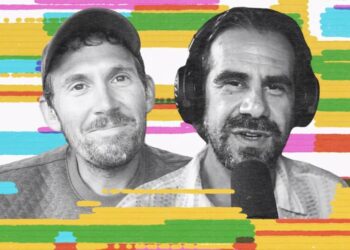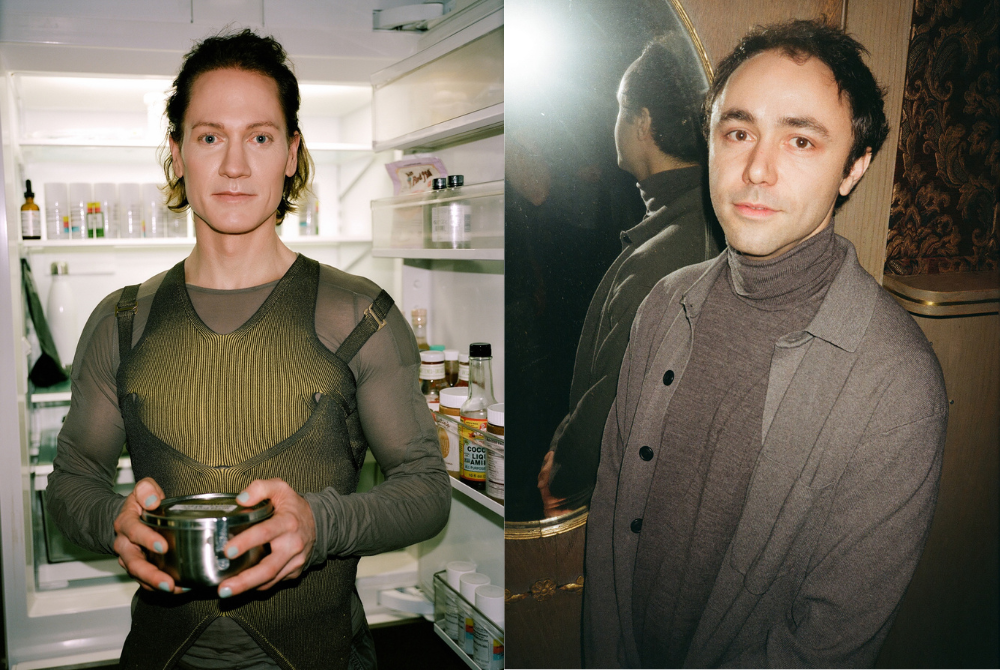
If immortality is something that can be bought, then Bryan Johnson can afford the price tag. As such, it’s no surprise that the tech millionaire’s (expensive) mission to live forever often brings out a petty, jealous side in observers.
There’s certainly been an ill-spirited tone to many responses to the news that the celebrity biohacker has an incurable autoimmune disease which basically means that his “stomach is eating itself.” This is probably nothing new for Johnson, who by now is used to laughing off criticism and ridicule with the tongue-in-cheek admission that he will “probably die in an ironic way.”
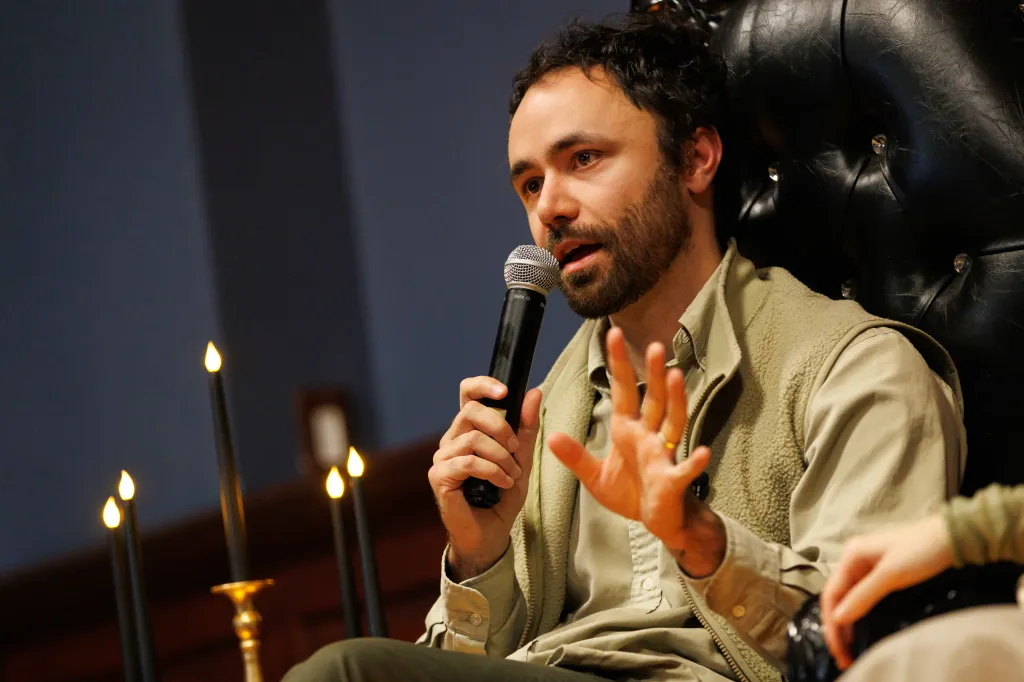
This public thirst for schadenfreude and proof of Johnson’s inviolable mortality must certainly come as no surprise to Jordan Castro, an American writer who will appear at an event with him later this month. Castro, author of The Novelist and Muscle Man, has been outspoken about the “tyrannical” nature of contemporary discourse and how “people literally walk around like zombies, possessed by their malformed ‘ideas’ and ‘opinions.’”
They may not seem like obvious bedfellows: the alt lit figurehead and the venture capitalist who spends millions a year trying to reduce his biological age, but it turns out that Castro and Johnson have more in common than you might expect. The former is a writer whose journey from tweeting through drug binges (“I basically wanted to be Young Thug”) to meeting a woman, lifting weights, and finding God has been well-publicized, the latter an ex-Mormon who made a fortune in tech but found himself struggling with depression before embarking upon a new mission: to try and live for as long as possible.
Ideologically, they overlap on matters of life (sacred) and death (not ideal). Cementing their mutual interests, Johnson will be speaking later this month at an event for the Cluny Institute, an initiative within The Catholic University of America, which triangulates discussions between academia, religion, and the tech industry (Castro serves as Cluny’s deputy director).
“There are people who try and get off heroin forever. They try and set rules, and they can’t, then they start praying and it works. Prayer reaches back into their life and then reorders their daily routines,” Castro tells VICE. “The interesting thing about Bryan’s project is that it seems like he’s basically done that with AI. He’s submitted his will to the algorithm and the body.”
I got on a call with both of them about a week after another viral news story: Johnson’s 5-MeO-DMT trip, which he evidently found to be a revelatory experience—and one that, perhaps crucially, cannot be fully explained through brain data and biomarkers.
During our conversation, we touched on many of the ideas that will be discussed during Cluny’s Zoë conference, a three-day gathering for “people who want to live a real life in the age of AI,” where Johnson will deliver a keynote address on whether tech can be used to achieve immortality.
VICE: You’re each on your own respective paths regarding faith and self care. Where do you stand on longevity and its spiritual and religious implications?
Bryan Johnson: The most common want for any human is they don’t want to die right now. They will wax poetic about whether they want to live ten, 20 years from now, or 100 years from now, but one thing is certain: they don’t want to die right now. Otherwise, they’d take their life. So the evidence is very clear. When you’re not dead, you’re afforded the privilege of offering your perspectives on anything you want. Your spiritual practice, your meaning and purpose in life, your decision about this and that… But in this moment, as we’re giving birth to AI, what I’m suggesting is that humanity agree that we don’t want to die right now. That is the singular point of agreement across the human race. Anytime you step beyond that in any which way, humans will disagree with each other, and usually that results in violence and bloodshed. It’s the thing that’s led to more violence and more death than anything: humans trying to say, “My ideas are better than your ideas.” So “don’t die” is a very basic thing to say. Let’s not fight and kill each other. Let’s just all agree no one wants to die right now as a basis of understanding.
Jordan Castro: Bryan, I feel like I had this caricature-ish view of your project and recently I’ve been engaging with it more, and I’ve done this 180 where I really admire and appreciate it. I’m a novelist, and I’m coming from a more orthodox Christian tradition, but one of the things that we share is this idea that death is fundamentally wrong, or that it’s kind of an aberration. For me, it’s less of a technical problem and more of a spiritual problem. One of the earliest Christian texts is this thing called the Didache. It articulates the way of life and the way of death. The way of life is always tied up with loving your neighbor, being honest… The way of death, there’s things like adultery and stealing and lying. And I think that there’s a way that we can die spiritually before we die biologically. That there are people that are basically alive, but they are, in effect, dead.
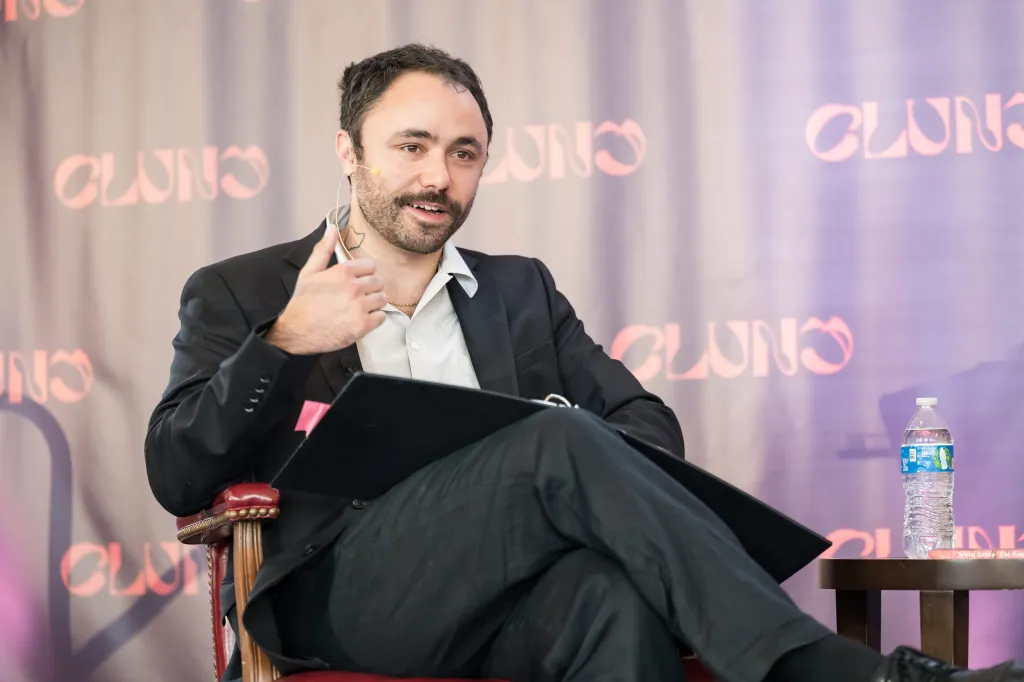
BJ: You’re postulating a question of spiritual death when a person is alive. You’re basically arguing there’s a biochemical state that represents a certain characterization, which you define verbally as spiritual death. If it’s formally done in science, like, cool, we have a definition. If it’s not subjectively assigned, that’s fine, but again, that’s in the landscape of opinion. You’re gonna have your opinion, other people gonna have their opinions. Great. I’m not trying to play on that battlefield. I’m just trying to say no one wants to die right now, and create an environment where those things can be expressed but don’t result in death. I’m really not trying to win the argument or be right.
I’ve noticed that Don’t Die, as an ideology, feels more compelling to many people than a lot of what contemporary culture offers us.
JC: I was super compelled listening to you, Bryan, on the All-In podcast and the way you described being on 5-MeO-DMT. You said it’s impossible to explain what it’s like, and you were sort of grasping to try and explain it. I feel like as a novelist, those are the kinds of experiences that I’m most interested in. For me, you can think about life in terms of trying to extend chronological time, but there are also these experiences that sort of take you out of chronological time and into durational time or something—like spiritual time, where your normal sense of perception is suspended and you’re kind of in this other domain. My interest in culture really has to do with that kind of experience.
One of the things that I’m fascinated by is your emphasis on quantification and measurement. There’s this French phenomenologist named Michel Henry, and he’s like, “You can picture a red bird, you can picture a brain, you can picture a pancreas. But when you try to picture life, you actually can’t picture it.” There’s something about life that is inward and inexpressible and experienced in a way that isn’t visible. So I was curious about your experience with DMT, and wondering what is the role of subjective experiences in your project?
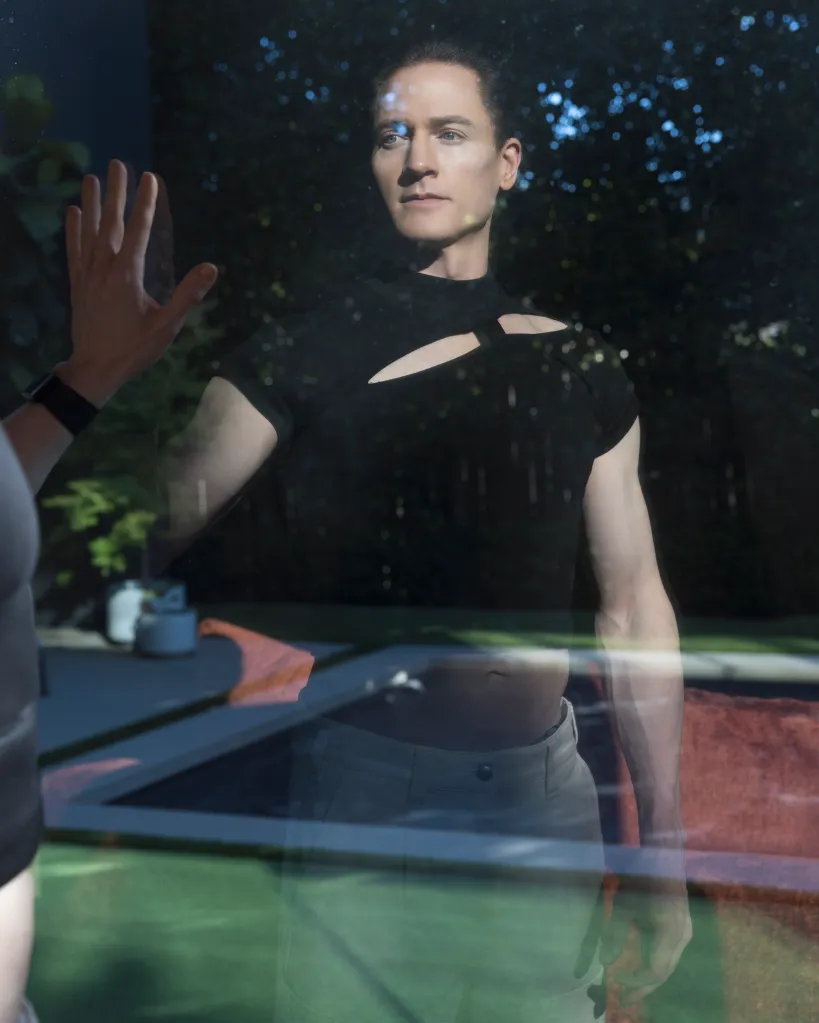
BJ: My entire project is about AI. People think it’s about health, but it’s not. It’s this idea that we are giving birth to super intelligence, which is something novel that has never happened before, and a creation that is beyond the scope of our imaginations. We cannot comprehend the significance of what it is.
In physics, this is known as a computational irreducible problem. In the 1400s, you could say, “I’m a farmer, therefore my child’s going to be a farmer, and their child’s going to be a farmer.” You could model out the world, these coarse-grain heuristics of what’s going to happen. Whereas now, when you look at the speed the world is changing, primarily driven by the emergence of AI, our ability to predict the future is narrowing. Before, it was like, “The following things will be true for the following duration of time, or at least a horizon of like my lifetime.” Now, we’re getting to a point where even a few months out, you’re like, “I really don’t know what’s going to happen in a bunch of domains where I felt stable before.” That’s the beginning of the singularity.
“I’m trying to offer a new framework, a new ideology [for] how we metabolize reality, because it’s going to feel nauseating”—Bryan Johnson
As a species, we are headed towards the event horizon. We feel the change happening. 5-MeO-DMT, is basically a biological simulation of the singularity. It is pure light, it is pure consciousness. It’s just raw existence. In that situation, you’re just dissolved. You’re detached from all things. You can’t keep up, you can’t hold on to things because they move too fast to emotionally and psychologically process what is happening. As a society, we are walking towards this thing. And as this happens, people’s attachments to the philosophies and ideas and meaning-making games they have won’t hold. The world will be too fast for you and I to lock in and say, “Here’s my take on this, here’s my take on that, and we’re going to battle it out.” It’s moving too fast and AI is going to be such a dominant power.
Psychologically, we are going to naturally feel resonance with psychosis: “Things are moving so fast, I’m feeling so unmoored. I don’t know how to anchor myself anymore. How do I find stability in that situation?” I’m trying to offer a new framework, a new ideology to say, “Here’s how we digest, here’s how we metabolize reality,” because it’s going to feel nauseating.
JC: So your answer is this unifying task amidst all the uncertainty of new technology, to try and stay physically alive as long as possible. Is there a positive vision associated with that? Because it sounds like what you’re saying is that you stay alive for as long as possible so that there can be this kind of multiplicity. Earlier you were like, “People can stay alive as long as possible and they can articulate their thoughts.” Is there anything for you beyond a kind of equal multiplicity when it comes to things like truth, or morality, or the spiritual life?
BJ: One of the strongest characteristics of humans is our capacity to generate stories for meaning-making games, right? So if all the games we play now stop working in a year from now because AI is just so good, there’s going to be a crisis of humanity. ‘Who am I? What do I do? How do I have status? How do I have power? How does a tribe see me?’ All of our basic instincts. But in that void, humans are immediately going to start creating new games. And so humans feel this panic, ‘Oh my God, what am I going to do?’ But the moment it comes, we just reinvent ourselves. Humans will do that again and again. I’m not worried about that.
What I am worried about is not having priorities. So, for example, we’re building AI, we have this incredible powerful tool. What do we use it for? “Well, we’re going to kill people more effectively. We’re going to dominate more effectively. We’re going to get people more addicted to algorithms. We’re going to get them to eat more bad food.” So we use AI for the objective of death. And I’m saying that we should be aware of this thing and say, “Actually, the thing we really care about the most is we don’t want to die because AI is here.” We may be looking to some new horizon. We may be able to extend our lifespan for we don’t even know how long. So it’s a fundamental shift of human psychology on what is existence.
“I think life is actually primary and it is good. And that death is wrong. It’s something to be defeated”—Jordan Castro
Someone like [Ancient Roman philosopher] Seneca might argue that life is about learning how to die. To what extent does the longevity movement get in the way of this? And what happens to our conception of our afterlife if the goal is to never die?
JC: One of the things that I have thought about, reading the Stoics or reading the Japanese Hagakure, is that a lot of cultures actually sort of fetishize or worship death. You read about how to die a perfect death, or how you’re training for your death. And I think that’s totally wrong. I think life is actually primary and it is good. And that death is wrong. It’s something to be defeated. George McDonald says, “Jesus didn’t come to make bad people good, he came to make dead people alive.” This is a radical shift, this emphasis on life.
When I was watching your documentary, Bryan, I was really struck by a certain sense that there are some forms of dying which are necessary to enable higher forms of life. For example, if I’m a greedy, murderous guy, I want to use AI to make weapons and kill people. One thing that could happen is I could sort of die to myself, and be renewed in a new kind of way. I could die to my passions, my greed, my desire for power. I could, through humility or things like that, be transformed or changed, and then live in this higher plane of life. I think there are spiritual deaths that are actually critical to enable the kind of life that Bryan is talking about, one that’s oriented toward the continuation of life and not toward death and destruction and so on. That kind of death is required because I don’t know how else people would turn from those kinds of things.
“Psychologically, we are going to naturally feel resonance with psychosis”—Bryan Johnson
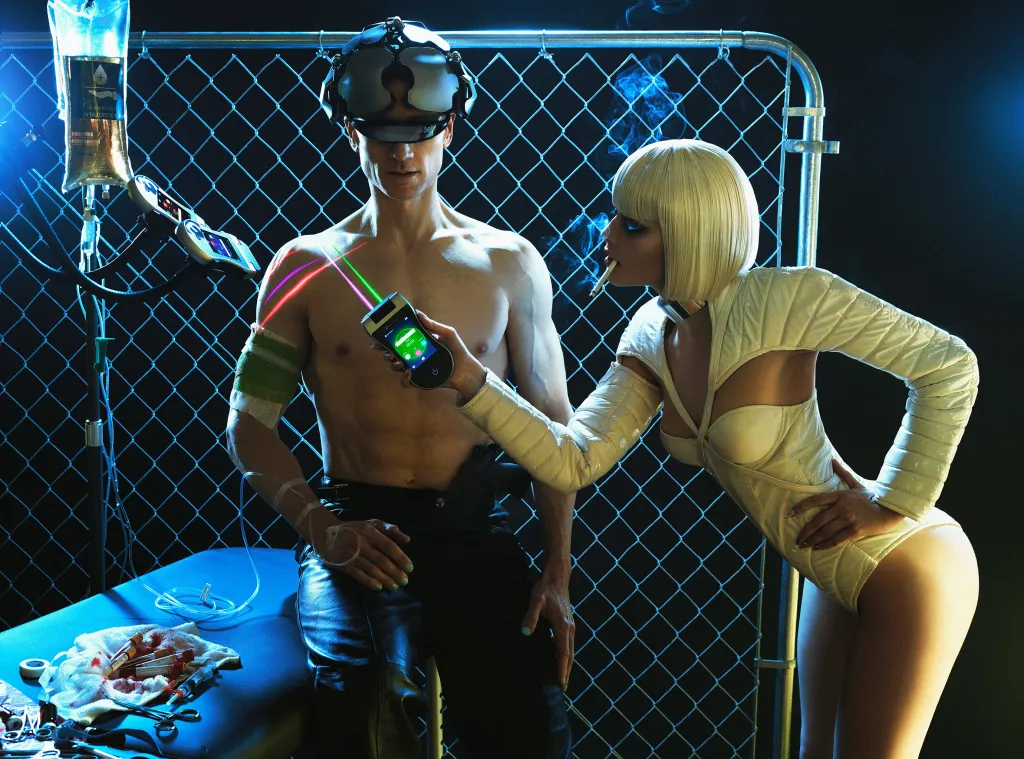
If there is no heaven and no hell, if we’re living forever, if we’re acting as God, where’s morality stand within that?
BJ: I’m advocating for a morality of the right to exist.
JC: I agree that life is good and people should have a right to exist and to live, but obviously other people disagree and I’m not totally sure that this strictly positivist vision of, you know, everybody wants to live and so we can rationally convince people not to kill each other, or we can rationally convince people not to do these things… If we could do that, I think it would have been done already.
I think good and evil are real. I think the spiritual realm is real. Problems of violence and self-centeredness are deeply entrenched within people, within society, within cultures, and it takes something like a spiritual conversion to contend with that and to change it.
The Cluny Institute’s Zoë conference will take place from July 26-28 in the Napa Valley, California. Tickets are available here. (Code VICE for 25% off).
The post Bryan Johnson and Jordan Castro on AI, God, and Why Psychosis Will Soon Be the New Normal appeared first on VICE.