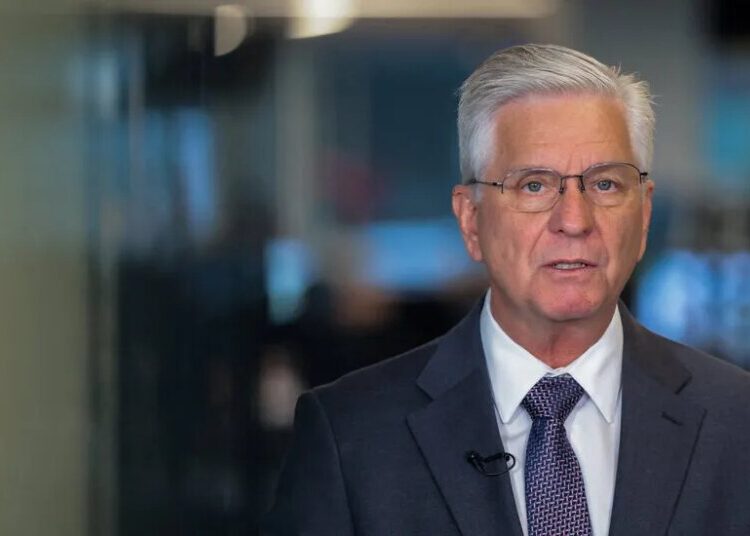
New York Times Executive Editor Joe Kahn said Wednesday that his newsroom “wouldn’t have” run opinion columnist Nicholas Kristof’s May 11 article claiming Israeli police had trained dogs to rape Palestinian prisoners.
“It wasn’t edited by the newsroom,” Kahn said in a Wednesday podcast interview with Peter Kafka. But asked if he would have run the story “in the same format with all the same facts” via the newsroom rather than the Opinion section, Kahn said, “It’s impossible to say whether we would’ve done the identical piece. We probably wouldn’t have. Nick has a particular focus on human rights and war, and it is kind of part of his area of focus as a columnist. So to say, ‘Would we have done that exact piece?’ No, we wouldn’t have done that exact piece.”
While Kahn’s statements mark the first time leadership at the paper has publicly distanced itself from the column, titled “The Silence That Meets the Rape of Palestinians,” the executive editor added he has “confidence in my Opinion colleagues that they edit with rigor.”
“That piece was edited by our Opinions section, it wasn’t edited by the newsroom — so it’s distinct, but it’s not a categorical difference,” Kahn said.
“We have reported very similarly on abuses in the Israeli prison system. We have also reported on sexual abuses by Hamas against Israeli prisoners or against Israelis during the Oct. 7 attack,” Kahn concluded. “So we’ve reported on sexual abuse on both sides of that, and every time we do it, it excites a lot of controversy. Nick’s piece did as well, this one happened to be done by the opinion section, by him as a columnist.”
Kristof’s article drew backlash from Israeli officials and Jewish advocacy groups, with the Israeli foreign ministry condemning it as “Hamas propaganda,” “fabricated” and a “baseless blood libel.” The piece also prompted a legal threat from Prime Minister Benjamin Netanyahu and a formal rebuke from the Conference of Presidents of Major American Jewish Organizations. Critics questioned the article’s reliance on anonymous and Hamas-affiliated sources.
A Times spokesman, Kristof and op-ed page editor Kathleen Kingsbury defended the article repeatedly, saying it was vetted thoroughly before publication.
The article alleged that Palestinians are regularly sexually abused in Israeli prisons, sparking sharp criticism and calls for the column to be retracted, which included angry protestors gathering outside the Times building.
A spokesperson for the Times said: “Nicholas Kristof is a two-time Pulitzer Prize-winning journalist who has reported on sexual violence for decades, and is widely regarded as one of the world’s best on-the-ground reporters documenting and bearing witness to sexual abuse experienced by women and men in war and conflict zones,” the Times spokesperson wrote at the time. “He traveled to the region to report firsthand on the stories of Palestinians who suffered abuse, and his article collects accounts in the victims’ own words, backed by independent studies.”
The New York Times then doubled down on its defense calling it a “deeply reported piece of opinion journalism.”
“Nicholas Kristof’s deeply reported piece of opinion journalism starts with a proposition to readers: ‘Whatever our views of the Middle East conflict, we should be able to unite in condemning rape,’” a spokesperson for the Times wrote on May 12. “He draws together on-the-record accounts and cites several analyses documenting the practice of sexual violence and abuse conducted by various parts of Israel’s security forces and settlers.”
Kristof also posted about the backlash in a May 12 X post saying, “I appreciate the intense interest in my column. For skeptics, why not agree on Red Cross and lawyer visits for the 9,000 Palestinian “security” prisoners? If you think these abuse allegations are false, such monitoring visits would be protective. So why not?”
I appreciate the intense interest in my column. For skeptics, why not agree on Red Cross and lawyer visits for the 9,000 Palestinian “security” prisoners? If you think these abuse allegations are false, such monitoring visits would be protective. So why not? https://t.co/AwSMvC13jN
— Nicholas Kristof (@NickKristof) May 12, 2026
But within the Times a debate has raged between the news division and the opinion section as to whether the article met the standards of the newspaper, and whether there are different standards in different sections.
Opinion editor Kathleen Kingsbury wrote an article on May 21 addressing the controversy titled “Your Questions About Nicholas Kristof’s Column on Palestinians and Sexual Assault.” Kingsbury stood by the column and said that Kristof’s piece “built upon a growing body of evidence regarding the mistreatment of detainees in Israel.” “Before publication, Nick’s reporting underwent a rigorous vetting process by Opinion’s fact-checking department to ensure that every testimony and anecdote he personally reported was supported by independent sources, as is the case with all sensitive pieces,” she said at the time. “The Times’s standards and legal teams also reviewed the column and offered feedback. After publication, we reviewed the factual challenges that readers and others raised, as is standard practice with any published piece. Editors found no errors.”
Kingsbury did add however that “The Times’s news staff in the Middle East played no role in Nick’s column.”
The post NYT Executive Editor Joe Kahn Says He ‘Wouldn’t Have’ Run Dog-Rape Article Against Israel appeared first on TheWrap.