Jennifer Aust’s heart is breaking.
Her whole life, she watched her dad, Pat, give back to the South Bay community he was raised in. He joined the Redondo Beach Fire Department in 1970 and held nearly every rank inside the department — including chief — before retiring in 2002.
Then came eight years as a City Council member. Finally, he was on the board of a healthcare district that leases land to a care home for seniors with dementia — a much-loved community resource that has, in a tragic twist of fate, become his own home.
Now that same board is evicting Aust and nearly 100 other patients from the Silverado Beach Cities Memory Care Community.
Families are furious. They say there are not enough facilities in the region that can provide the specialized care their loved ones need, and they worry that the forced move poses serious health threats.
“When I think of how he’s being treated by elected leaders now, I think he would be so mad and disappointed because he had so much passion for this community,” Jennifer Aust said.
She can only speculate on how her father would feel. Neither he nor most of the other patients who live at the home have the cognitive ability to understand what’s happening to them.
On May 27, the Beach Cities Health District board of directors voted to move forward with a redevelopment plan for its 11-acre Redondo Beach campus that will permanently close Silverado. Within the next year, all the residents will need to leave.
Dr. David Presser, an emergency medicine physician, wrote a letter urging the district to spare Silverado. Moving patients with Alzheimer’s disease, he said, is associated with “behavioral destabilization, increased agitation, accelerated functional decline and a higher likelihood of acute care utilization.”
“Continuity of caregivers, physical environment, and routine are not merely quality-of-life considerations for this population,” he wrote, “they are clinically meaningful protective factors.”
Local families are concerned about how far they will have to travel to find appropriate care.
“We’ve called around to a lot of the local memory care places and in total there were around two dozen beds available in South Bay,” said Nicole Purohit, whose mother lives in Silverado. “It’s creating a little bit of a public health crisis.”
Long-planned project but a sudden twist
The health district has been planning to redevelop its healthcare campus for about a decade to replace aging and seismically vulnerable buildings with facilities that will provide a range of community health and wellness services.
The looming project was why Purohit was nervous to move her mother into Silverado last winter. But then came a letter signed by health district Chief Executive Tom Bakaly.
“For families who are considering a move into Silverado Memory Care at Beach Cities today, please know that you can do so with confidence,” the Dec. 23 letter stated. “Residents who move in now will be secure in their care and will continue to have access to a Silverado bed throughout the redevelopment process.”
Purohit’s mother, Annette Rippe, already had to leave two other care homes that couldn’t cater to her behavioral needs. But Purohit took the letter to heart and moved her mom in, watching with relief as she thrived under Silverado’s specialized and attentive care.
“I was 100% feeling that this was going to be the last time I had to move my mom — that she was going to be able to live out the rest of her years here,” she said.
Presser, the emergency medicine physician, said Silverado’s care model of catering solely to dementia patients and having clinical nurses on site 24/7 sets it apart from most other facilities and reduces how often residents need to go to the emergency room.
“The gap they fill is not abstract,” Presser wrote. “It is the difference between appropriate, stable placement and a revolving door of hospitalizations, psychiatric admissions, and failed care transitions.”
‘The hard and, I think, right decision’
Wearing navy blue “Save Silverado” T-shirts and badges bearing the same message, more than two dozen members of the public packed into the Beach Cities Health District board of directors’ May 27 meeting to make a desperate appeal to preserve the beloved facility.
The district had issued a request for proposals from developers interested in leading the campus redevelopment last June. Of the 12 submissions received, the board initially favored working with Continental Development and Mar Ventures on a plan that would keep Silverado on the site.
However, the terms of that proposal “changed significantly” after negotiations began in January, reducing the board’s confidence in the project, according to a district spokesperson. Changes included a longer project timeline, uncertainty over whether the developers could provide community amenities such as a pool and less profitable ground lease terms, according to the district.
Continental Development executive Bob Tarnofsky said the team learned about “previously undisclosed higher decommissioning and demolition costs, a more complicated approval process, and greater environmental risk mitigation” after submitting the proposal.
Nonetheless, he said the team remained confident it could complete the project.
“Yes, our proposal had nominal additional costs and may have taken a little more time,” he said. “But we feel strongly that it was a better solution to significantly upgrade the existing healthcare and memory care services provided to our South Bay community.”
In February, the board pivoted and entered negotiations with Sunrise Senior Living, whose proposal is more profitable, has a faster timeline and provides more space for community amenities, according to the district.
The board determined that the ground lease terms proposed by Sunrise would bring in greater profit throughout the 99-year lease, helping fund the district’s free programs for residents of Hermosa Beach, Manhattan Beach and Redondo Beach for years to come.
Sunrise, for its part, views Silverado as a competitor and is not interested in partnering on the redevelopment project. The company will instead build its own senior home on the site with a mix of independent living, assisted living and memory care units.
“We are confident that Sunrise’s breadth of offerings will serve the needs of this community well,” said Philip Kroskin, head of real estate and senior vice president of investments at Sunrise. The company is “partnering with BCHD to provide direct support to residents and team members impacted by the upcoming community transition.”
Ultimately, the board determined that the long-term community benefits of the Sunrise project outweighed the short-term pain of displacing Silverado residents.
“That was one of the harder meetings I’ve been in, because our friends are there, parents of friends of mine are there, a former board member of the district is in Silverado,” Bakaly told The Times. “At the end of the day, the board made the hard and, I think, right decision.”
‘I have to be his voice’
The families relying on the specialized care at Silverado disagree.
Christian Horvath, whose father-in-law lives in Silverado, said as a former Redondo Beach City Council member he understands the challenges of navigating complicated development proposals.
Nonetheless, he believes the board was too quick to jump ship when the initial development proposal — which would have kept Silverado on-site — became more complicated.
“I feel like they are rushing and just want to get it done,” he said. “But getting it done doesn’t mean it’s getting done well.”
Although Beach Cities Health District has entered a ground lease agreement with Sunrise, the project still needs to advance through several layers of city approval before it can break ground.
For now, many of the Silverado families are trying to figure out their next steps — and aren’t abandoning hope that something can be done to save the care home.
“There needs to be accountability here,” said Jennifer Wade, whose stepmother lives in Silverado. “We’re talking about people who cannot advocate for themselves, most of them live in a constant state of confusion but have stability where they are.”
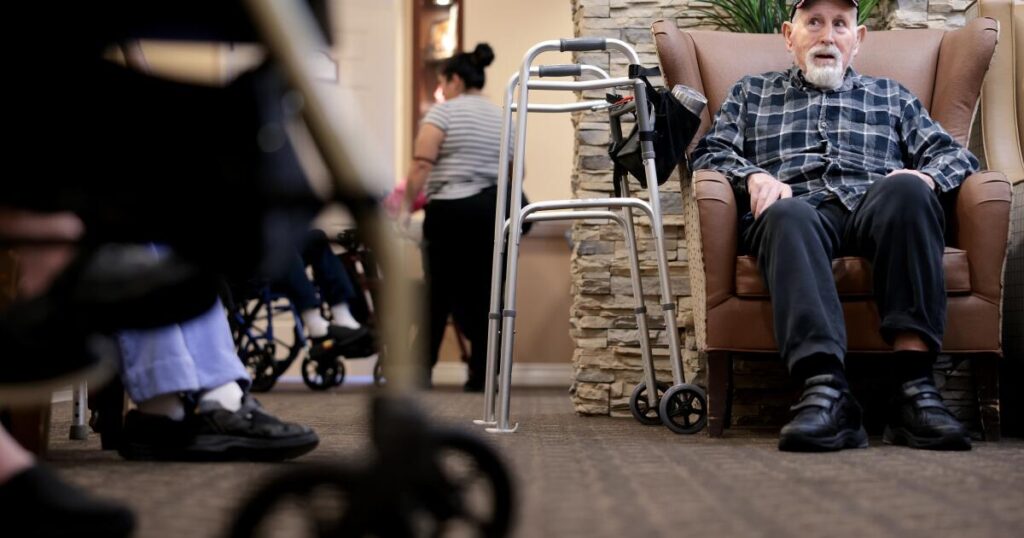
Jennifer Aust visits her father as much as she can at Silverado, where he can be found wearing his trademark flannel and a Redondo Beach Fire Department baseball cap.
Years before his diagnosis, Pat Aust advocated to install a sprinkler system inside the care home. Now, he is a staple of the facility’s weekly car collector club, which Silverado staff decided to start after learning about his legendary passion for classic cars.
“Part of me is fighting this, because I know that’s what my dad would do,” Jennifer Aust said. “My dad would do what was best for others, and I feel like I have to be his voice at this time.”
The post Nearly 100 dementia patients are being evicted from their Redondo Beach home. Why it’s sparking outrage appeared first on Los Angeles Times.