Last year, we wrote in the Los Angeles Times that the Centers for Medicare and Medicaid Services was done chasing criminals after we’d already handed them money. We said we were building something different — a prevention-first operation that would detect and stop fraud before the check cleared, not attempt to claw back lost funds years later.
Skeptics had reason to doubt. Government agencies announce transformations all the time. The results usually don’t follow.
So here are the numbers:
In fiscal year 2025, Medicare savings from the prevention of fraud, waste and abuse hit $42 billion — an almost 60% increase over the prior year and the highest figure ever recorded in the program’s history. That’s not just a line on a spreadsheet. In Medicare’s coffers, $42 billion can pay for 3 million knee replacements, 7 million cataract removals or 37.5 million routine colonoscopies.
Finding and stopping fraud can be expensive, but return on investment also hit an all-time high — more than $22 saved for every dollar spent on program integrity.
And here’s the stat we’re proudest of: Nearly 70% of those savings came not from recovering money already out the door, but from prevention-first actions — revoking fraudulent providers before they could continue billing, stopping improper claims at the point of submission and intercepting payments through prepayment controls before they ever cleared.
We promised big changes. The scoreboard says the Centers for Medicare and Medicaid Services delivered.
One key to success has been to finally acknowledge the scale of the problem and adapt appropriately. Healthcare fraud spreads like wildfire. Left unchecked, a single bad actor can become a network, a network can become an industry, and billions of taxpayer dollars can go up in smoke.
Many of these schemes are run by organized criminal enterprises that rotate billing addresses, shuffle ownership structures across state lines and exploit federal programs with the operational sophistication of a successful business. They are fast. They are coordinated. And for years, they understood exactly how slowly government moved.
It was time to update tactics and take back the initiative. No more chasing smoke after the flames have spread. That meant monitoring the healthcare ecosystem, identifying vulnerabilities and conducting “controlled burns” to eliminate the conditions that enable fraud to jump from one community, provider or program to the next. This shut scams down early, before they became vast and costly.
The Centers for Medicare and Medicaid Services now sees networks, not just claims. By integrating enrollment records, billing histories and utilization patterns across programs simultaneously, we can identify coordinated fraud schemes — not isolated anomalies — in time to stop payment. That is not an incremental improvement. It is a different kind of enforcement entirely.
When our data signaled systemic abuse in the home health and hospice sector, we did not open a series of haphazard individual audits. We began a coordinated national crackdown, imposing a nationwide enrollment moratorium and suspending 808 providers. In California alone, suspended providers had billed $1.4 billion in 2025. And when those providers challenged the suspensions, investigations upheld 80% of decisions — because the enforcement was built on data, not guesswork.
Then there is the action that has no real precedent in this program’s history: For the first time, all 50 states have committed to coordinated Medicaid provider revalidation — a simultaneous, nationwide reassessment of who should still be enrolled and billing. If we get this right, then for the first time in the program’s history, there will be nowhere for scammers to hide.
Early results appear to bear that out: In Minnesota, for example, more than half of high-risk providers have not yet passed revalidation. A decade ago, that kind of coordinated accountability across every state Medicaid program was simply not possible. Now it is, and fraudsters are finding that out.
The Centers for Medicare and Medicaid Services has also stepped up cooperation with law enforcement.
Multistate, multiprogram fraud schemes used to be nearly impossible to prosecute efficiently because the evidence was scattered across jurisdictions. That’s changed thanks to cutting-edge data analytics and unprecedented cooperation that brings in state and federal law enforcement as well as other agencies.
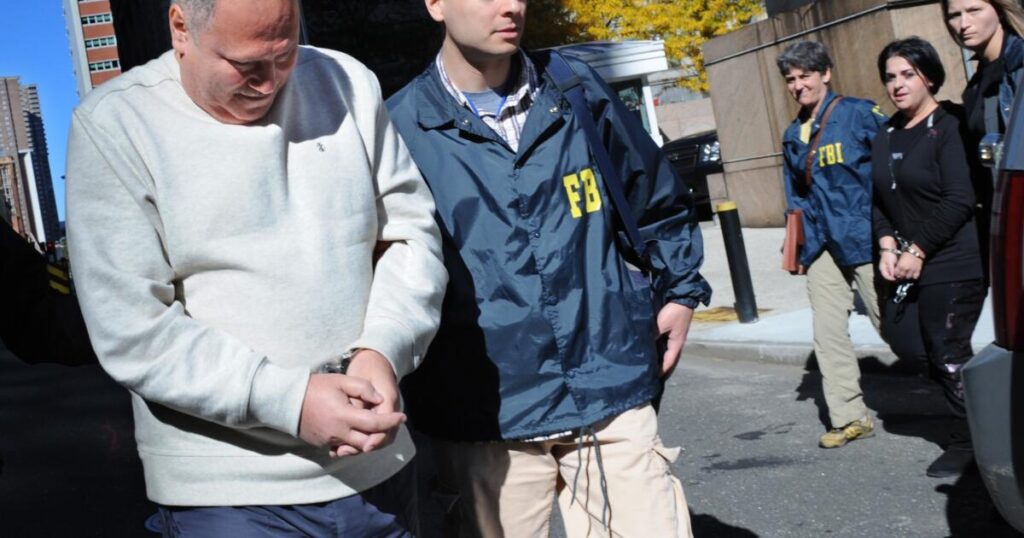
In 2025, the Centers for Medicare and Medicaid Services delivered 372 fraud referrals to federal law enforcement in cases covering $3.7 billion in billing. And when we say “referral,” we don’t mean a vague tip. We mean an organized, cross-referenced data dossier built to support prosecution. In April, such analytics helped the FBI’s Los Angeles field office and First Assistant U.S. Atty. Bill Essayli of the Central District of California bring charges against eight people accused of stealing more than $50 million from Medicare.
The results of this last year have proven that government can move faster than fraudsters, but one good season doesn’t mean we can sit back and watch dry underbrush pile up again.
Staying one step ahead of the fraudsters will require sustained investment in the data infrastructure, cross-agency partnerships and enforcement capacity that make prevention possible. It will require Congress to protect and build on the analytical tools that generated these record savings. And it will require every state Medicaid program to stay at the table for the coordinated revalidation work that is already rooting out bad actors nationwide.
We’ve built something that works — a transformative new anti-fraud strategy that’s saved $42 billion for the patients who rely on Medicare and the taxpayers who fund it. The task now is to make sure it keeps working.
Dr. Mehmet Oz is the administrator of the Centers for Medicare and Medicaid Services. Kim Brandt is the deputy administrator and chief operating officer.
The post Medicare’s new approach to halting fraud is paying off appeared first on Los Angeles Times.