Andrew B. Mikula is the chief housing economist at the Pioneer Institute.
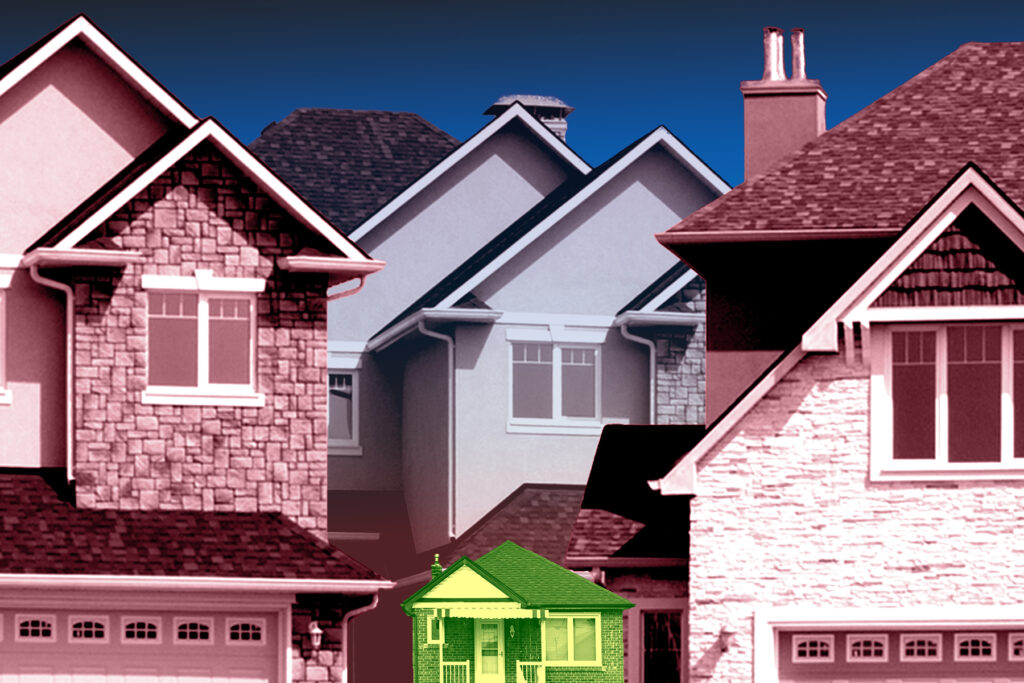
Recently dubbed the hardest state in the country for young adults to buy a home by the New York Post, Massachusetts is a cautionary tale for other states struggling to keep up with the demand for affordable housing. The state’s failure to build and maintain starter homes is squeezing both ends of the age pyramid — driving young families to greener pastures and keeping older adults stuck in homes too big for them.
Between May 2019 and May 2026, the number of active listings in the state fell by more than one-third, and the median home value rose by 50 percent. Simultaneously, the number of young families skyrocketed. Massachusetts added nearly 75,000 households headed by people younger than 35 between 2016 and 2022. Young adults looking for starter homes are finding themselves out of luck, since a mountain of red tape has made small, affordable homes an endangered species in the Bay State. I exchanged emails with a younger adult looking for a home, an older adult looking to downsize and a Massachusetts home builder to understand the challenges and incentives facing the state’s housing market.
“There just isn’t anything I can afford,” the 29-year-old resident of Massachusetts’s South Shore wrote to me. “Or, the house is so far gone that I’d probably spend hundreds of thousands of dollars to fix it up.”
She lives with her parents and dreams of living in a two-bedroom house with a vegetable garden that could cut down on her long daily commute to Cape Cod. If she and her boyfriend could find jobs and housing elsewhere, she would consider moving to another state.
She wouldn’t be alone in fleeing. Between July 2024 and July 2025, Massachusetts lost 33,000 more residents to other states than it gained. IRS data and survey results suggest that those leaving are disproportionately young and that housing costs are pushing them out.
Traditionally, small, reasonably priced “starter homes” have helped first-time buyers establish themselves in a community and build equity from a young age. But today, relatively few such homes are built. In 1984, 24 percent of new single-family homes sold in the United States had two or fewer bedrooms. In 2025, only 5 percent did.
Massachusetts is also replacing the few starter homes that remain there, due to a mismatch between property values and house size. The state has 8,000 fewer single-family homes with two or fewer bedrooms than it did in 2010, mostly because smaller homes are torn down and replaced by larger ones.
“We might benefit from a smaller home,” a 70-year-old from the Boston suburb of Wellesley said, citing the physical and financial demands of maintaining her multilevel colonial. “But things would have to be drastically different in the real estate world for us to find a home with half the space and a substantially lower price than our current home.”
She and her husband put a deposit toward an apartment in a retirement community nearby, but the long waiting list means they probably can’t move in for almost ten years.
Developers are building large homes for a variety of reasons, including strict building codes, rising costs and buyer preferences. But zoning restrictions are a big driver that local governments can address directly.
“I don’t know of any city or town in Massachusetts where land is zoned to incentivize the building industry to build starter homes,” explained the developer, a home builder based in Beverly, Massachusetts. “Large lot size requirements and bans on any typology besides detached single-family force us to build large homes to recoup costs.”
Massachusetts can find its way out of this housing bind, but local and state lawmakers will have to cut through the regulations suffocating starter-home construction.
Municipalities should allow townhouses and condos to be built in more places. Shared walls, utilities and internal circulation can help drive down costs. In May 2026, the median price for a detached single-family home in Massachusetts was $697,000, compared with $548,000 for a townhouse and $587,000 for a condo or co-op. But even in metropolitan Boston, most communities don’t allow townhouses to be built in any zoning district without a discretionary review process.
Local governments should also encourage building smaller homes on smaller lots. In 2022, the average value of a single-family residential land parcel in Massachusetts exceeded $1 million per acre, which is priced into the final sales value of the home. Massachusetts municipalities rarely allow residences to be built on lots smaller than 10,000 square feet, about a quarter of an acre. Meanwhile, in 2025, the median lot size for a new single-family home sold in the western U.S. was 5,969 square feet.
Massachusetts should further empower homeowners to build small residences on their properties. The Bay State legalized accessory dwelling units — small homes located on the same lot as larger primary dwellings — in 2024. But lawmakers could make it even easier to build ADUs by standardizing zoning and infrastructure regulations across municipalities.
Without a new wave of starter homes, Massachusetts will continue to underserve young families and seniors, ultimately hampering the state’s economy, exacerbating the out-migration trend and making it harder for extended families to stay together. As housing affordability challenges have multiplied around the country, Massachusetts is a striking example of why it is necessary to build entry-level homes for the small families and empty nesters that make up a growing share of households.
The post In this housing bind, both the young and the old lose appeared first on Washington Post.