This year is shaping up to be a bad one for the spread of cyclospora, a parasite transmitted through contaminated food and water that causes severe diarrhea.
At least 531 cases of cyclospora infection have been confirmed across the United States, said Dianna Blau, acting chief of the Parasitic Disease Branch at the Centers for Disease Control and Prevention. That’s four times as many cases as were reported this time last year, she said, with many states showing higher than usual numbers. At least 21 states have reported cases.
The C.D.C. figures are lagging behind those reported at the state level, though, with many more cases to come, Dr. Blau said. On Wednesday, for instance, health officials in Michigan reported 992 infections — a nearly 500 percent increase from the numbers reported the week before. Michigan typically identifies only about 50 cases of cyclospora per year.
Health officials in several other states, including New York, Ohio and Illinois, are reporting higher than usual numbers of cases.
The C.D.C. does not know what is causing these infections, Dr. Blau said. She added that there were probably multiple sources of contamination.
In any event, said Dr. Thomas Moore, an infectious disease specialist and clinical professor of medicine at the University of Kansas School of Medicine-Wichita, this spike in illness is “definitely abnormal” and alarming.
The good news, he said, is that cyclospora infections rarely cause serious complications and are not typically life-threatening. Still, he added, it’s a good reminder to take food safety seriously.
What is cyclospora? How is it transmitted?
Cyclospora is a microscopic parasite that infects people when they consume food or water that has been contaminated with human feces containing the oocysts (or eggs) of the parasite, said Keith R. Schneider, a professor of food safety at the University of Florida.
Cyclospora infections tend to rise from May through August in the United States. So it’s normal to see more of them this time of year, he said.
But the “huge spike” in cases, especially in Michigan, is clearly concerning, Dr. Schneider said. “Something is going on right now in that area.”
After ingesting the parasite, it can take from two days to two weeks or more for it to cause illness. The main symptom is watery diarrhea, with frequent, sometimes “explosive” bowel movements.
An infected person will then excrete the oocysts in their feces, but the parasite is not infectious in the feces until a week or two later. Because of this lag, the illness does not seem to spread directly from person to person, Dr. Schneider said.
And since it can take a while for symptoms to develop, it can be challenging to identify the source of an outbreak. The contaminated food or water would have been consumed long before someone became sick, Dr. Schneider said.
The current case counts are likely “the tip of the iceberg,” Dr. Moore said, with “many more coming down the road.”
How can you reduce your risk?
Past cyclospora outbreaks in the United States have mainly been linked to fresh produce, including raspberries, basil, cilantro, fruit mixes, snow peas, snap peas, lettuce and salad mixes. They have been caused by both imported and domestic fruits and vegetables and those prepared at home and in restaurants, said Donald Schaffner, chair of the food science department at Rutgers University.
Because the cause of the recent infections is unknown, the best way to prevent illness is to follow standard hygiene and food safety practices, said Dr. Adam Ressler, an infectious disease physician with Michigan Medicine.
Always wash your hands with soap and water after using the bathroom and before preparing food, Dr. Moore said. Alcohol-based hand sanitizers do not kill cyclospora, he said, but soap and water does.
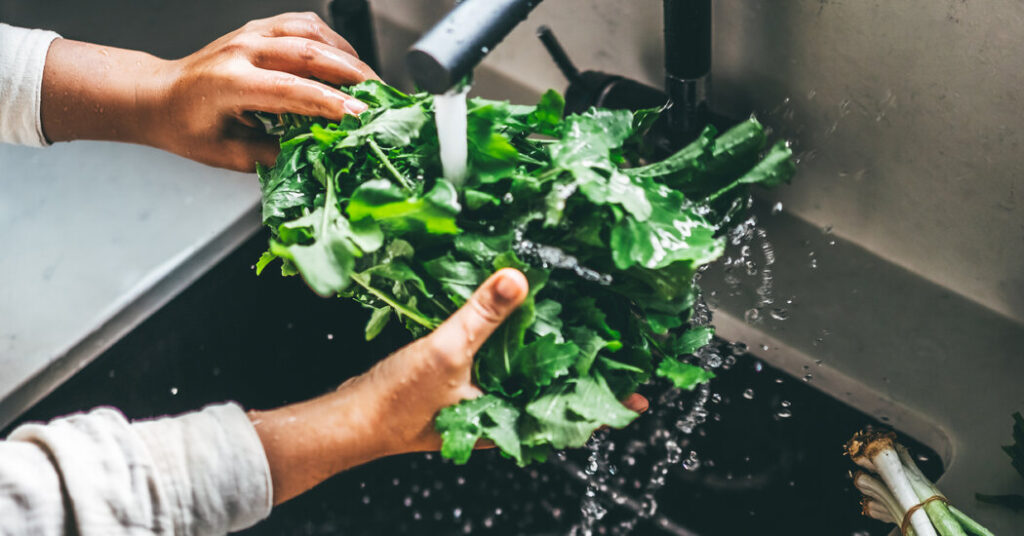
Rinsing fruits and vegetables with water is always a good practice, Dr. Moore said. Some cyclospora may still cling to contaminated produce after rinsing, but it will reduce their numbers and in turn can reduce your risk of getting sick or make the illness less severe, he said.
Cleaning produce with vinegar or other solutions is generally no more effective than doing so with running water, Dr. Schaffner said.
Produce is safest when heated to 158 degrees or higher, which kills cyclospora, according to Michigan’s health department. The department has also issued advice for specific types of produce that have been implicated in previous outbreaks:
-
Cilantro and basil should be washed thoroughly under running water, while separating the leaves.
-
For green onions, trim the root end and remove the outer layer, and wash thoroughly under running water.
-
Snow peas should be washed under running water while rubbing the surface.
-
Raspberries are difficult to clean because their bumpy surface provides crevices where the parasite can hide. Consider cooking them in pies or jam. Freezing berries may reduce the number of parasites, though probably not entirely.
Since bagged salad mixes have been associated with past cyclospora outbreaks, Dr. Ressler suggested buying heads of lettuce instead. Discard the outer layer of leaves, he advised, and wash the inner leaves under running water before consuming them.
You can’t eliminate your risk completely, Dr. Schneider said. “There is an inherent risk with any raw food that you eat.”
It’s also possible that people are being sickened by contaminated water, including through drinking or swimming, Dr. Schaffner said. Keep an eye out for local public health advisories about water quality, he added.
If you live in an area with a high case count, like Michigan, and you’re concerned, he said, you can consider switching to bottled or boiled drinking water for the time being. And, Dr. Schneider said, you might also consider opting for cooked produce over fresh.
What should you do if you have symptoms?
The symptoms of cyclospora infection — including diarrhea, nausea, malaise, cramping and bloating — look like those of a typical stomach bug, Dr. Moore, of the University of Kansas, said.
Because of that, many cases “fly under the radar,” he added. People may ride the illness out at home rather than see a doctor, and doctors may not always test for cyclospora. In most cases, people will recover from the illness on their own, with symptoms resolving within about a week or so, Dr. Moore said.
Staying hydrated is key, he said, so drink plenty of fluids. He recommended making a simple rehydration solution, with water, sugar and salt, for example, to replace electrolytes and fluids.
If your symptoms are severe or if they linger for more than a few days — especially if you live in an area with a lot of cases — it’s worth seeing a health care provider and getting tested for cyclospora, Dr. Ressler said.
Children, older adults and people who are pregnant or otherwise immunocompromised are at risk of more severe illness and should also seek treatment, Dr. Moore said.
If you test positive for cyclospora, a doctor can prescribe antibiotics that can reduce symptom severity and speed recovery, Dr. Ressler said. If left untreated, symptoms like chronic diarrhea can sometimes linger for months, he added.
Talk to a doctor before using over-the-counter anti-diarrheal medications like Imodium or Pepto-Bismol, Dr. Ressler said. Depending on the type and severity of illness, these medications are not always recommended.
Amanda Schupak contributed reporting.
The post How to Stay Safe From the Severe Stomach Bug That’s Going Around appeared first on New York Times.