The number of students admitted to Ph.D. programs this fall dropped 15 percent from the previous year, according to data from over 50 top research universities, raising fears that the nation’s capacity to produce new science could be diminished.
The decline is driven, in part, by a chaotic and unpredictable federal funding environment under the Trump administration, as federal cuts are promised and then reversed, and budgets remain unclear.
A reduction in doctoral students could mean fewer scholars at universities to teach and mentor undergraduates. Higher education leaders also worry that, if the declines continue, there will be fewer researchers to power a rapidly evolving scientific work force.
The data showing the decrease comes from 55 universities, all of them members of the Association of American Universities, an invitation-only organization that includes 69 of the most prestigious research institutions in the United States. The data collection was conducted by a another group, the Association of American Universities Data Exchange.
Schools in A.A.U. confer half of the nation’s research doctorates, according to the association.
“We are at risk of losing a whole generation of new talent because of the reduction in the capacity to support those students,” said Toby Smith, vice president for policy of the A.A.U.
University leaders and research advocates cite many reasons for the declines in new doctoral students. Key federal agencies, such as the National Institutes of Health and the National Science Foundation, have been funding fewer research grants. The wealthiest institutions also face a new federal tax on their endowments.
But the most cited reason in interviews was the unreliable nature of federal funding under the Trump administration. The administration proposed major cuts to federal research agencies last year, but Congress restored the funding. It is again proposing big cuts. While Congress may again reverse the administration’s proposed reductions, the uncertainty makes it hard for schools to make multiyear commitments to doctoral students.
The administration also abruptly ended thousands of research grants last year, arguing that they did not align with the government’s priorities. The administration restored many of the grants after judges deemed the eliminations illegal and arbitrary, but research advocates say the whiplash was damaging.
Hiring for research projects is not like turning a light switch on and off, they said, and disruptions can have a long tail.
Mr. Smith said declines in funding at agencies like the National Science Foundation, where new awards have “dwindled to a trickle,” had disproportionately hurt new scholars hoping to start their scientific careers.
Travis York, a director at the American Association for the Advancement of Science, said developing research talent “is more like planting an orchard than filling a warehouse.”
Dr. York, who has a doctorate in higher education administration, said the consequences of a decline in new Ph.D. students because of funding uncertainty “will not simply be felt on campuses this fall and next year; it really will ripple across the U.S. innovation ecosystem for years to come.”
In a statement, Liz Huston, a White House spokeswoman, said President Trump was “committed to keeping America the world leader in scientific innovation.”
“That means funding real science, not left-wing ideology,” she said. “For years, federal grant dollars were funneled into politicized research with little accountability to taxpayers or results to show for it. This administration is ending that waste and restoring a simple standard: Grants should go to the best science, not politics. That’s how we maintain American global dominance.”
The data provided to The New York Times show only overall reductions and do not show breakdowns by discipline. But anecdotal data and announcements from several universities suggest they are hitting science and humanities programs across the board.
Declines this fall also appear to be stacking on top of losses in Ph.D. student capacity from last year. The A.A.U.D.E. collected data for fall 2025 and found that, for the 42 schools that responded, new enrollments dropped by 11 percent from the previous year.
Enrollments and admissions are not the same, but tend to be good proxies for each other in doctoral education. The central takeaway, A.A.U. officials said, is that the data shows two years of a “substantial reduction in the number of Ph.D. students being admitted and ultimately enrolled at major research universities.”
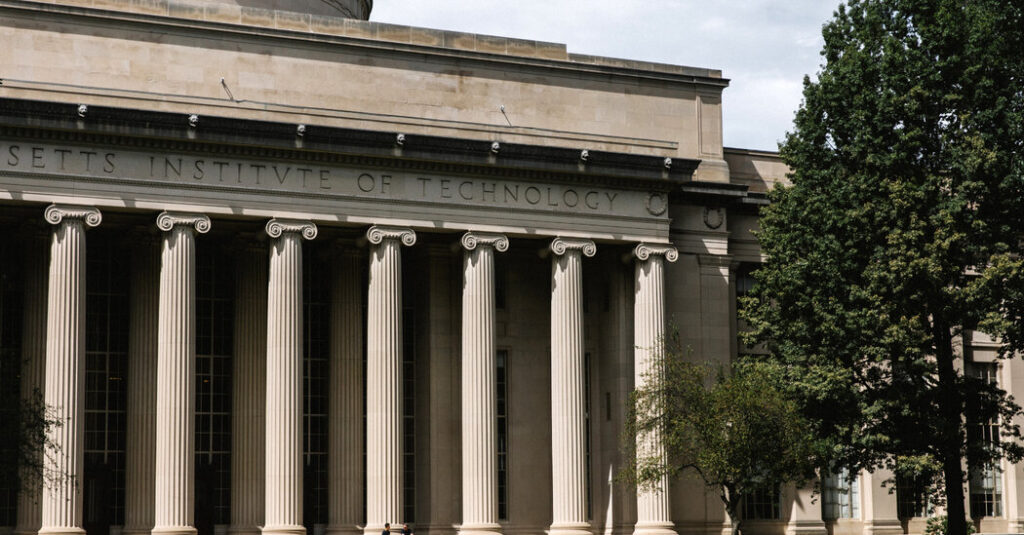
Sally Kornbluth, the president of the Massachusetts Institute of Technology, said in a message to the campus in May that, while Congress restored some agency cuts, the money was “not actually flowing to M.I.T. the way it typically has.” She said new federal research awards were down 20 percent and also cited the effects of a new tax on the school’s endowment.
The school is expecting nearly 20 percent fewer new graduate students, with only a handful of exceptions, Dr. Kornbluth said. The loss adds up to about 500 students, which she said would hurt undergraduates who will have fewer research mentors.
“It’s a loss for the nation,” she said. “When you shrink the pipeline of basic discovery research, you choke off the flow of future solutions, innovations and cures — and you shrink the supply of future scientists.”
The California Institute of Technology, another of the nation’s premier research institutions, said it would reduce its new graduate students by 40 percent in fall 2026 across the board. The reason was not specific cuts, but a lack of funding certainty, David Chan, the university’s dean of graduate studies, said in an interview.
“The hope is to go back to historic numbers, but we don’t know when that will happen,” he said, adding that decisions for fall 2027 have not been made yet “given how quickly things are changing.”
Jessica Werk, the astronomy department chair at the University of Washington, said the institution was facing a mix of state budget cuts and worries about the Trump administration’s proposals.
“There’s all these external factors that are just kind of pressing in on us,” said Dr. Werk, whose department typically hires about four new doctoral students a year from an application pool of about 400.
She decided not to take any new doctoral students in fall 2026 — the first time at least since 2016, when she joined the department. She said the department planned to hire again in fall 2027.
The data from the A.A.U. institutions also show a decline in applications to Ph.D. programs — a gauge of demand — driven by international students. While applications from domestic students increased by 3 percent, applications from international students fell by 21 percent.
The Trump administration has taken a series of actions that experts say have dampened the desire of international students to study in the United States, including delaying visa interviews, expanding a ban on travel from certain countries and screening the social media posts of applicants for speech deemed anti-American.
The decline in applications from international students, Mr. Smith said, comes as other countries like China are making a strong recruitment push “to take advantage of the United States’ unforced errors.”
The post Research Universities Are Admitting Fewer Ph.D.s, a Bad Sign for Science appeared first on New York Times.