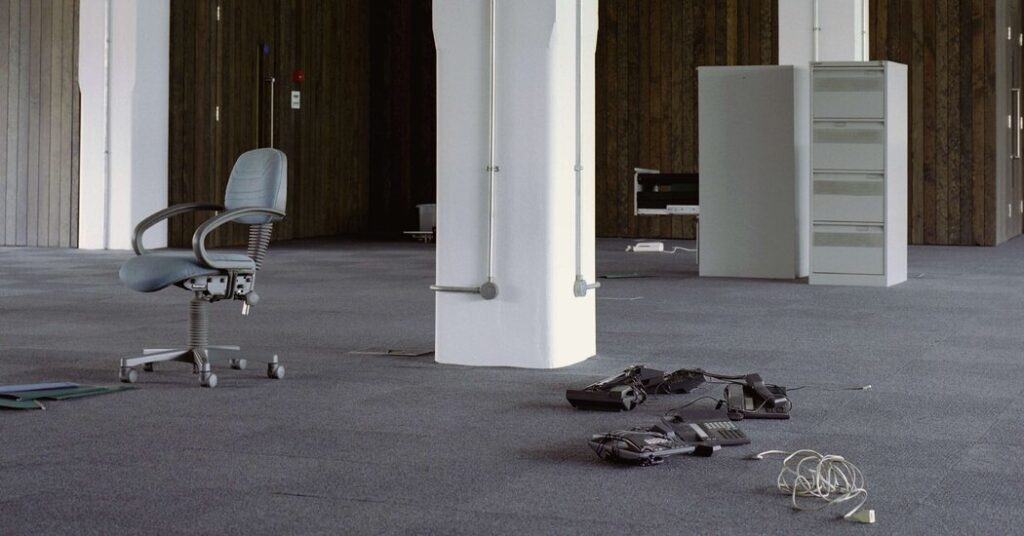
I spent the past few weeks talking to people across the country who are looking for work in our low-hire, low-fire labor market, where hiring rates are nearly as low for steady jobs as they were in the aftermath of the Great Recession, despite an otherwise fairly decent overall economy. While the hiring market has perked up a bit in recent months, the latest jobs report suggests that wage growth has been outpaced by inflation in the past year. The number of unemployed people who have been out of work for over six months is the highest it’s been since the pandemic. This job market is not just bad for young people, it’s bad for everyone looking.
None of the men and women I spoke to are sitting idly by, twiddling their thumbs. They are doing every possible thing they can to spiff themselves up for a new role: taking classes to get a new certification and going back to school for a year to get a master’s degree. They are attending every in-person networking event under the sun. They are all over various job sites, applying for appropriate roles every week, if not every day, even though they worry that some of those job listings might be scams.
They’re extremely aware that an approximate 90 percent of companies use artificial intelligence at some point in the hiring process, so they’re also trying to contort their résumés to appeal to the bots, even though how those tools determine their suitability is a “black box.”
As I was speaking to job seekers, the image that kept popping into my head is the waiting room in the 1988 movie “Beetlejuice.” If you haven’t seen the film, this scene features a newly dead couple, Adam and Barbara Maitland, who are just realizing that they are, in fact, not alive. While trying to figure out their new reality, they end up in a kind of bureaucratic, fun-house mirror underworld, surrounded by people with shrunken heads and green skin, where they are waiting for their case worker.
The Maitlands find a book in their house, “Handbook for the Recently Deceased,” but it’s written in such thick jargon they don’t understand a word of it. In the underworld, when they ask questions, people roll their eyes and say they should have studied the manual harder, telling them things like, “It’s all in the handbook!” and “The intermediate interface chapter on haunting says it all.”
Looking for a job in 2026 is a version of this purgatory.
Nena Caviness, 46, who works in manufacturing and retail, has been looking for a job for six months. She uses artificial intelligence to sharpen her résumé and find the best fitting roles, and says she has sent in over 200 applications. She has made it to the interview stage a few times, and each time it involves an arduous set of take-home assignments and in-person interviews. “I can run a flawless process, prepare for 40 hours, perform well across multiple panels, reach the final round three separate times and still end with nothing. ” Caviness said.
Caviness’s experience is not unique, and the description that kept coming up among both the job seekers and economists I spoke to was: strange. Having the economy in a low-fire, low-hire equilibrium “is actually pretty unusual,” said Erika McEntarfer, a research scholar and a distinguished policy fellow at Stanford’s Institute for Economic Policy Research, who affirmed my waiting room analogy. “I can’t recall a recent precedent.”
This strange and unusual job market is the result of a confluence of technological and political forces: A.I. kneecapping entry-level jobs, continuing tariff chaos and uncertainty around trade policy, federal funding cuts and the Iran War pushing up oil prices at the beginning of the year. (McEntarfer herself has been a victim of our chaotic and vindictive administration.) We don’t even know how to measure the full impact of artificial intelligence on the labor market yet, as my newsroom colleague Ben Casselman explained earlier this week, “Researchers can’t even agree on basic questions like how many companies are using A.I. or which workers are most vulnerable to the disruptions it could cause.”
The unknown unknowns about A.I. may be making employers gun-shy about creating new roles, or hiring to replace the wave of boomers who are retiring, said Cristian deRitis, a managing director and deputy chief economist at Moody’s Analytics. Artificial intelligence makes posting roles very easy for employers, which can lend the impression a business is thriving, he explained: “It’s costless to post openings everywhere and just kind of see what happens. If there’s a great candidate that all of a sudden shows up in your doorstep, maybe you advance it.” But maybe they don’t.
This uncomfortable ambiguity is affecting how we all feel about the economy, and how we counsel young people to live their lives. There is so much anxiety about whether the sensible financial choices of the past — going to college, buying a home — are still the most rational choices in an economy that may no longer reward those choices. As one 40-something with two graduate degrees who has been looking for work for over a year put it to me, “My job search has left me questioning every single decision I’ve made as an adult.”
Over the next few weeks, I am going to write about navigating the purgatory job market. I plan to cover the long tail of federal job and budget cuts and their impact on workers and what the day-to-day grind of searching feels like. I will try to pull back the curtain on how artificial intelligence is impacting the job hunt — for both employers and employees — and how it’s making everyone involved feel like they’re getting catfished.
While no one can really predict when or if this strange equilibrium might shift, I will also explore policy ideas that could make the experience much less Kafkaesque. It’s a tremendous waste to have motivated and experienced job seekers languishing, demoralized for years, and I do believe that we can make the search a little less ugly than it is right now.
My survey for job seekers is still open if you’d like to share your story. I may contact you for a future newsletter.
End Notes
-
I have long been mystified and intrigued by the tech-world obsession with self-tracking and human optimization; longtime readers will recall my dalliance with happiness trackers two summers ago. But I fear we have truly and permanently lost the plot now that there are trackers for bowel movements. The Cut’s Erica Schwiegershausen describes one of them: “The Dekoda is a sleek device that attaches to the inside of your toilet, with ‘discreet lenses’ that point down at the bowl (‘and nowhere else,’ the company takes pains to emphasize). For $449, plus $70 a year for the Kohler Health app, the camera records every time you use the bathroom, and then uses AI to analyze the contents of your toilet bowl and give you ‘personalized insights’ into your hydration levels and stool frequency, texture, and quantity.” Send me off on an ice floe where no one can track me anymore.
Feel free to reach out if you’re a rural none, or drop me a line about anything else here.
Read past editions of the newsletter here.
If you’re enjoying what you’re reading, please consider recommending it to others. They can sign up here.
The post The Purgatory Job Market of 2026 appeared first on New York Times.