With temperatures soaring into the triple digits in D.C. this week, keepers at the Smithsonian’s National Zoo have been working to make sure the animals stay cool.
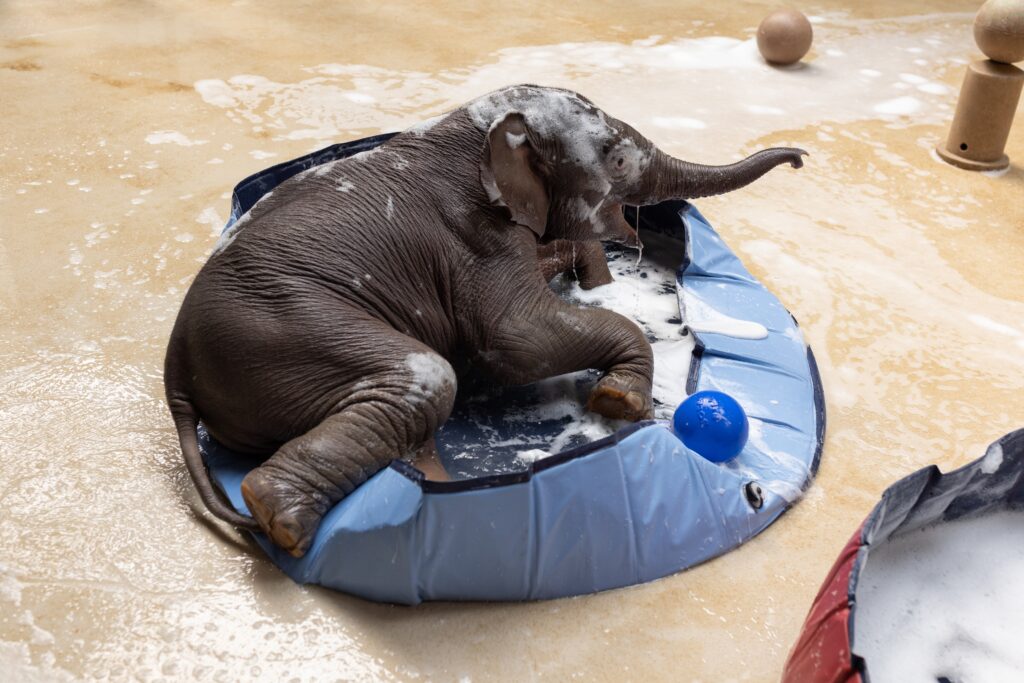
The zoo’s now 5-month-old baby elephant, Linh Mai, has been spending hours going in and out of the pool in her area before resting on the sandy shore nearby — “all tuckered out,” said Annalisa Meyer, a zoo spokesperson.
Recently, keepers did “supervised field trips” into one of the outdoor pools that is six feet deep in parts so Linh Mai can get acclimated to deeper water — without adult elephants around.
“She’s getting to know how to swim on her own,” Meyer said. The baby elephant also gets daily bubble baths.
For tigers and lions, zoo staff prepare “bloodsicles” — frozen treats made from blood that sometimes also include a bone or chunks of meat in them, officials said.
The elephants, gorillas and pandas get a fruitsicle, a snack-size frozen treat. Seals and sea lions get fish frozen in ice blocks.
Other animals have been keeping cool by using their pools more often, keepers said. Swamp monkeys are skillful swimmers and take dips in their pools to beat the heat.
To make sure otters stay sharp and have “enrichment” activities, keepers sometimes hide snacks in buckets of ice so they can cool off as they look for food. They also make special feeders and fill them with diluted juice as a fun way for lemurs to forage for a treat, according to zoo officials. Lemurs use their narrow snouts and long tongues to lick the juice out of tubes on the top — a method similar to how they’d eat nectar from flowers in the wild.
Flamingos and ibises use their long, thin featherless legs to release heat from their bodies. Meyer and zoo officials said when blood circulates in their legs, heat dissipates through their skin, a process called thermoregulation. And when a bird enters water and submerges its feet, experts said, it helps to give the process a boost and cool them off faster.
Fun — and smelly — fact: black-crowned night herons have what scientists call an “uh, oh — natural solution” to keeping cool. They poop on their own legs, a phenomenon known as urohidrosis, which lowers the birds’ body temperature as the moisture in the poop evaporates and cools off their skin. While smelly, it’s effective, experts said.
For those animals — including bobcats, lynx and clouded leopards — that may prefer to lay low in the heat, there are shady spots in their enclosures so they can get in an afternoon snooze out of the sun.
Officials at the zoo said caretakers are continuously looking for any physical signs an animal isn’t doing well with the heat. Animals will often pant excessively or appear lethargic if they’re overheated.
And for those who find the weather just too hot to bear, they can stay indoors.
Meyer said the zoo’s two sloth bear cubs “will 100 percent not be out in 111-degree heat” — even though their species is native to South Asia where it’s often hot. Because they’re so young, they’ll be kept inside.
The post How the National Zoo is keeping animals cool in the extreme heat appeared first on Washington Post.