Every year, over 2 million visitors flock to Mount Rushmore to see the heads of Washington, Jefferson, Roosevelt, and Lincoln, according to the National Park Service.
But more than 1,500 miles away, another set of presidents’ heads has unexpectedly become a tourist destination in its own right.
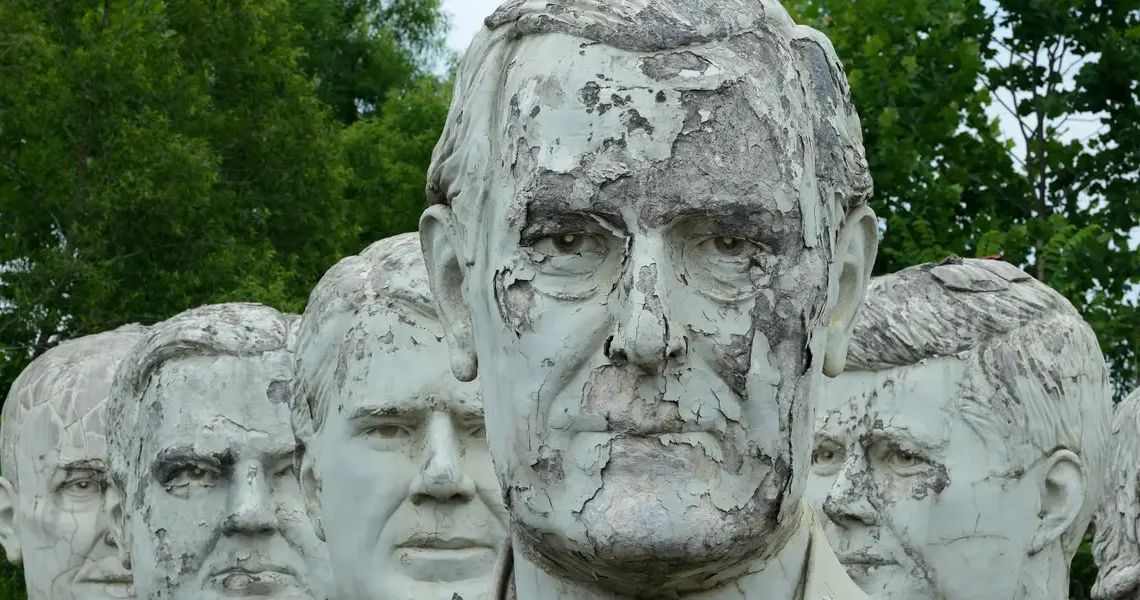
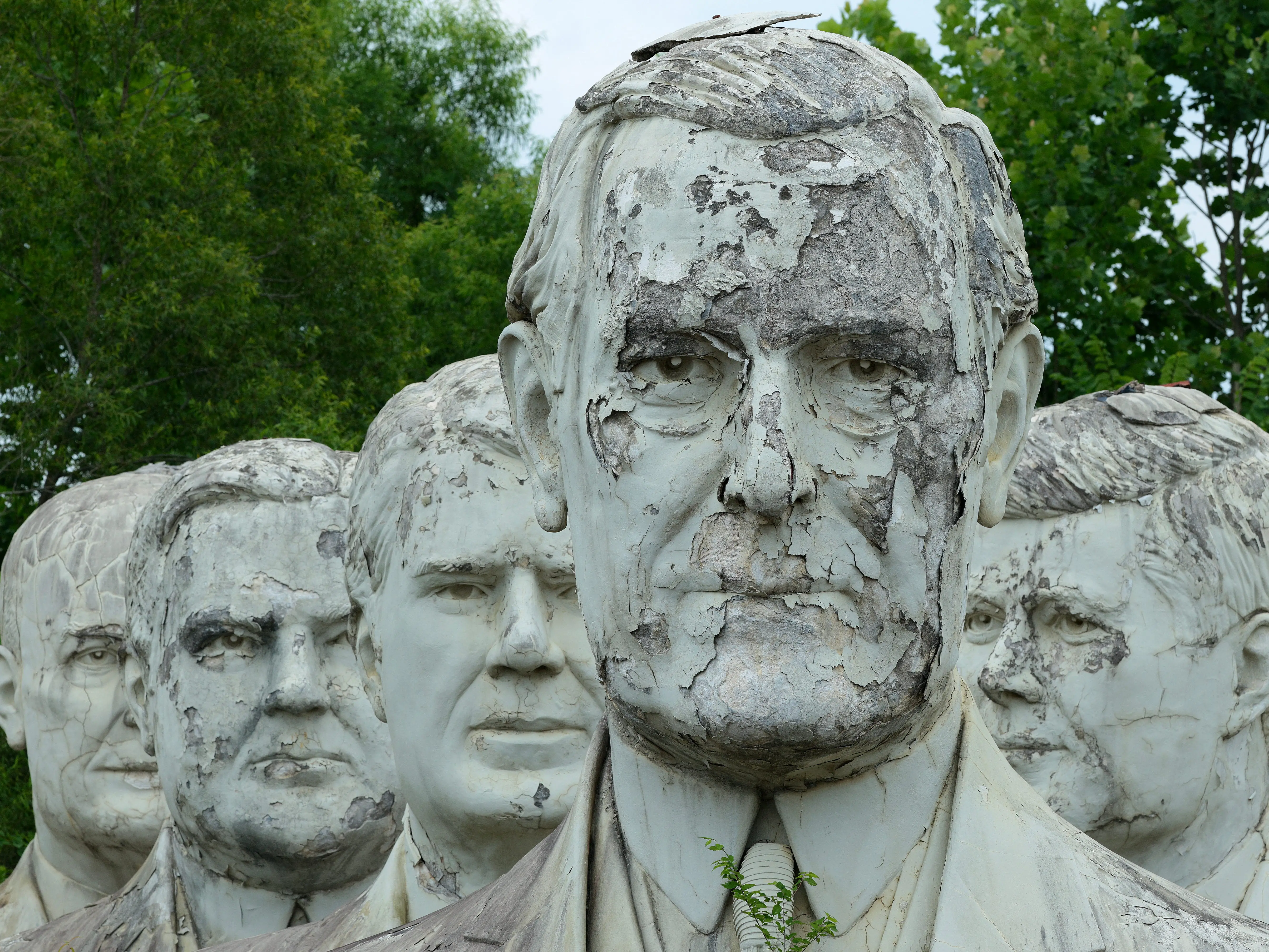
In Croaker, Virginia, about 10 miles north of Williamsburg, 42 presidential statues have been sitting on private land for over a decade, crumbling and decaying from the elements. The 15- to 20-foot-tall busts were initially an attraction at a park in Williamsburg that closed in 2010. They would’ve been destroyed, had a man named Howard Hankins not saved them.
Now, in partnership with photographer John Plashal, Hankins periodically offers tours of the heads on his property, as he hopes to do his part to preserve history. And while the heads still sit in disarray, their fate could soon change with a potential rezoning project.
See the story behind the crumbling heads and how they’ve gained a second life as a tourist destination.
The concrete and steel heads were created by Houston-based sculptor David Adickes.
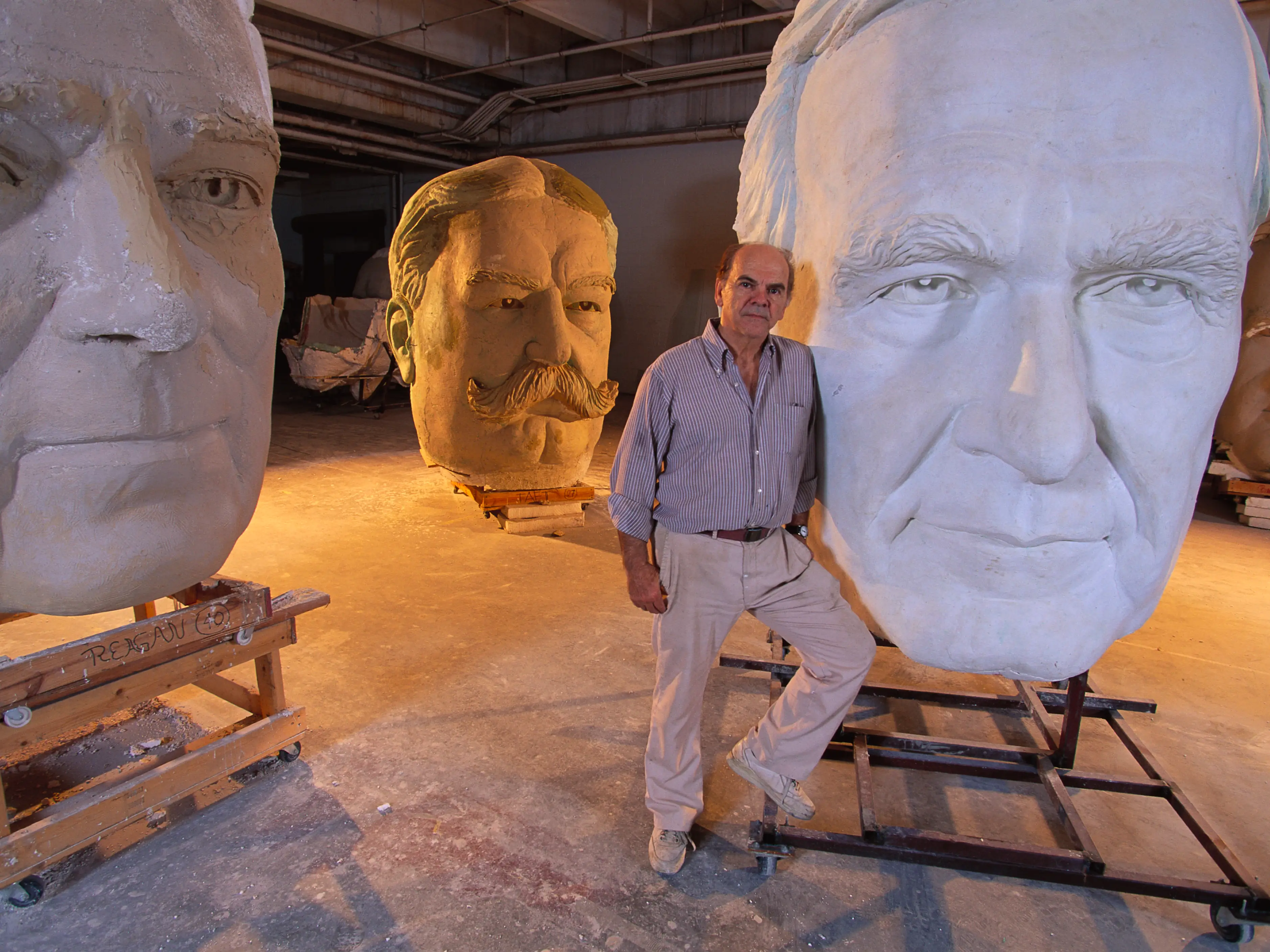
Adickes created three sets of statues inspired by his 1994 visit to Mount Rushmore. Some busts from the other sets have since been acquired, according to Adickes’ website.
For instance, Greater Houston’s Aldine Management District acquired a bust of John F. Kennedy in 2023, which now sits outside an entrance to the George H.W. Bush Intercontinental Airport in Houston.
Adickes died last year at the age of 98.
Initially, the busts resided in Presidents Park in Williamsburg.
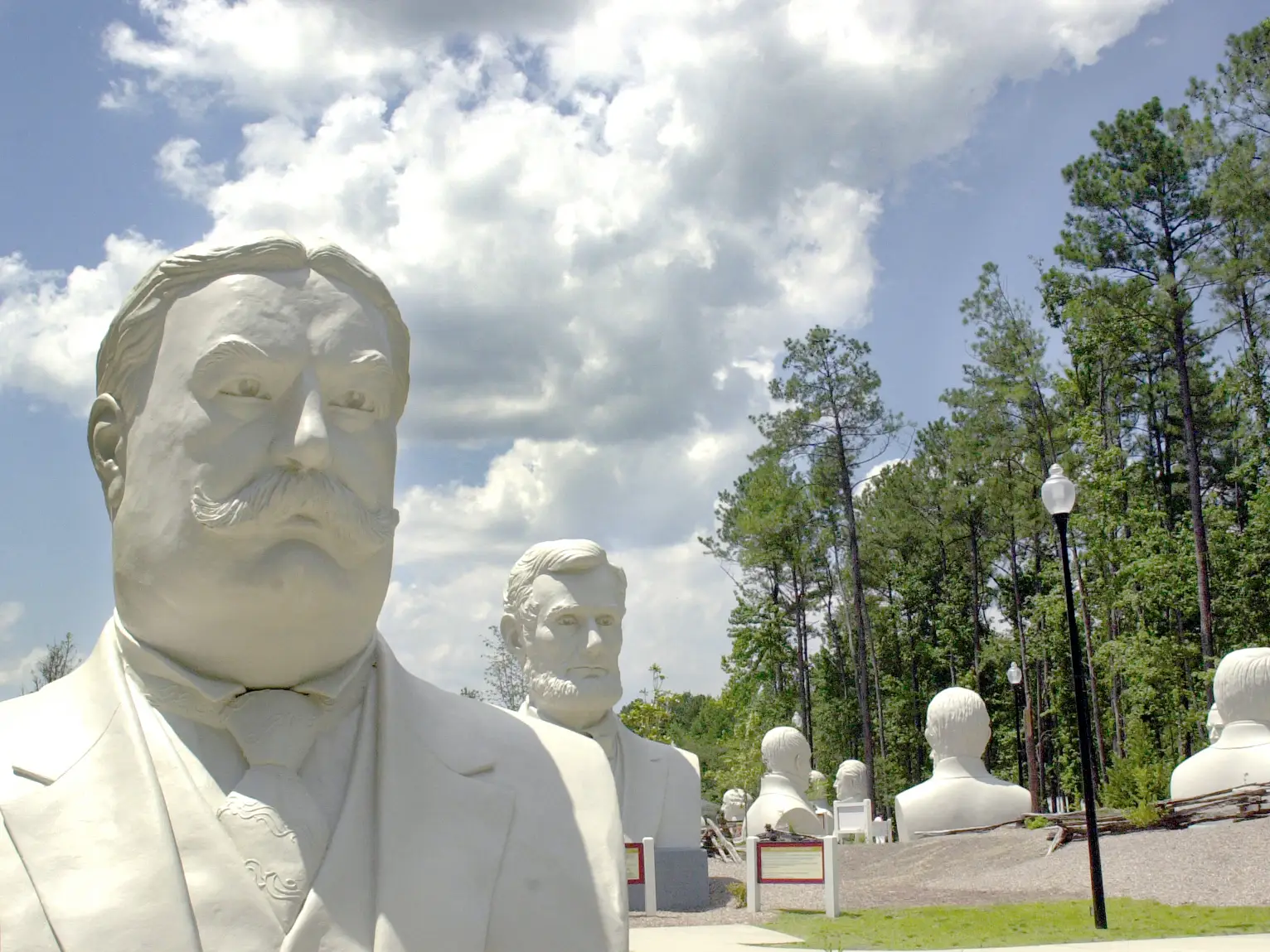
Created by local entrepreneur Everette Newman and Adickes, the attraction in historic Williamsburg operated from 2004 to 2010.
The busts, each measuring between 15 and 20 feet tall, were well maintained in the 10-acre park, which Hankins helped build.
“The unusual part of visiting Presidents Park would be standing close to these enormous heads,” Hankins told National Geographic in 2017. “You almost feel they’re looking at you from the way the sculptor did the work on them.”
The park closed because of financial troubles in 2010. The land was auctioned off in 2012 and eventually won by a car-rental business.
Hankins was then hired to destroy the heads.
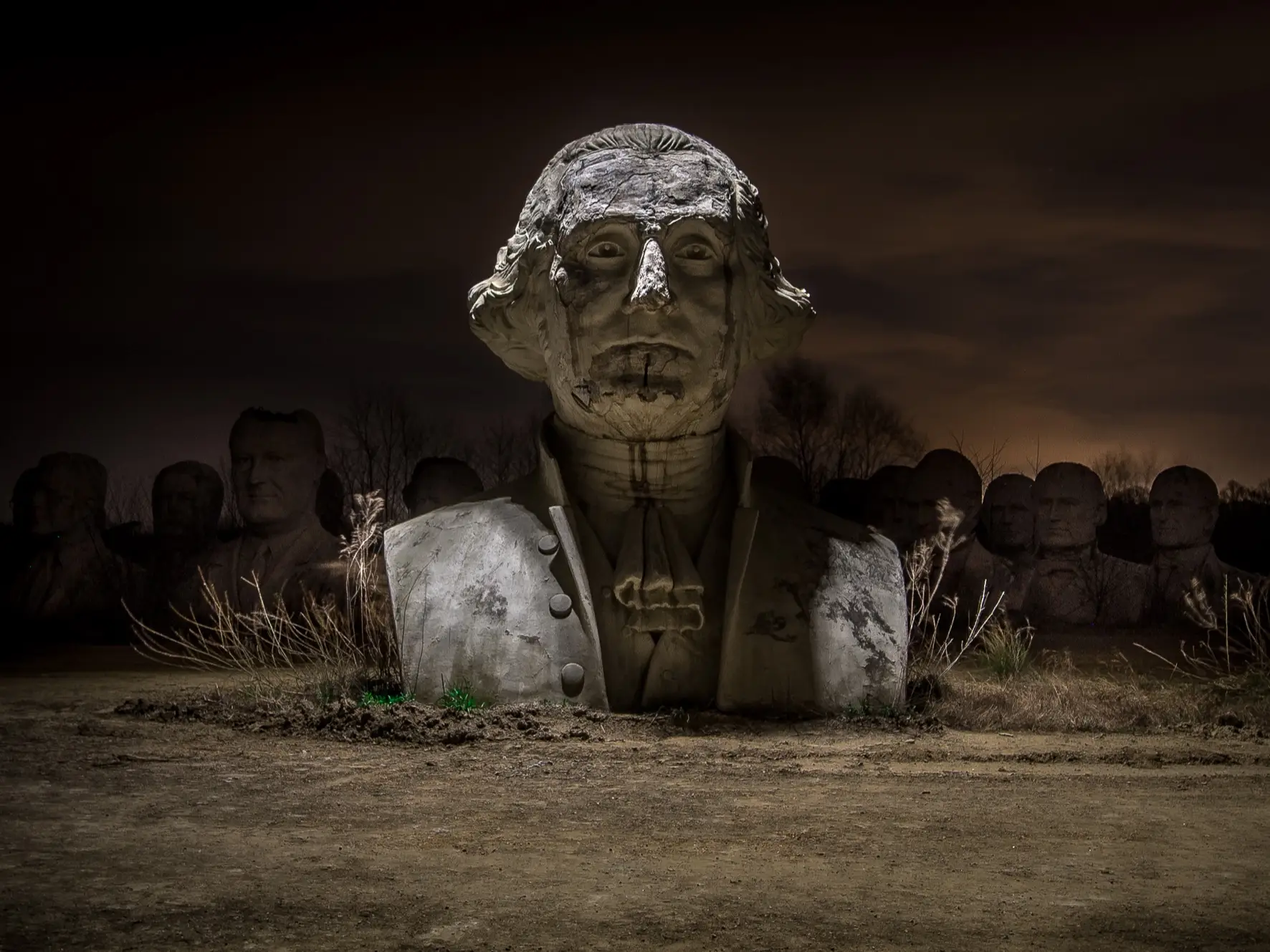
A commercial recycler by profession, Hankins was contracted to oversee the destruction of the heads in his industrial stone crusher. He ultimately didn’t have the heart to crush them.
“Rather than doing that, he spent tens of thousands of dollars out of his own money to move the heads, which weigh over 20,000 pounds each, to his property to save them,” photographer John Plashal told Business Insider in 2020.
The property, a 400-acre farm and industrial recycling space, is located just over 10 miles north of Williamsburg in rural Croaker, Virginia. By Hankins’ estimate, the process of transporting the heads cost him about $50,000, Smithsonian Magazine reported.
Some of the statues were damaged in the move.
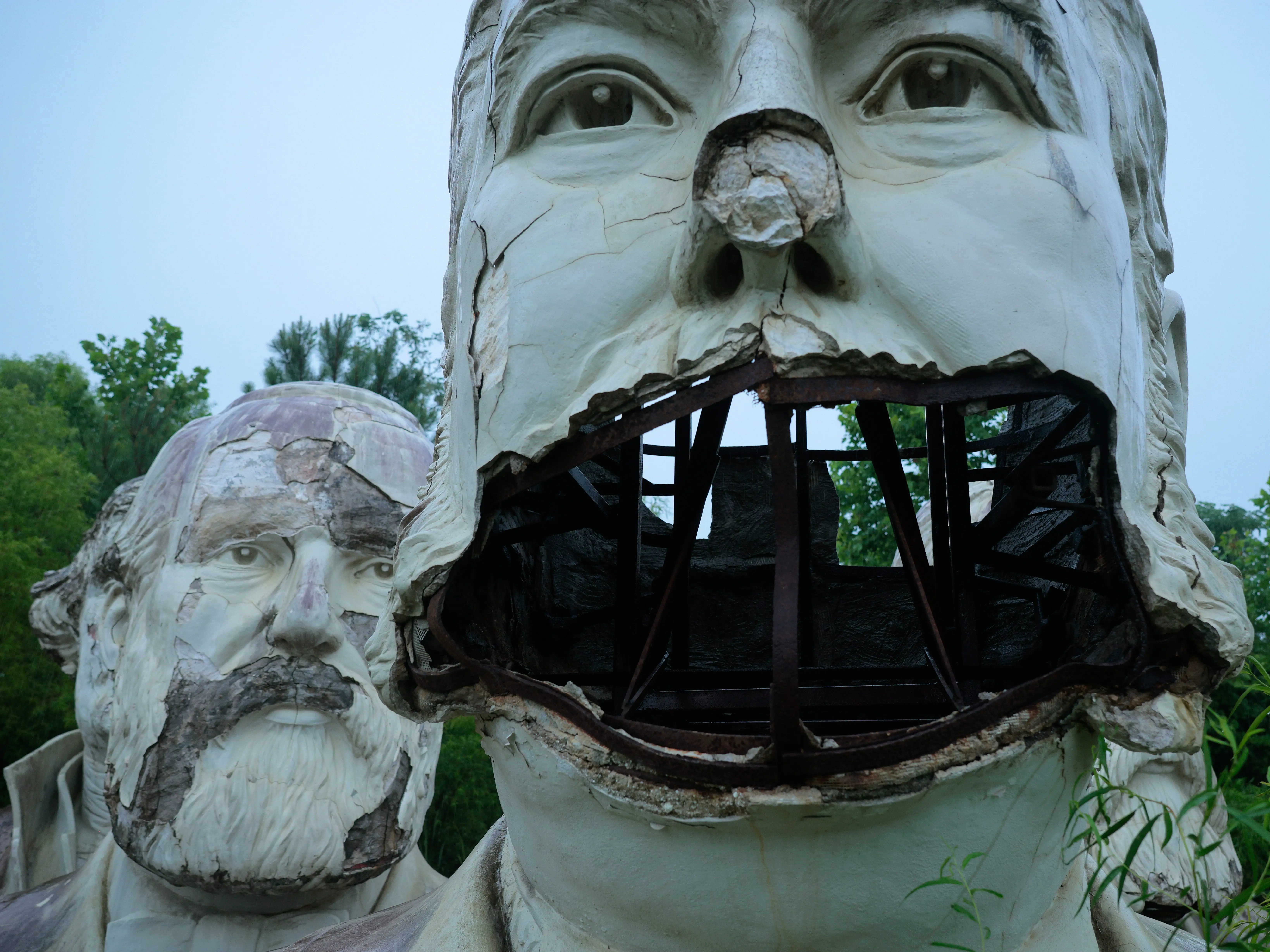
Among the statues that were damaged, Lincoln’s head fell over, leaving a giant hole on the back side, per Smithsonian Magazine.
During the move, which involved lifting the statues with a crane and transporting them on a flatbed truck, other presidents got scarred and lost appendages like noses.
Hankins’ big hopes for the heads remained unrealized for years.
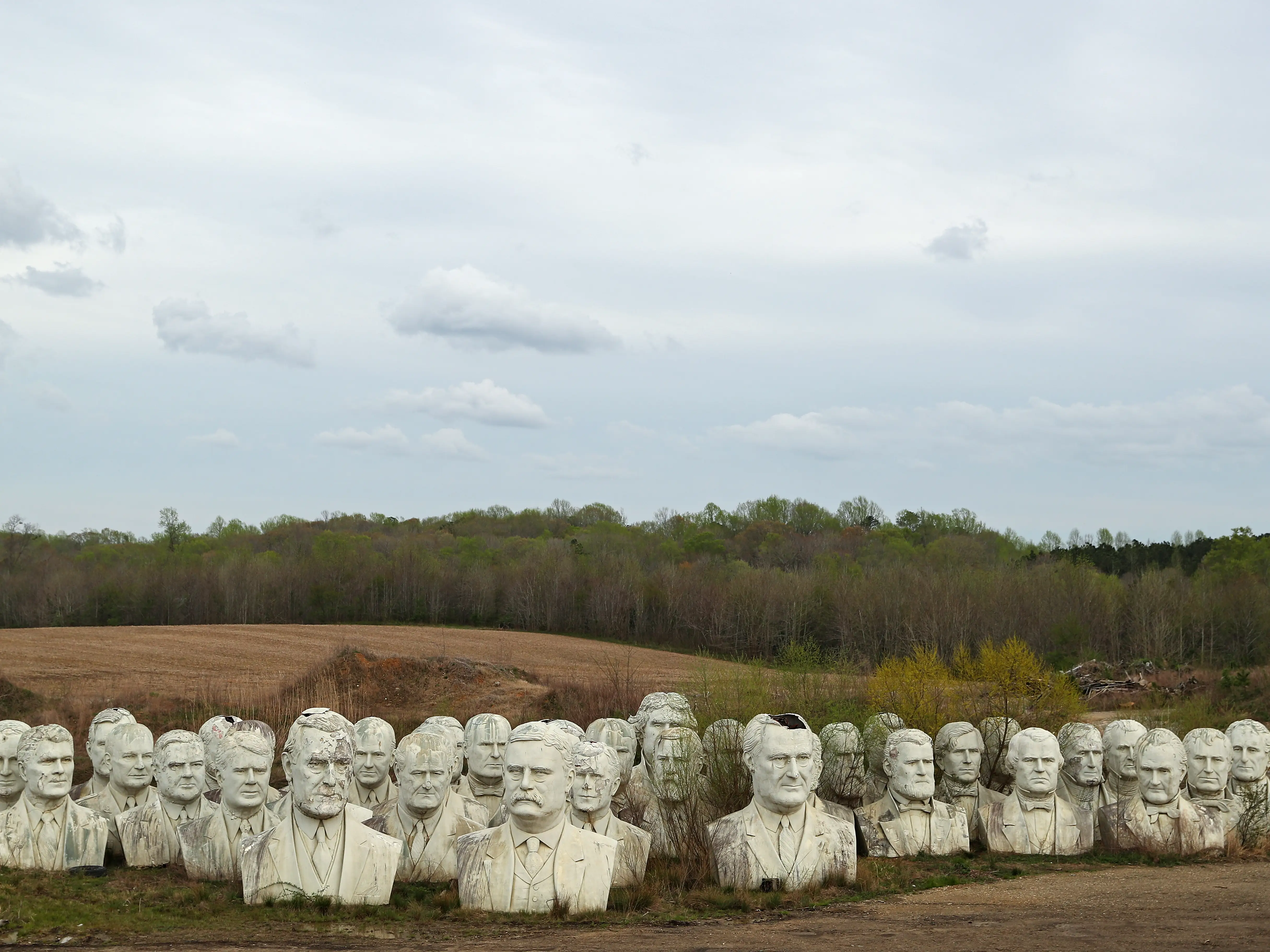
“He hoped that he would either open his own park or some exotic and wealthy art collector would come in [with] a huge check,” Plashal said.
Hankins told National Geographic that he’d “love to find the means to build an educational park for our kids to come to from all over the country,” adding that simply sitting in a field could not be the statues’ fate.
Tourists began to take an interest in visiting the austere abandoned heads.
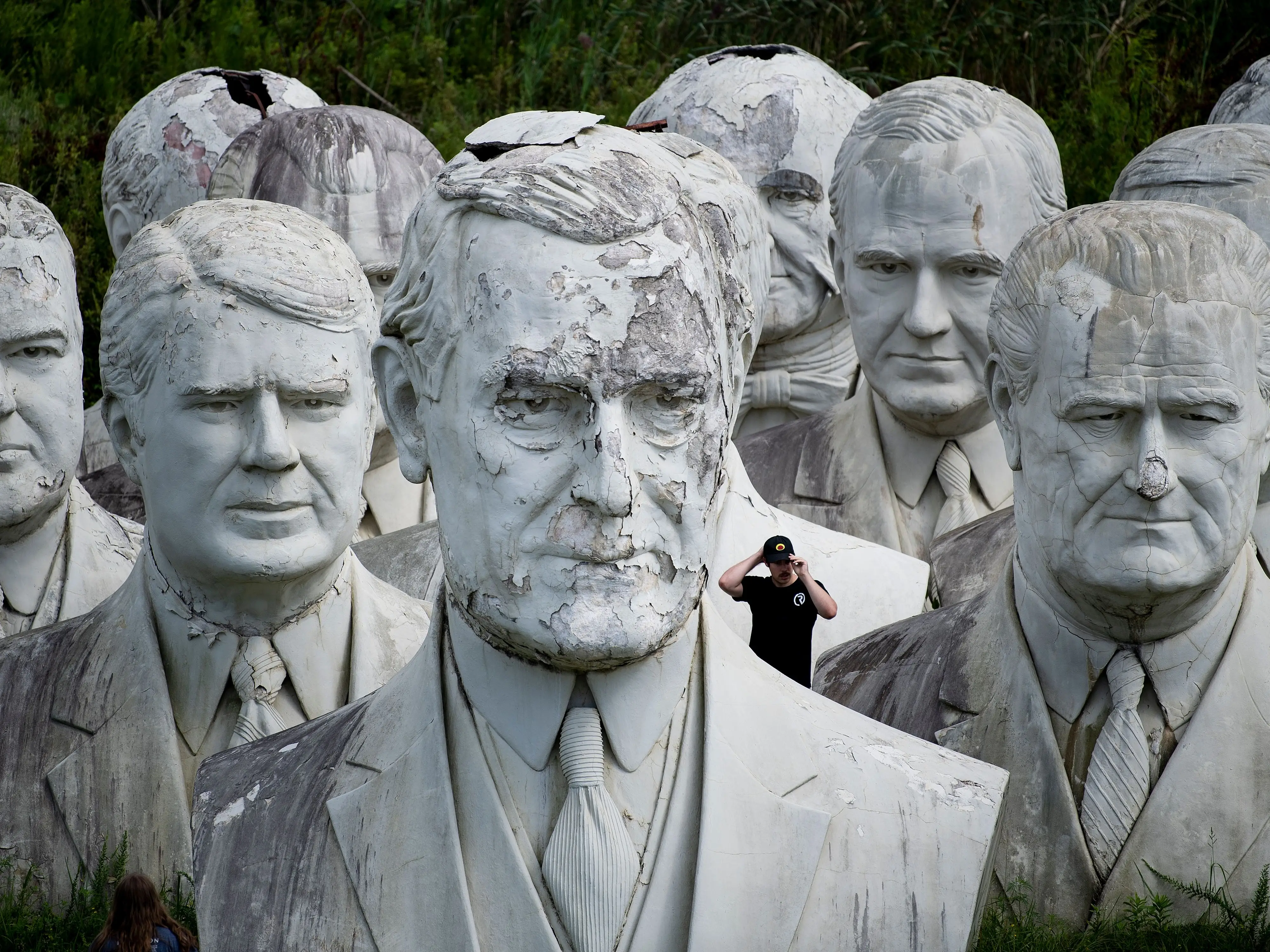
The heads started to gain attention when tourists documented them on social media. Plashal said that once people took to Instagram and Snapchat, the heads “spread like wildfire.”
He realized that the statues were unlike any other abandoned place he’d been to, as their representation of powerful men was in sharp contrast to their state of decay.
They also caught the attention of Plashal, whose work as a photographer aligned with the statues.
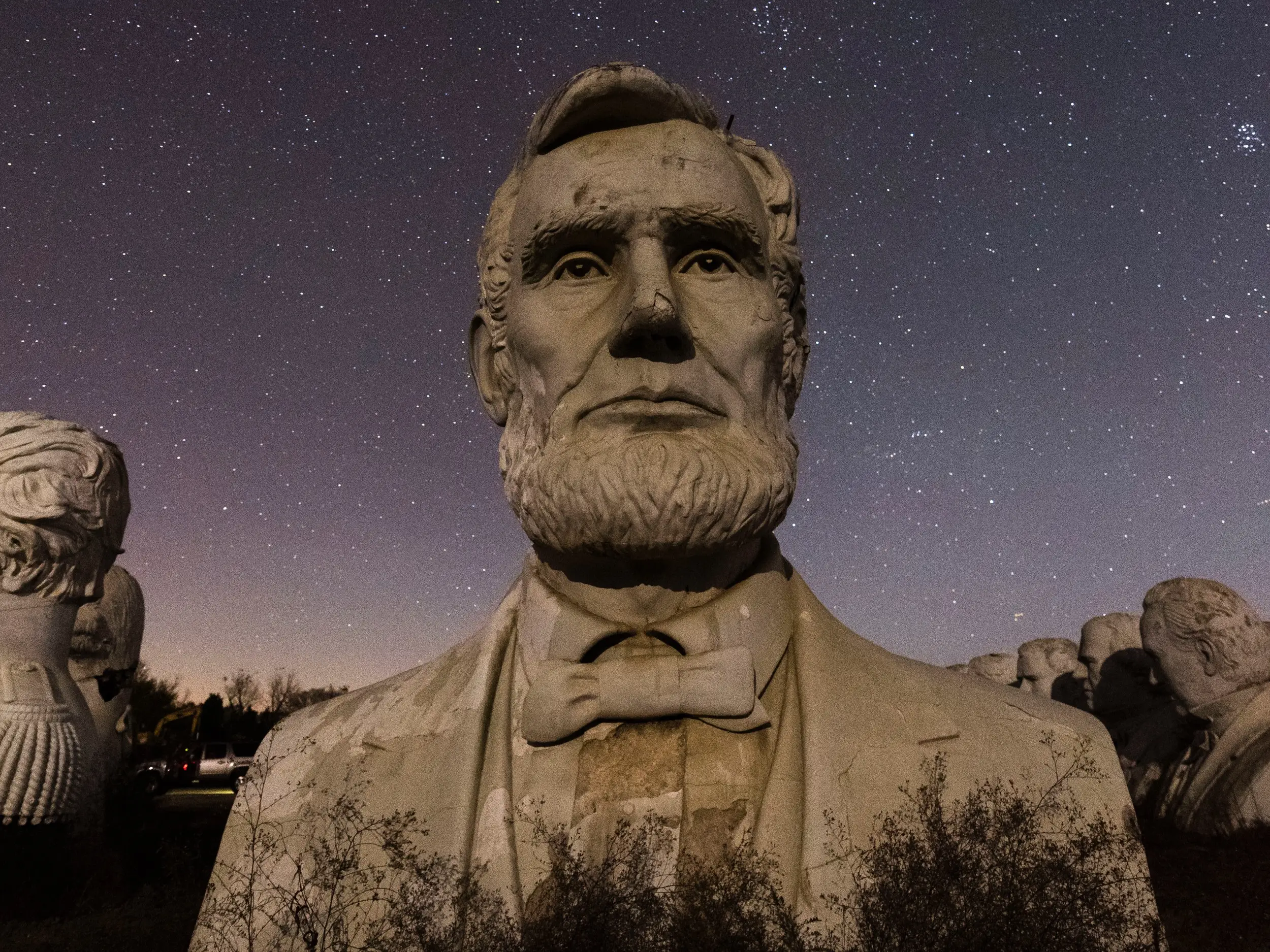
Plashal has a passion for capturing abandoned places, especially in Virginia, where his work is based. One of the photographer’s goals is to “photograph and document places that offer beauty in decay and unique histories,” according to his website. The heads were a perfect match.
Plashal especially enjoyed capturing images of the heads at night, when he could photograph them against the stars, giving them back some of the majesty they may have lost as they decay.
He soon realized the heads were more special than they let on.
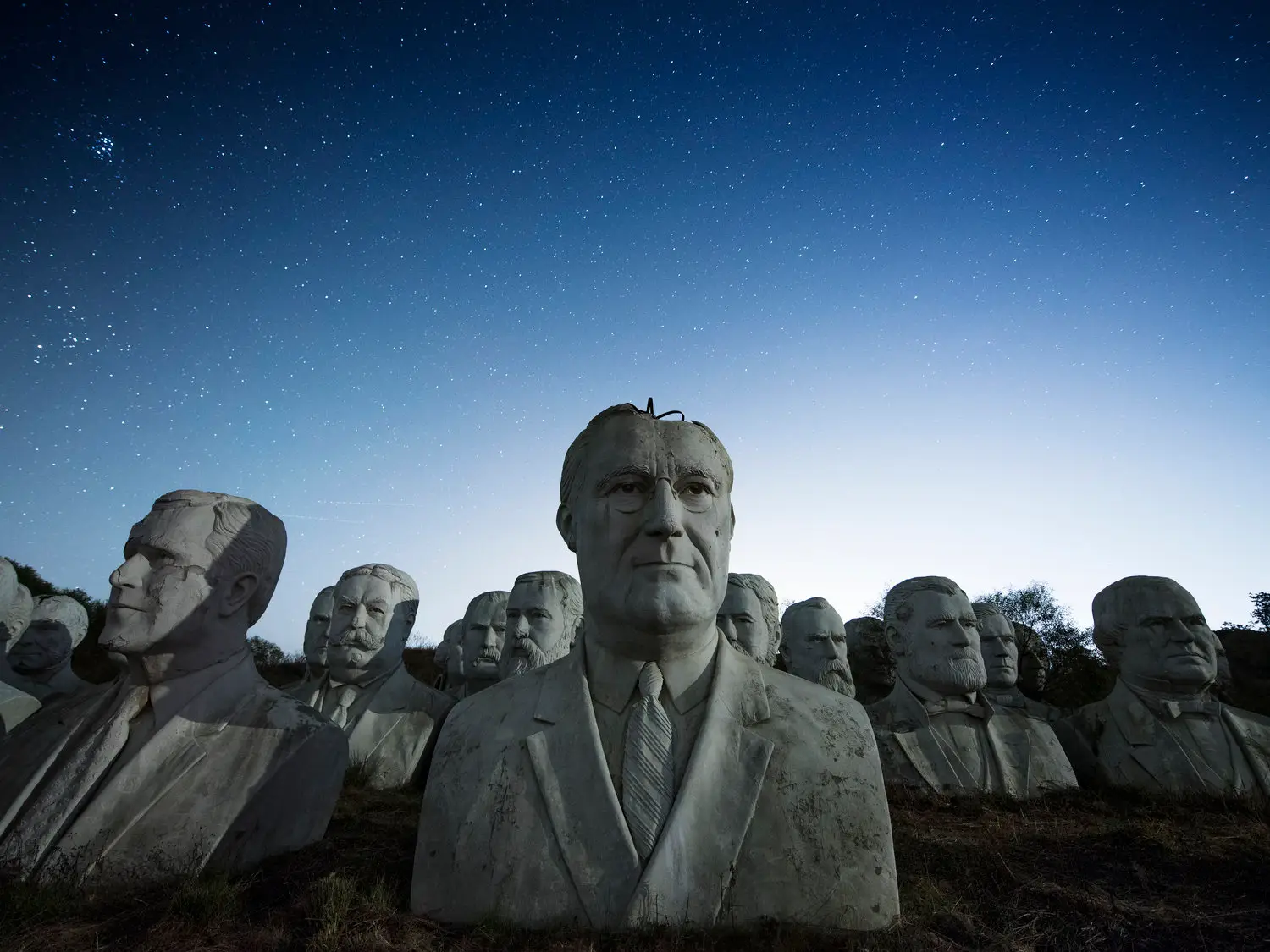
Plashal, who had already gained some success as a photographer and storyteller, was approached by the Virginia Museum of Fine Arts to be an adjunct speaker.
“They sent me around the state to storytell about all the history of the abandoned places that I find and document and photograph,” Plashal said.
He realized he could apply this storytelling ability to the abandoned heads.
Plashal decided to help Hankins give the heads a new life.
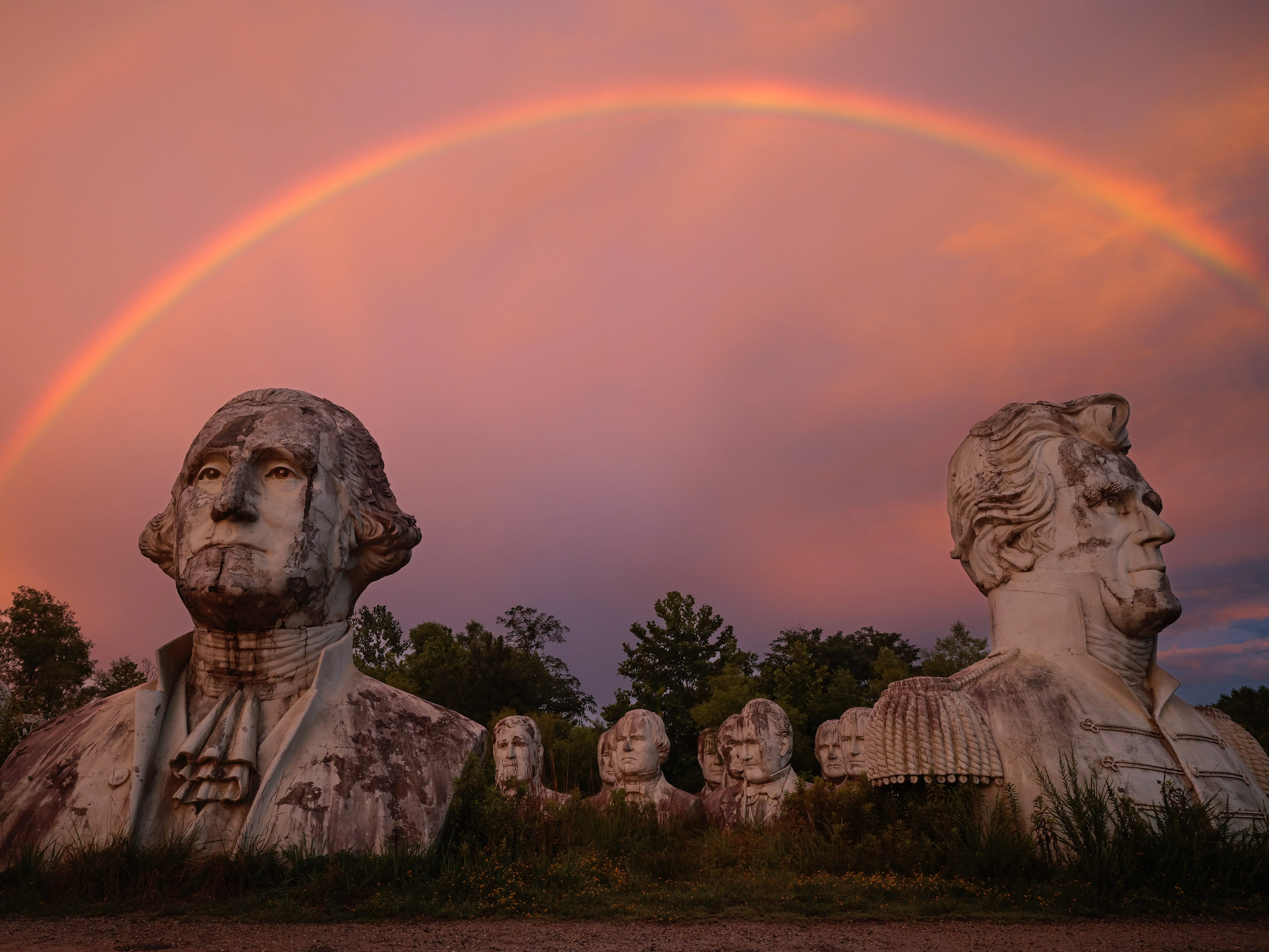
As Hankins had already spent a small fortune saving the statues from destruction, Plashal agreed they could serve a greater purpose than sitting in a field. From the social media attention and in-person visitors, he also knew the demand was there.
But because they were on Hankins’ private property, Plashal said, all the visitors were trespassing when they came to see the heads up close, perhaps not realizing the property was private.
“A lot of people think the statues reside in a wheat field or something,” Plashal said.
He came up with a plan to conduct tours of the heads on Hankins’ property.
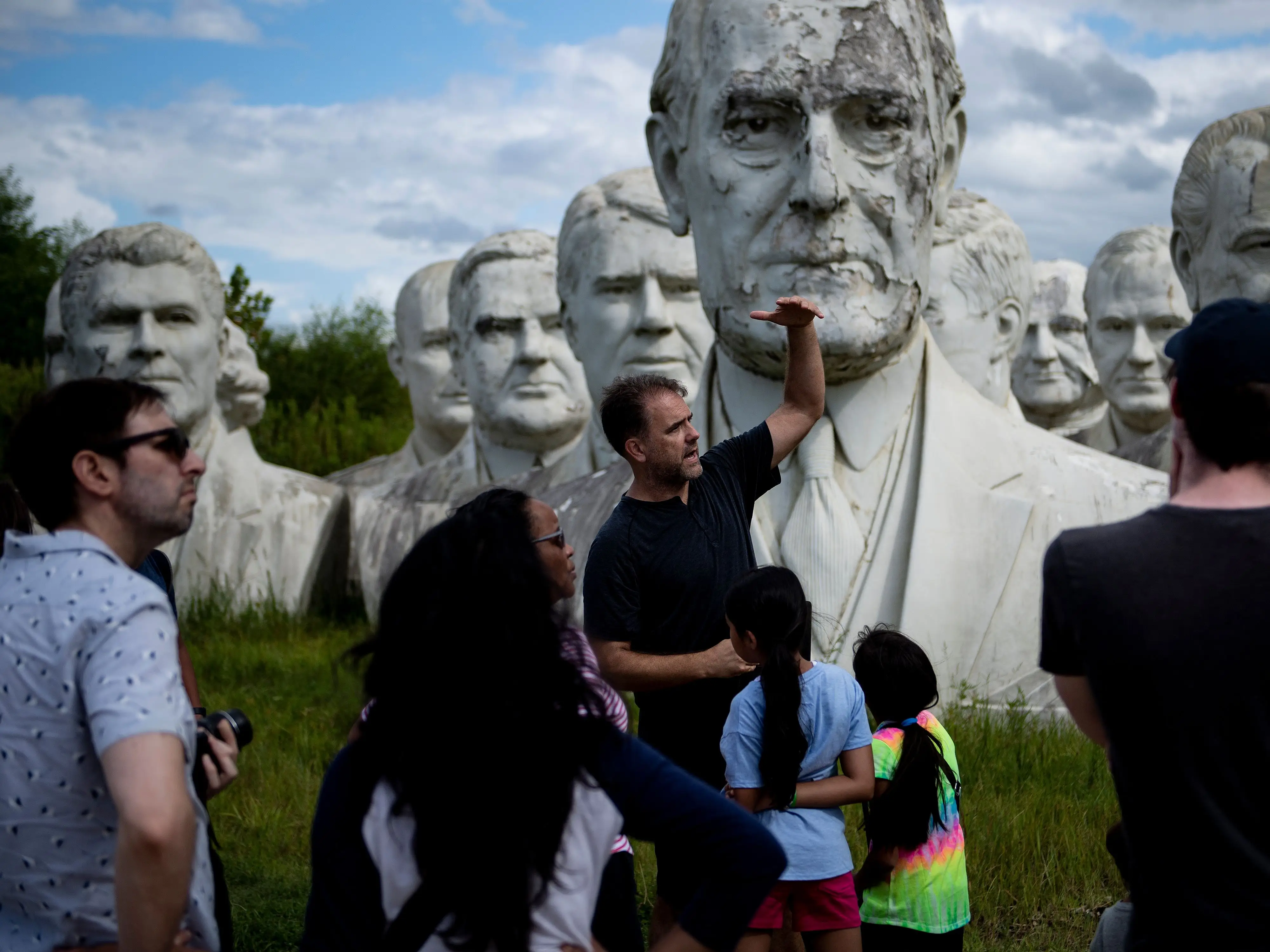
The first tour, held in 2019, was met with enthusiasm.
“I approached Hankins about doing it because the presidents’ heads are the ultimate abandoned place in Virginia — if not the world — and it blew up,” said Plashal, pictured above giving a tour in 2019.
The heads in their current state are much more popular than Presidents Park ever was.
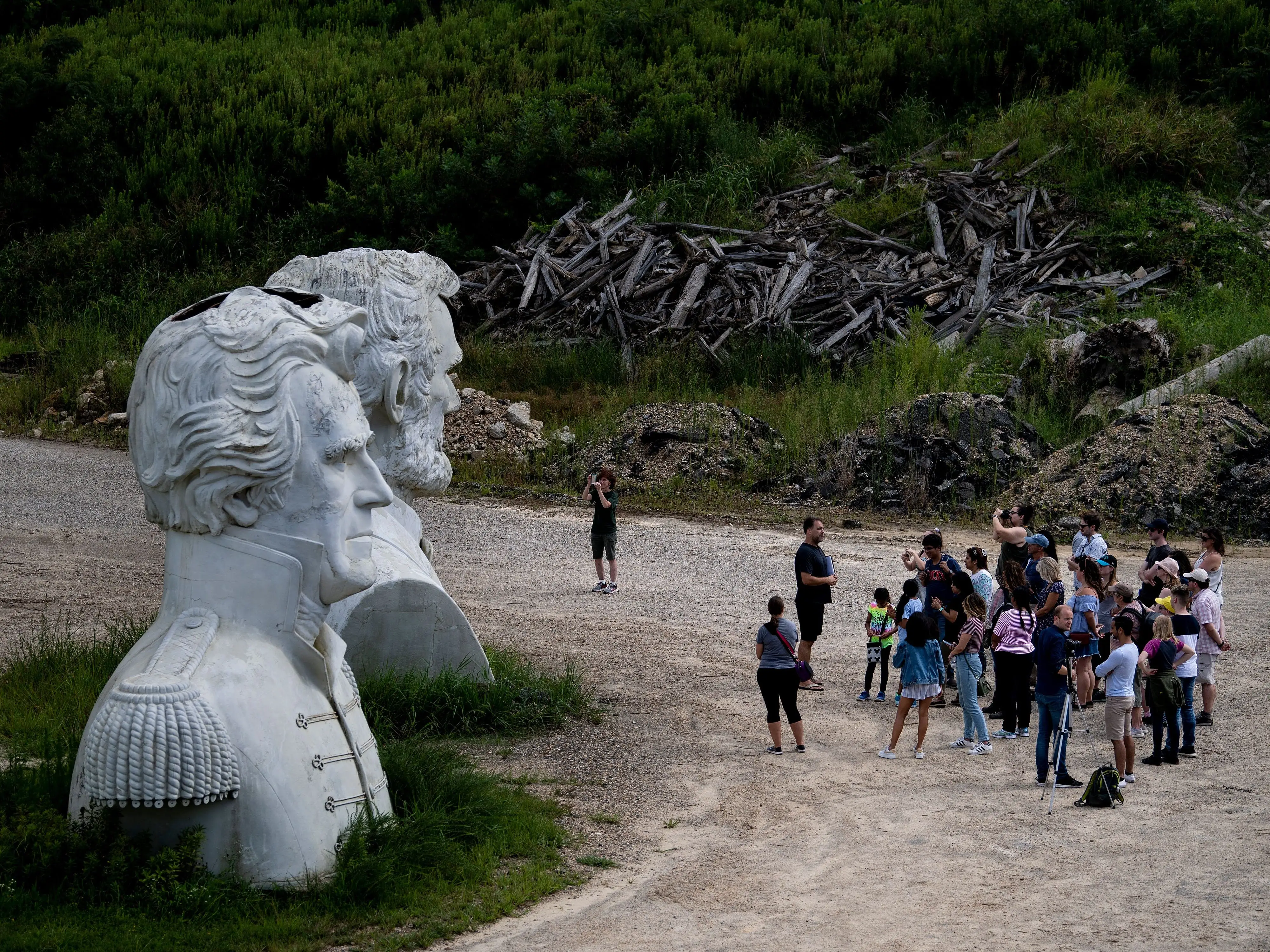
“There’s a lot of people who want to see these things,” Plashal told Hankins.
Because Hankins had legal concerns about the potentially dangerous nature of the heads, Plashal has guests sign waiver forms before entering the property.
Tours are still offered periodically.
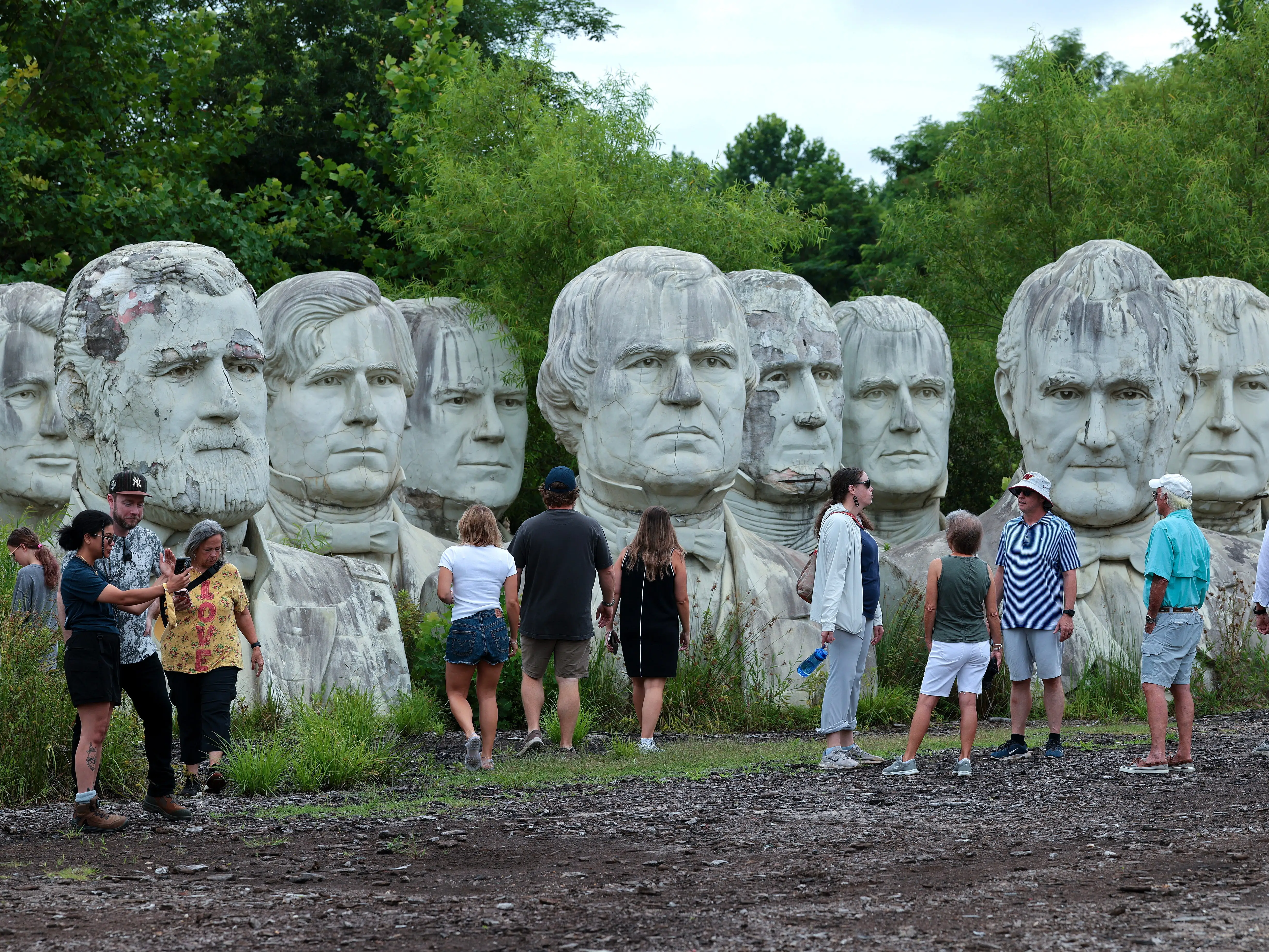
Plashal offers paid tours of the attraction on a limited basis, both during the day as well as a nighttime tour, “Night of the Presidents Heads.”
Stories and facts about the heads are shared, and guests can win prizes in a presidential trivia game.
A recent vote could’ve given the heads’ home a proper makeover.
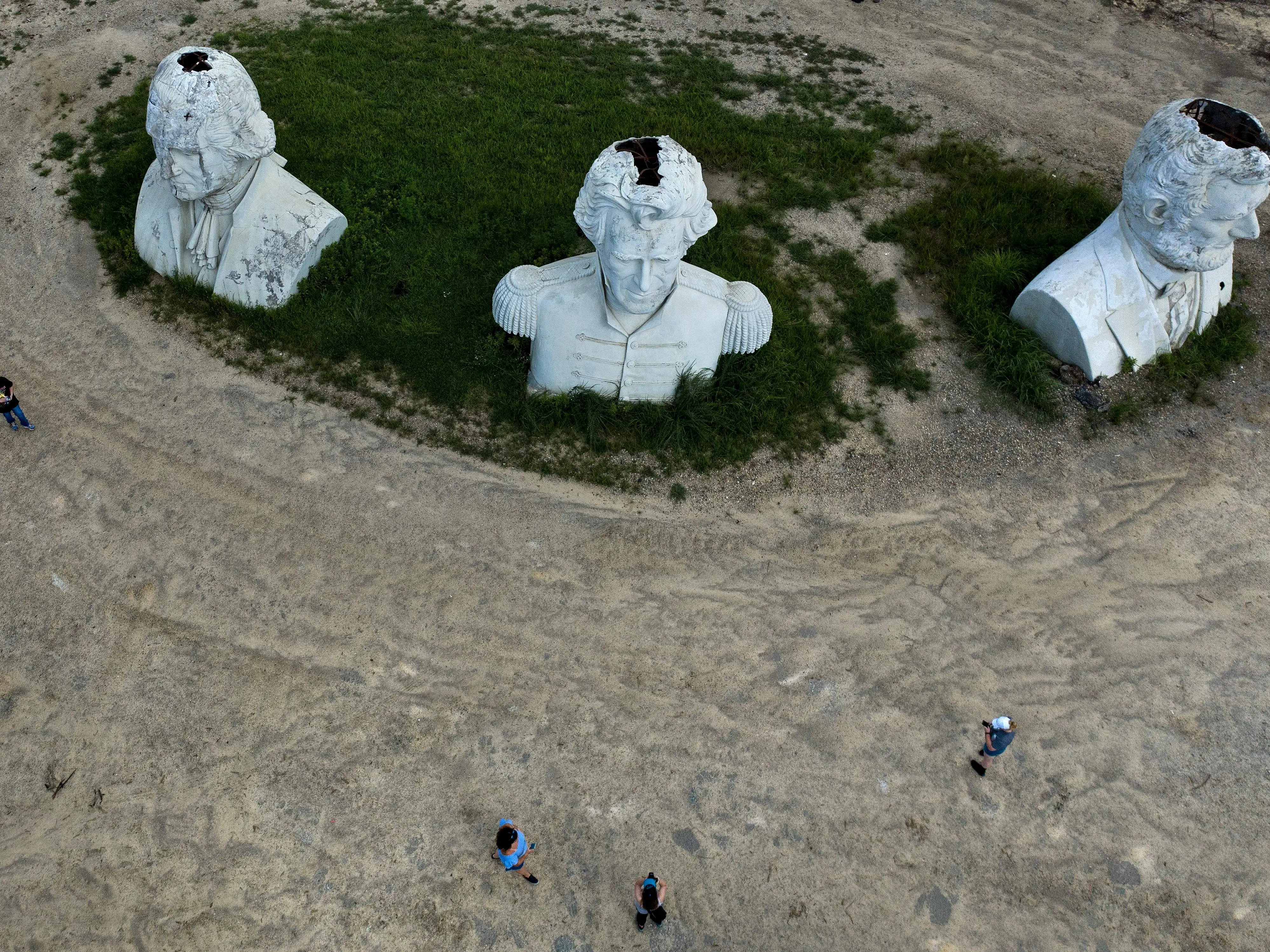
In June, the county’s Board of Supervisors voted on a rezoning project which, in addition to partially restoring the sculptures and turning the heads into a proper attraction, would’ve added a museum, housing units, and commercial space in the land around the statues.
However, the board “voted 3-2 to take no action on the project,” WTKR News reported. The board plans to reevaluate the proposal again in the fall, but Hankins said he’s in no rush.
“I believe when it’s right, it will happen — so I can’t worry about it,” Hankins told WTKR News.
Plashal believes the heads will attract interested visitors for years to come, turning the site into an Easter Island of North America.
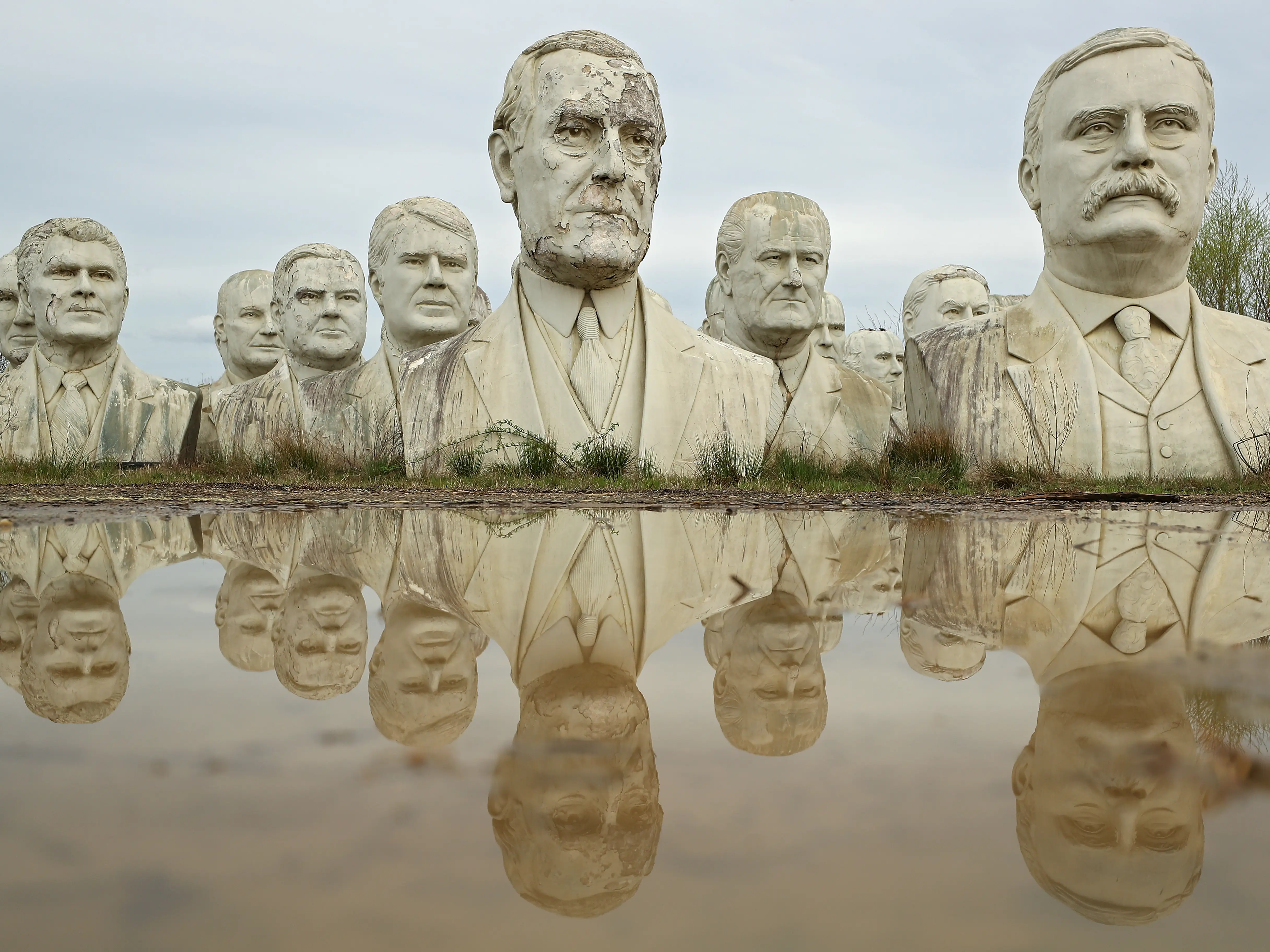
“It meant a lot to me to preserve history,” Hankins told National Geographic in 2017.
Read the original article on Business Insider
The post 42 giant statues of presidents’ heads are crumbling on private property in rural Virginia. Here’s why. appeared first on Business Insider.