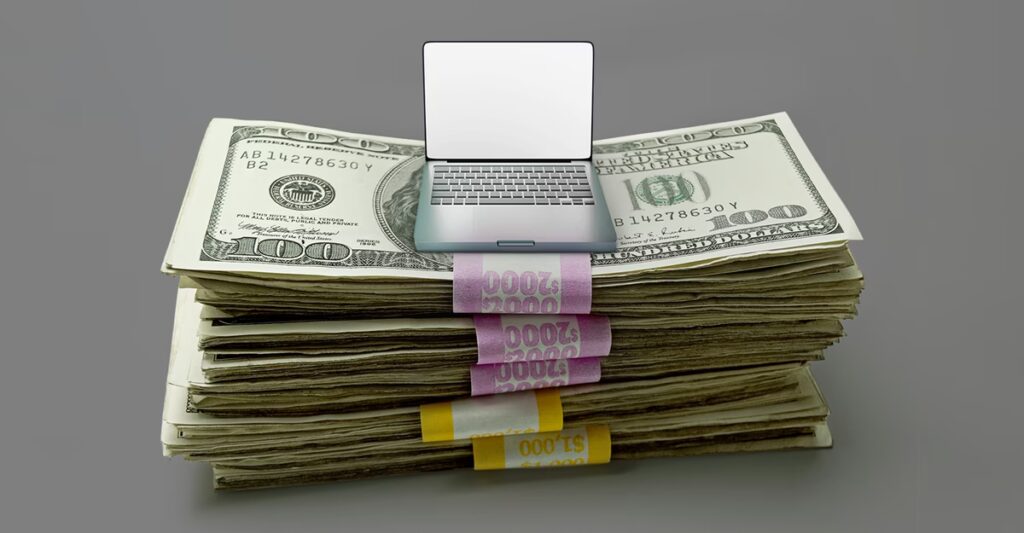
There are many things you can buy for $10,000: A nose job. With luck, a used car. A middling ticket to the World Cup final. Or you could purchase a MacBook Pro. That’s how much the highest-end, fully loaded version of Apple’s laptop now costs—$3,000 more than it did last week.
Maybe you don’t need the most powerful MacBook Pro. But last Thursday, Apple announced price hikes on most of its products. Apple’s cheapest laptop, the MacBook Neo, debuted for $600 just a few months ago. Now it’s less of a steal at $700. Apple’s base tablet model costs 30 percent more. Although iPhones are the same price (for now), every Mac and iPad model is now more expensive. So are other gadgets: Even the HomePod mini, a smart speaker that debuted six years ago, will set you back an extra $30. The day the new prices hit Apple’s website, people ran to Costco and Best Buy hoping to take advantage of some lag between the new and old world.
The products are more expensive because they now cost more to make. Specifically, one particular component has become considerably more expensive: RAM, short for “random-access memory.” RAM is essential in practically every electronic device. It’s what allows you to toggle between the 30 different tabs you might have open right now. And this year, the price of RAM has quadrupled.
Blame the AI boom. Data centers use a gargantuan amount of memory chips. Amid the frenzied AI build-out, the world doesn’t have enough to go around. In a statement issued the day of the price increases, Apple wrote that “the rapid expansion of AI data centers” had forced its hand: “We have never seen a component price increase this much, this quickly.” Seemingly every laptop maker has already jacked up prices at this point. In October, Microsoft raised Xbox prices by up to $70; last week, the company announced another $100 hike. The effects of the memory shortage extend beyond laptops and gaming consoles. A coalition of trade groups recently wrote to the Trump administration that the memory shortage was jeopardizing the “production and availability of automobiles, medical devices, and other manufactured goods.”
If there’s one company that should have been able to weather this crisis, it’s Apple. In the world of consumer electronics, Apple is “an 800-pound gorilla,” Corey Cohen, a computer historian who authenticates vintage Apple products for museums, told me. The company is so big and exacting that it has long been able to essentially name its price for computing parts. Apple CEO Tim Cook has squeezed suppliers to secure better deals and sought to own as much of its production process as possible. Apple’s custom chips also shunt around electrical signals much faster than its competition, so its devices can do more with less memory.
Now Apple’s grip on the global supply chain is slipping. RAM is one of the most expensive components that Apple does not make itself. Instead of prioritizing Apple, RAM manufacturers are selling chips to AI companies that are willing to spend near-infinite amounts of money to acquire memory in the name of building more powerful bots. Apple’s problem extends beyond memory chips to any product AI companies decide they need. In 2013, the CEO of Taiwan Semiconductor, the world’s biggest chipmaker, spent $10 billion to invest in manufacturing Apple processors. Now AI companies are its most valuable customers, and Apple is reportedly fighting for enough production lines to fulfill its orders. Apple is reportedly low on a material known as T-glass, which is made almost exclusively by a single century-old Japanese textile company, and which AI companies have been buying up. (Apple did not respond to a request for comment.)
Compared with other electronics companies, Apple is still in an enviable position. Smaller tech companies are struggling to get memory manufacturers to even pick up their calls: GoPro, the action-camera maker, warned last month that it might go out of business because of the memory shortage. Apple enjoys margins fatter than most consumer-tech companies could dream of. “They’re sitting on a pile of cash, right?” Cohen told me. “Apple could survive selling zero products for years and not be in the red.” Raising prices is a choice by the company to cede as little ground on profits as possible.
No one enjoys paying more for the same thing. The ubiquity of Apple’s products makes its price hikes feel especially noticeable, and analysts I spoke with expect prices on iPhones to rise soon. The iPhone 18, set to be released this fall, could be up to $200 more expensive than its predecessor. The increases can easily compound when you are stuck inside Apple’s walled garden. Most iPhone users also own an iPad, and a third of Apple’s customers own the holy trinity: tablet, smartphone, laptop. iPhone parents raise iPad babies who get Macs during Apple’s annual back-to-school sale.
Memory prices may come down in the next few years as new RAM factories come online. But Apple’s prices are unlikely to ever go back. “Prices generally are a one-way ratchet,” Wamsi Mohan, an Apple analyst at Bank of America, told me. “Customers acclimate to paying more.”
Many Americans already worry that AI will take their jobs, dry their rivers, and run up their utility bills. A pricier laptop may not be the greatest worry, but it’s certainly not going to help sell anyone on the AI future.
The post The $10,000 MacBook Pro Is Here appeared first on The Atlantic.