President Vladimir V. Putin of Russia is under pressure.
In recent weeks, Ukraine has brought the war home for Russians in new ways with attacks on refineries and in Moscow, drawing on its advances in drone and missile production.
Will the increased Ukrainian attacks on the Russian home front ultimately convince Mr. Putin to end the war?
So far, the answer seems to be no.
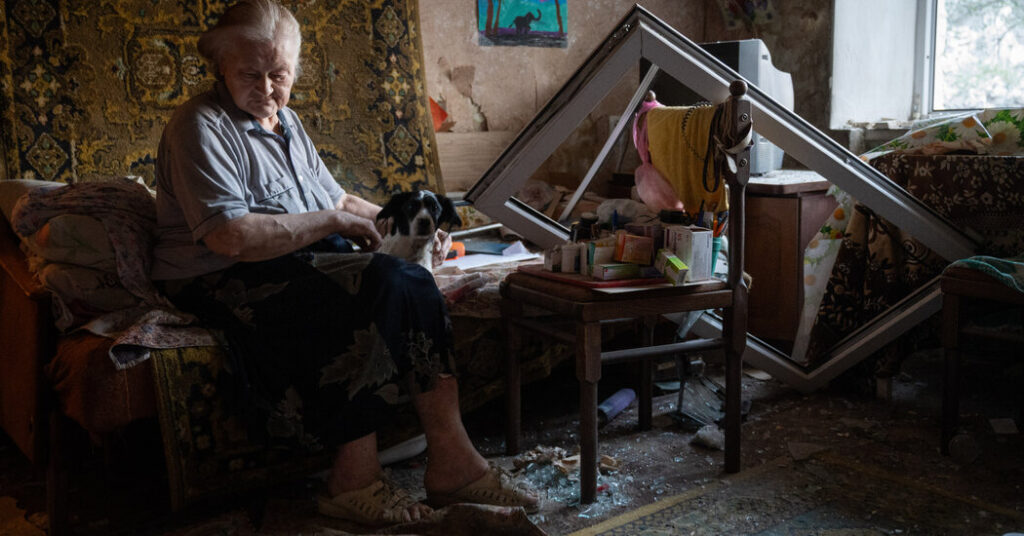
On Thursday, Russia launched waves of ballistic missiles and drones into Kyiv, killing at least 18, in what appeared to be the Kremlin’s immediate retort to the pressure and the latest signal from Moscow that Mr. Putin is digging in.
That’s not to say Ukraine’s campaign is having no impact.
Airstrikes against Russian oil refineries have caused nationwide fuel shortages. The largest drone attack on Moscow of the war sent huge clouds of black smoke billowing over the Russian capital last month. And Kyiv has steadily begun cutting off Crimea, the Black Sea peninsula that the Kremlin illegally annexed from Ukraine in 2014, leading to power outages, severe fuel deficits and water supply issues there.
Russians seem to be growing more frustrated with the war as they face worsening economic prospects, higher taxes, internet restrictions, strikes on Russian soil and broad exhaustion from a conflict that has now stretched longer than World War I.
After days of silence, Mr. Putin addressed the mounting difficulties in a state news interview on Sunday. He vowed to sort out the fuel issues and produce more air defenses, but also pledged to continue the fight on the battlefield.
It is far from clear that growing public dissatisfaction with the war in Russia will translate to any formidable political challenge for Mr. Putin, given that he has erected an authoritarian system and drastically increased wartime censorship and repression.
Alexander Gabuev, director of the Carnegie Russia Eurasia Center in Berlin, said, “The chances that the tide will turn against Putin are there but single-digit percentage wise.”
“Ukrainian pressure makes it more likely, but I don’t think this is the most likely scenario,” he added. “The most likely scenario is the whole thing will just continue with more destruction and more death on both sides.”
Mr. Putin’s future calculations will depend in part on how far Ukraine can go with its strikes. If the air campaign further limits Russia’s ability to wage war by taking out defense factories and supply lines, that could force Mr. Putin to change his ambitions.
In his comments on Sunday, Mr. Putin said Ukraine was facing an acute troop crisis, suggesting he still believes that he must merely hold out long enough and keep pushing for Ukrainian defenses to collapse.
“Given the catastrophic shortage of personnel, the Ukrainian Armed Forces apparently believe this could be their salvation,” Mr. Putin said. “But saving the Kyiv regime is not part of our plans.”
Mr. Putin then offered a long description of battlefield positions that analysts said employed some magical math, with the Russian leader regularly halving the distances between his forces and Ukrainian cities.
“He is either misinformed or lying or both,” Mr. Gabuev said. “But it doesn’t matter, because he seems to be stubborn on this. I don’t think at this point there is anything indicating change.”
If Ukrainian strikes pose a graver threat to the lives of people in Russia and Crimea, it could also prompt more defiance in Russian society and lift the voices of hawkish pro-war Russians. For years, they have been arguing that the Kremlin needs to take the gloves off; get rid of Ukraine’s president, Volodymyr Zelensky; and turn to nuclear weapons if necessary.
One of the enduring surprises of the conflict is how much pain Mr. Putin has been willing to suffer at home to pursue his war aims.
Already, the conflict has cut off Russia from the global economy, boomeranged into the Belgorod region to create a war zone inside Russia’s borders and led to a monthslong period during which Ukraine occupied a piece of the Kursk region. It caused a short-lived mercenary mutiny threatening Mr. Putin and has resulted in about 350,000 to 450,000 Russian deaths on the front, in addition to an embarrassing retreat from Kyiv early in the war.
Mr. Putin has remained undeterred.
If Kyiv can sustain pressure on Russia for months and affect Moscow’s ability to fight the war, that will matter, said Stefan Meister, a Russia analyst at the German Council on Foreign Relations.
The Ukrainian campaign is already forcing Mr. Putin to react, Mr. Meister noted, eroding Russians’ belief that they can win the war and that their leadership is capable of the task.
The strikes also prolong Mr. Putin’s battlefield burden at a time when his financial technocrats are struggling to pay for spiraling war costs without causing even more negative consequences for Russian society.
“The question is, ‘What will change Putin’s opinion? When will the cost-benefit calculation really start fundamentally changing?’” Mr. Meister said. “This is a question we have been asking ourselves for years.”
He added, “With Putin, I have my doubts, whatever it is, if he will stop.”
The post Facing New Pressure From Ukraine, Putin Signals Intent to Dig In appeared first on New York Times.