As extreme heat threatens the stability of electrical grids across the eastern United States, big users of power have been ordered to help prevent air-conditioners from shutting down and homes from going dark.
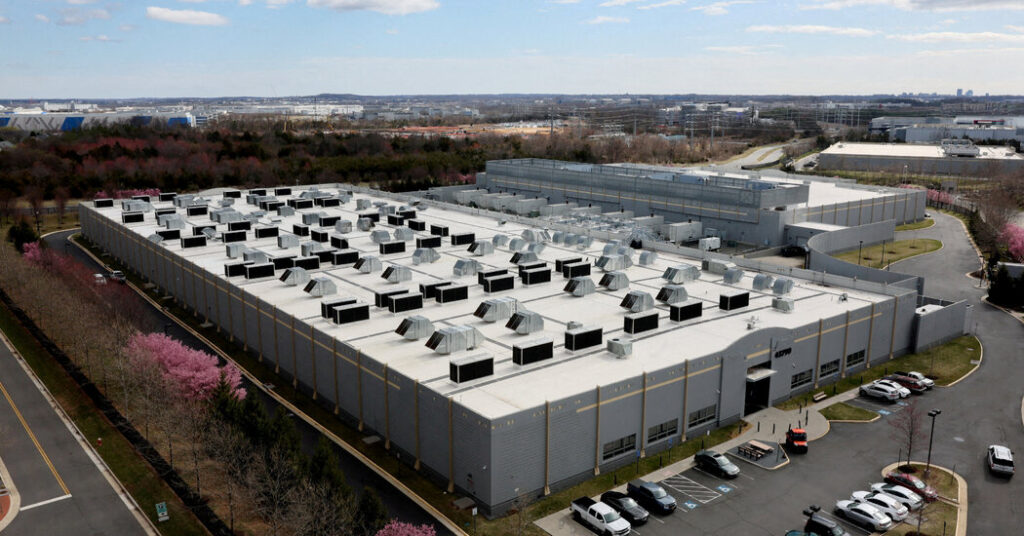
The energy secretary, Chris Wright, this week instructed grid operators to require data centers to use their backup power supplies if they need to ease strain on electrical system. Across the United States, Mr. Wright said, backup generators that could power dozens of large data centers sit idle much of the time.
Orders to use such generators are most likely to come in 13 Mid-Atlantic States, which share a strained grid and are home to the largest concentration of data centers in the world. That region has also been subject to this week’s heat wave. The area’s primary grid manager, PJM, runs a system that stretches from Chicago to Virginia Beach and covers most of Pennsylvania, Maryland and New Jersey. PJM expects that demand for electricity on its system will hit its highest level on Thursday, exceeding a previous record set two decades ago.
“Maintaining affordable, reliable, and secure power in the PJM service territory is nonnegotiable,” Mr. Wright said.
Some energy experts are worried that extensive use of backup systems at data centers could significantly increase air pollution in residential areas. Backup generators typically run on diesel or natural gas and emit more nitrogen oxides, particulate matter and other harmful emissions than large power plants or solar and wind farms.
Unlike the grids in California and Texas, PJM has been slow to add energy storage batteries that can support power systems during heat waves and cold spells. California has not had to ask residents and businesses to conserve electricity during periods of high demand for several years in large part because it has added many batteries, each of which is as large as a shipping container.
PJM has issued hot weather warning at least through Friday and told power plants to be available to operate at their maximum capacity to ensure adequate electricity during the heat wave.
Elsewhere in the East, grids were receiving less electricity from hydropower plants in Quebec, the Canadian province that has been struggling with low water levels in its reservoirs for several years.
A new transmission line that delivers hydropower to New York City from Quebec, which came online this spring and was expected to provide up to 20 percent of the city’s power needs, stopped delivering electricity to the city on Wednesday and Thursday morning, as the heat wave ratcheted up.
By Thursday afternoon, the issue had been resolved, said Lynn St-Laurent, a spokeswoman for Hydro-Québec, which provides the electricity carried on the transmission line. The breakdown had been caused by a converter station repair that had “triggered a secondary issue,” Ms. St-Laurent said.
Quebec, which borders New York State, is also experiencing extreme heat, which can increase its own power needs. And its low reservoir levels mean its hydropower plants cannot produce as much electricity as intended.
The projected peak power demand on Thursday could be the third highest ever in New York State, which is getting more than 60 percent of its electricity from oil and gas. New York City gets most of its electricity from the burning of fossil fuels because there is not enough capacity on high-powered transmission lines for it to draw power from elsewhere. The rest of the state has greater access to renewable and nuclear energy.
The post Energy Department Orders Data Centers to Tap Backup Power appeared first on New York Times.