Scott Atlas is the Robert Wesson senior fellow in scientific philosophy and public policy at the Hoover Institution and was special adviser to President Donald Trump in fall 2020.
In 1980, economist Milton Friedman said the National Institutes of Health should be abolished. Friedman said the same about another government research agency, the National Science Foundation. And when he was asked what the NSF should be replaced with, he replied: “Nothing.”
Whistleblower documents highlighted in a recent report showed what happens when private billions meet a public agency that can be influenced: Bill Gates’s foundation spent two decades steering the NIH research agenda toward its own priorities — with agency officials as willing partners. The NIH has become a government entity captured by special-interest groups — just as Friedman feared 46 years ago.
Look inside the grants at where taxpayer money actually goes. The NIH paid universities approximately $9.5 billion in fiscal 2026 to cover indirect costs such as facilities and administration expenses. These same universities accept grants from private foundations with little or no funds provided for overhead. The Gates Foundation caps its university overhead at 10 percent — a rate universities accept without protest. The disparity is easily explained: Private foundations say no, while the government readily spends other people’s money with no accountability. When the NIH attempted to impose a 15 percent cap in 2025, universities sued — and won.
This financial exploitation is compounded by political agendas, regardless of party. President Ronald Reagan’s administration delayed AIDS research funding; Reagan did not address the epidemic publicly until 1987, after more than 36,000 Americans had been diagnosed and nearly 21,000 had died. President George W. Bush restricted embryonic stem cell research on religious grounds. President Barack Obama reversed that ban by executive order. His administration created the NIH’s ideologically driven Sexual and Gender Minority Research Office in 2015.
President Joe Biden converted the agency into a racial and social-justice instrument: a diversity, equity, inclusion and accessibility system of almost 100 offices, committees and groups across 27 institutes and centers. His administration allocated $241 million for the Faculty Institutional Recruitment for Sustainable Transformation program to hire more diverse faculty. The money was granted to address underrepresented racial groups in science, claiming the representation gap is driven by “structural barriers” and “in large part by institutional cultures lacking necessary elements of inclusion and equity.”
Then the NIH reorganized around a new political agenda under President Donald Trump. Last year, his administration terminated over 5,100 grants worth more than $4.4 billion on political grounds. Courts intervened. A federal judge ordered the grants to be reinstated. The Supreme Court, however, later allowed the Trump administration to cut nearly $800 million in NIH grants. Taxpayers fund all the ideological shifts, litigation and policy reversals.
Government funding of academia corrupts science in subtle ways, too: When institutions depend on the NIH — for faculty promotions, overhead and graduate-student support — dissent becomes institutionally intolerable. In the White House, I witnessed enforcement of the “harmful uniformity” that NIH Director Jay Bhattacharya, Martin Kulldorff and I described in National Review: Some physicians and scientists who questioned NIH leaders on pandemic lockdowns or masking were removed from social media platforms because of accusations that they violated misinformation policies. They were also threatened with loss of licensure by the Federation of State Medical Boards. Many stayed silent because their funding could have been at risk. The promise of NIH dollars distorts research, too. Now that Bhattacharya has declared reproducibility of research results a top agency goal, many scientists will predictably discover a dormant passion for repeating old experiments — and universities will be right behind them, operational overhead budgets in hand.
Abolishing the NIH would not create a funding vacuum. The private sector funds 78 percent of U.S. biomedical research and development. Venture capital has exploded. Investment focused on artificial intelligence in drug discovery alone surged nearly 36-fold between 2010 and 2024 — funding the overwhelming majority of innovative medical devices and building the AI revolution in biomedicine. The Howard Hughes Medical Institute, the Wellcome Trust, the Gates Foundation and the Chan Zuckerberg Initiative represent more than $150 billion in endowed capital. Nokia Bell Labs, funded by AT&T and then Nokia private revenue, generated 10 Nobel Prizes. The private sector has already proved Friedman right.
Critics contend that private funders won’t support basic or high-risk science or early-career investigators — but the evidence runs the other way. Howard Hughes Medical Institute funds investigators without concern about risk or yield. Wellcome has committed $21 billion through 2032, and Chan Zuckerberg Initiative has pledged at least $10 billion over the next decade, for basic or high-risk science.
Private capital, not NIH direction, produced many of the most celebrated medical advances of the past two decades. Checkpoint inhibitors — drugs that allow the immune system to recognize and attack tumors it ignored — have converted metastatic melanoma, lung and kidney cancer from near-death sentences into more manageable conditions. These drugs reached patients through industry investment. Semaglutide, reshaping obesity treatment for tens of millions through drugs such as Ozempic and Wegovy, was developed by Novo Nordisk’s research chemists without NIH direction.
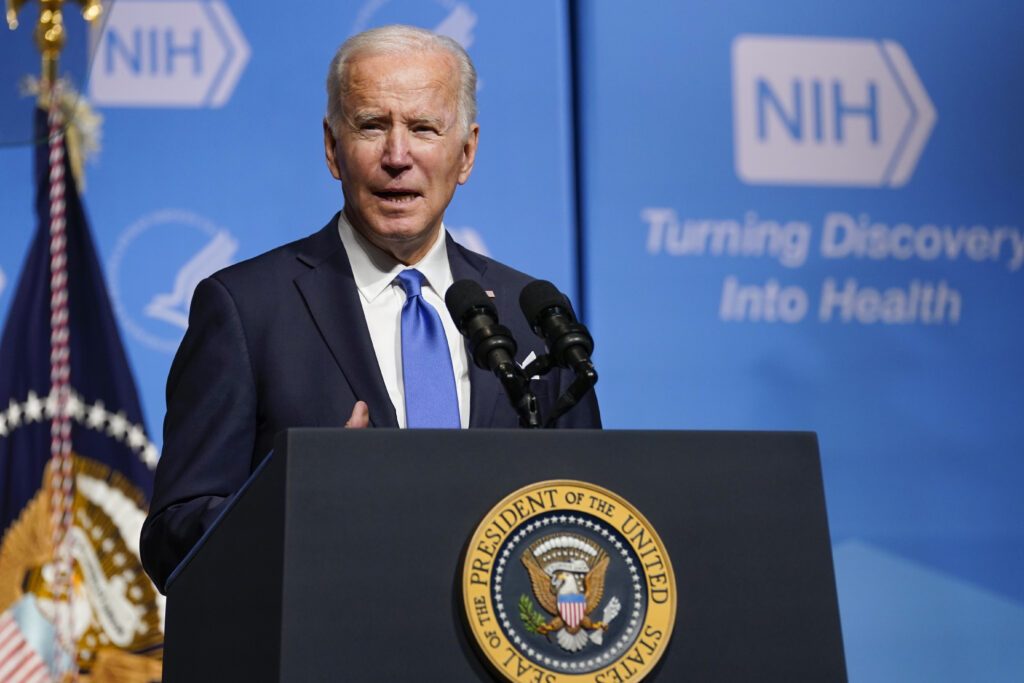
The NIH has funded valuable science. But it’s also a governmental monopoly with a roughly $48 billion budget subject to political influence, fiscal abuse and suppression of scientific dissent — one that has diverted billions from actual science to academic operations, racial set-asides and ideological mandates. It is what government agencies always become: an instrument of whoever holds power, and one that escapes accountability. Friedman asked the fundamental question: On whom should the burden of proof rest — on those who force taxpayers to fund government research, or on those who challenge its necessity? Abolishing the NIH is not a case against science. It is a case for science itself.
The post Abolish the NIH appeared first on Washington Post.