The American Revolution unleashed what one prominent historian has called a “contagion of liberty.” Ideas for change went viral, as revolutionaries saw independence as an opportunity to establish a truly different sort of nation. Some even saw the possibility of creating a more equitable society.
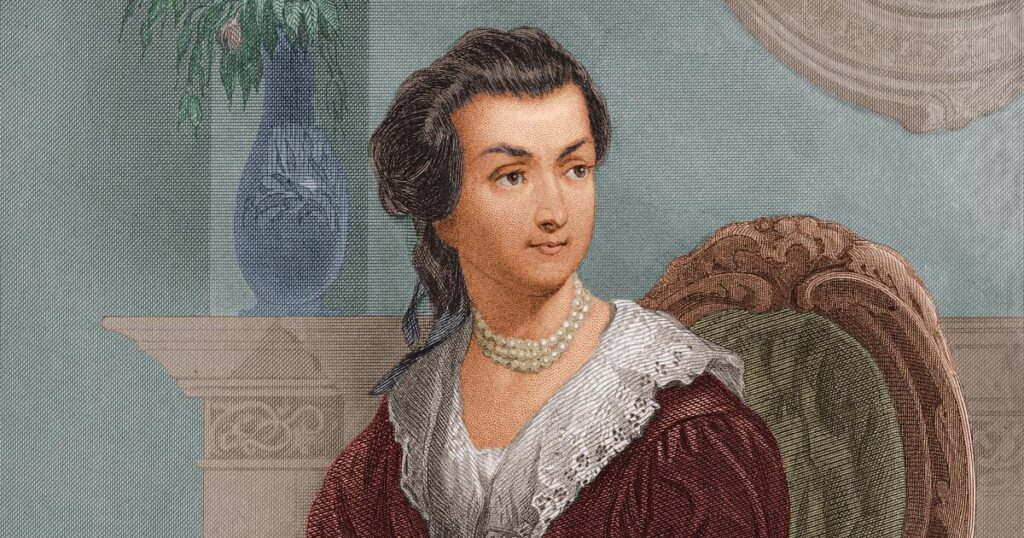
While many reformist proposals involved institutional changes, such as empowering more men to vote and hold political office, others were more fundamental. At a time when women lost their legal identities — and their legal rights — when they married, Abigail Adams playfully posited the following in March 1776 to her congressman husband:
“In the new code of laws which I suppose it will be necessary for you to make I desire you would remember the ladies and be more generous and favorable to them than your ancestors. Do not put such unlimited power into the hands of the husbands. Remember all men would be tyrants if they could. If particular care and attention is not paid to the ladies we are determined to foment a rebellion and will not hold ourselves bound by any laws in which we have no voice, or representation…. Why then, not put it out of the power of the vicious and the lawless to use us with cruelty and indignity with impunity?”
Efforts of enslaved people to attain freedom, often by allying with the British who promised emancipation, drew attention to the hypocrisy of the revolutionaries’ stated commitment to the idea that all humans had certain natural rights. As some enslaved people in Massachusetts asserted in their 1777 freedom petition (using the conventional petitioner’s third person):
“They have in common with all other men a natural and unalienable right to that freedom which the Great Parent of the Universe has bestowed equally on all mankind and which they have never forfeited by any compact or agreement whatever & but they were unjustly dragged by the hand of cruel power from their dearest friends and some of them even torn from the embraces of their tender parents & from a populous, pleasant, and plentiful country, and in violation of laws of nature and of nations and in defiance of all the tender feelings of humanity brought here to be sold like beasts of burden and like them condemned to slavery for life & among a people professing the mild religion of Jesus, a people not insensible of the secrets of rational being nor without spirit to resent the unjust endeavors of others to reduce them to a state of bondage and subjection…. They cannot but express their astonishment that it has never been considered that every principle from which America has acted in the course of their unhappy difficulties with Great Britain pleads stronger than a thousand arguments in favor of your petitioners.”
Thomas Jefferson, the Virginian who wrote so eloquently in the Declaration of Independence about the “unalienable rights” to “life, liberty, and the pursuit of happiness,” made religious freedom — or “liberty of conscience” — one of his top priorities. In 1779, he drafted a document that was enacted by Virginia’s legislature seven years later as “An Act for Establishing Religious Freedom,” a law that included this bold assertion, which motioned in the direction of our modern right to privacy and became the basis of the American notion of the separation of church and state:
“Our civil rights have no dependance on our religious opinions, any more than on our opinions in physics or geometry; that therefore the proscribing any citizen as unworthy the public confidence by laying upon him an incapacity of being called to offices of trust and emolument, unless he profess or renounce this or that religious opinion, is depriving him injuriously of those privileges and advantages to which, in common with his fellow citizens, he has a natural right.”
Although they chose the winning side in the revolution and its War for Independence, neither Jefferson nor Adams nor the Massachusetts petitioners really got what they wanted.
Jefferson’s bill passed and his friend James Madison penned the 1st Amendment to the U.S. Constitution, which codified religious liberty at the federal level, though church and state were never as completely separate as purists like Jefferson would have wanted.
The revolution produced no changes in the legal status of women, except for a brief period, between 1776 and 1807, when New Jersey’s constitution enfranchised property-owning widows and single women — but not wives, who were still legally subservient to their husbands.
Slavery was abolished in Massachusetts and the other northern states eventually followed suit, but fortified by certain obliquely stated constitutional protections and the rise of King Cotton, slavery spread across the South and gained political clout in the post-revolutionary era.
It’s also worth noting that the lines between radical and more cautious revolutionaries shifted from issue to issue. Jefferson enslaved hundreds at Monticello, his mountaintop estate in central Virginia. Abigail Adams and her husband, John, were were at best ambivalent about government by the people. As John cautioned in a letter to a friend, “Remember democracy never lasts long. It soon wastes exhausts and murders itself. There never was a democracy yet, that did not commit suicide.”
As we mark the semiquincentennial of the American Revolution, we should celebrate what its leaders achieved — and be mindful of what they did not. Many who fought for independence successfully opposed internal changes that would have made the United States more democratic and its citizens more equal, leaving reform-minded ideas that originated in the revolutionary era as an agenda for the future.
Cynthia A. Kierner, a professor of history at George Mason University, is the author, most recently, of “The Tory’s Wife: A Woman and Her Family in Revolutionary America.”
The post The revolution was a road map, not a destination appeared first on Los Angeles Times.