Republican lawmakers and allies of President Donald Trump are calling for a constitutional amendment that would restrict birthright citizenship after the Supreme Court on Tuesday ruled to uphold the more than 150-year-old constitutional guarantee that most people born on American soil are automatically citizens.
In a narrow 5-to-4 decision, the Supreme Court struck down Trump’s Executive Order that sought to impose sweeping restrictions on birthright citizenship, drawing swift backlash from the President and many other Republicans.
Read More: The Fight Over Birthright Citizenship Has Always Been Political, Not Just Legal
Speaking to reporters following the ruling, House Speaker Mike Johnson said that birthright citizenship has “been abused.”
“It’s one of those things that was intended to serve a noble and important purpose and has been thwarted and overused and abused,” the Republican leader said. “And so I’m sure that we’ll continue to look at that. I’m sure that the conclusion from this decision is you have to amend the Constitution to fix that.”
Other GOP lawmakers have more forcefully called for a constitutional amendment that would severely restrict the parameters of birthright citizenship from the longstanding interpretation of the Citizenship Clause of the 14th Amendment, which established that “all persons born or naturalized in the United States, and subject to the jurisdiction thereof, are citizens” and was at the center of the case before the Supreme Court.
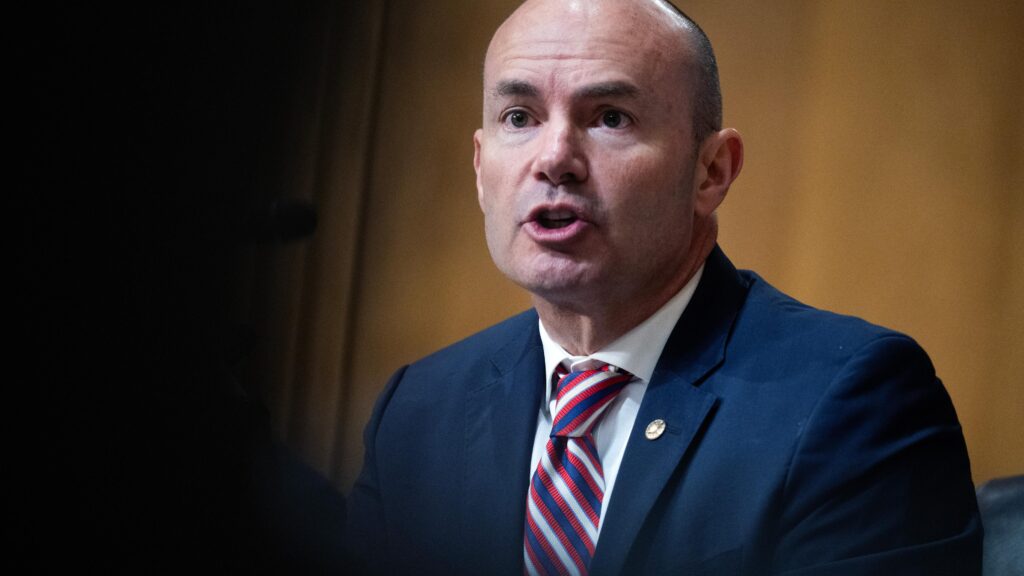
“We’re going to need a constitutional amendment,” Republican Sen. Mike Lee of Utah said on X minutes after the Court issued its ruling.
Sen. Eric Schmitt of Missouri, calling the issue of birthright citizenship a “national crisis,” announced a “forthcoming” amendment.
“That amendment will restore the original American understanding of citizenship. It will restore the right of the American people to define their own political community,” Schmitt said on social media. “And it will ensure that citizenship once again reflects allegiance, permanence, and membership in the American nation.”
Sen. Rand Paul, meanwhile, pointed to a proposed constitutional amendment he introduced in April to “fix” birthright citizenship.
“An executive order was never going to be strong enough to permanently fix birthright citizenship, no matter how good the intentions behind it were,” Paul said, noting he’d had “a feeling” the Court would rule as it did.
“This decision confirms what I already suspected,” he added. “If we want real, lasting change, it has to come through the amendment process.”
Trump contends a constitutional amendment isn’t necessary
Trump himself also reacted to the Supreme Court ruling by calling for action, but he argued on Truth Socialthat Congress could “make it up” through legislation.
“No long and unwieldy Constitutional Amendment is necessary!” he wrote. “Congress should start TODAY to work on ending expensive and unfair to our Country, Birthright Citizenship. They will have my Complete and Total Support!”
In line with Trump’s comments, several Republican lawmakers indicated that they were planning to take a legislative route to limiting birthright citizenship.
Sen. Tom Cotton of Arkansas said on social media that Congress should pass the “Constitutional Citizenship Clarification Act” he introduced last July, which seeks to prevent the automatic granting of American citizenship to children born on U.S. soil to parents who are present in the country “unlawfully,” or for diplomatic purposes, or who are engaged in “a hostile occupation of, or a hostile operation in,” the U.S. Sens. John Cornyn of Texas and Rick Scott of Florida similarly promoted legislation they had previously introduced as ways to address birthright citizenship following the Supreme Court ruling.
“I have a bill, the SAFE KIDS Act, to combat the exploitation of U.S. surrogacy laws for birthright citizenship,” Scott said on X. “I have been fighting visa-free loopholes in U.S. territories participating in surrogacy schemes.”
“My Barring American Citizenship by Keeping Out Foreign Fraudsters (BACK OFF) Act, which would put a stop to the practice of birth tourism by adversaries like China and Russia, is a good first step,” Cornyn posted.
Immigration and human rights groups, in contrast, celebrated the Supreme Court’s ruling, while stressing that birthright citizenship is guaranteed by the Constitution and that the interpretation of that guarantee including nearly all people born on U.S. soil is both longstanding and reaffirmed by Tuesday’s decision.
“While not legally groundbreaking, today’s decision is nonetheless historic in its clear confirmation of well-settled law that the Fourteenth Amendment’s Citizenship Clause guarantees citizenship to children born in the United States regardless of their parents’ immigration status,” Jeff Joseph, president of the American Immigration Lawyers Association, said in a statement.
“The Fourteenth Amendment affirmed that in America, belonging is rooted in being born on this country’s soil, under our nation’s laws and equal in dignity, not in ancestry or inherited status.”
The post Republicans Push for Constitutional Amendment Restricting Birthright Citizenship After Supreme Court Ruling appeared first on TIME.