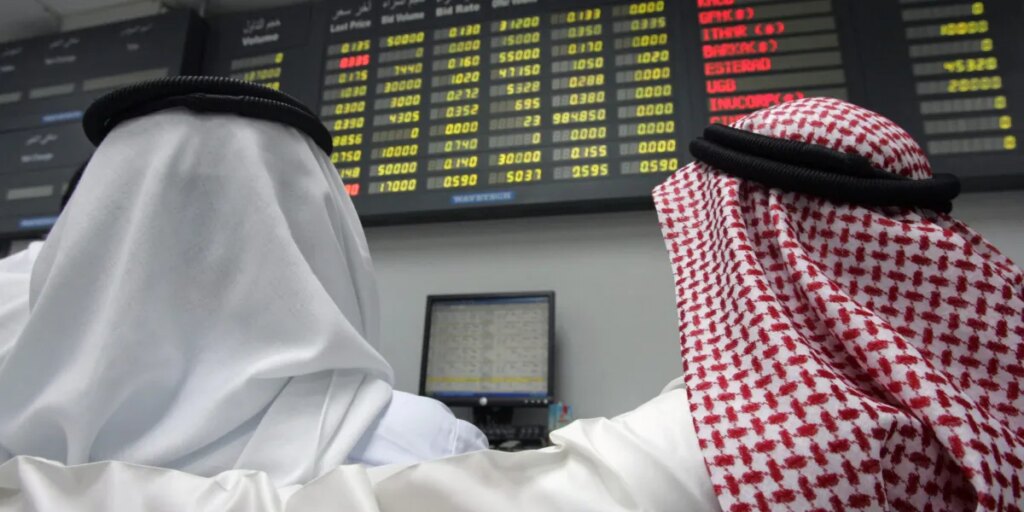
GCC bond and sukuk markets have experienced a distinct “relief rally” since the signing of the Iran-U.S. ceasefire on April 8, steadily recovering from their sharp sell-offs in the weeks following the outbreak of the conflict at the end of February
Many GCC US dollar sukuk (Islamic bond) and bond yields had widened to five-year high spreads by the end of March—the highest levels since the pandemic—but have narrowed significantly toward pre-war levels over the past few months.
“GCC fixed-income yields are benefiting from a decline in geopolitical risk premiums,” the Fitch Ratings said in a report published in mid-June.
The credit rating agency noted how the spread on the S&P GCC Bond Index—the most utilized benchmark for the region—has fallen to 89 basis points, from 126 basis points in March, and roughly 100 basis points before the war.
GCC sukuk, meanwhile, continue to have lower yields than GCC bonds, on average, due to broader demand from Islamic banks, although spreads on high-yield GCC sukuk remain heightened.
“Since the first ceasefire, and even more so since the signing of the memorandum of understanding, bonds have rallied and yields have come down quite nicely,” Azad Zangana, head of GCC macroeconomic analysis at Oxford Economics in Dubai, told Fortune. “So, it looks like the worst has passed in terms of risk premiums in the market for now.”
In turn, the improvement in the market’s fundamentals is fuelling a revival in issuance.
A combined total of $7.5bn in debt was issued by QatarEnergy, AviLease, Emirates NBD, First Abu Dhabi Bank, Dukhan Bank and Burjeel Holdings in the week to 26 June.
The strength of demand for Burjeel Holdings’ $500 million sukuk led to it being 3.2 times oversubscribed. It was priced with a 7% profit rate and a yield of 7.125%.
This represents the lowest 5-year yield by a GCC-based private non-investment grade corporate issuer since 2020.
The $500 million sukuk is due to be listed on the International Securities Market of the London Stock Exchange on July 1.
Tight liquidity persists
But while easing geopolitical risk has helped spur a recovery in GCC bond prices, borrowing costs remain elevated as dollar liquidity remains tight.
GCC fixed-income yields are closely correlated to U.S. Treasuries as all Gulf currencies—with the exception of the Kuwaiti dinar—are solely pegged to the dollar.
As a result, expectations for U.S. monetary policy remain a key driver of the region’s debt markets.
Fitch Ratings does not forecast any Federal Reserve rate cuts in the second half of 2026. Meanwhile, over three-quarters of economists polled by Reuters expect the Fed to hold interest rates steady for the rest of 2026.
In early May, the UAE’s trade minister Thani Al Zeyoudi said the country was discussing a currency swap line with the U.S. in order to provide it with a cheap supply of dollars that could back the UAE dirham. Currency swaps are agreements between two parties to exchange one currency for another at a preset rate over a given period.
Read more: Saudi Aramco’s chairman calls for “energy realism”
Although the UAE holds nearly $300 billion in foreign exchange reserves and around $2.5 trillion in sovereign wealth, that money has largely been earmarked for economic diversification.
Al Zeyoudi made clear that the currency swap request is not motivated by any financial distress, but rather by joining an elite club with access to Federal Reserve liquidity.
“Being part of that group means that transactions… trade, investments between both nations reach a level where that swap is highly needed,” he said. “So it is an elite matter, it is not about bailing out.”
The U.S. Federal Reserve has permanent standing central bank currency swap lines with five other major central banks—the Bank of Canada, the Bank of Japan, the European Central Bank, the Bank of England, and the Swiss National Bank.
It’s a different story for Bahrain.
On 3 June, the kingdom became the first Gulf sovereign to issue debt since the start of the U.S.-Iran war when it raised $1 billion through a 10-year USD bond.
Bahraini bonds came under pressure after the outbreak of the war in February but recovered by mid-April after the UAE extended a $5.4 billion swap line to the kingdom.
The swap line to Bahrain was expected to ease pressure on its foreign exchange reserves. However, data published by the Central Bank of Bahrain shows that its reserves plunged 56% month-on-month to $1.5bn at the end of May.
Excluding a brief COVID-induced dip in April 2020, reserves are now at their lowest level on record which may account for why the GCC state decided to issue a bond earlier this month.
As the only GCC state not rated investment-grade by the three rating agencies, Bahrain remains the market most vulnerable to a continued tightness in global liquidity.
Higher funding costs typically lead to lower risk appetite, ultimately making investors more selective about which GCC issuers they buy into.
But while higher-rated sovereign and quasi-sovereign issuers stand in better stead today, limited investor depth remains a key structural constraint to the development of all the Gulf markets over the longer-term.
“Obviously, more recently we’ve had fresh geopolitical risk and other issues. But assuming all these things die down, the size of these markets is still the biggest hindrance to getting substantial buy-in,” said Zangana.
“The lack of liquidity really hurts them when large international investors come along and say that they want to invest proportionally, but it’s just not liquid enough, so it’s too risky for them.”
The post GCC debt markets have rallied since the ceasefire, but tight liquidity remains a key hurdle appeared first on Fortune.