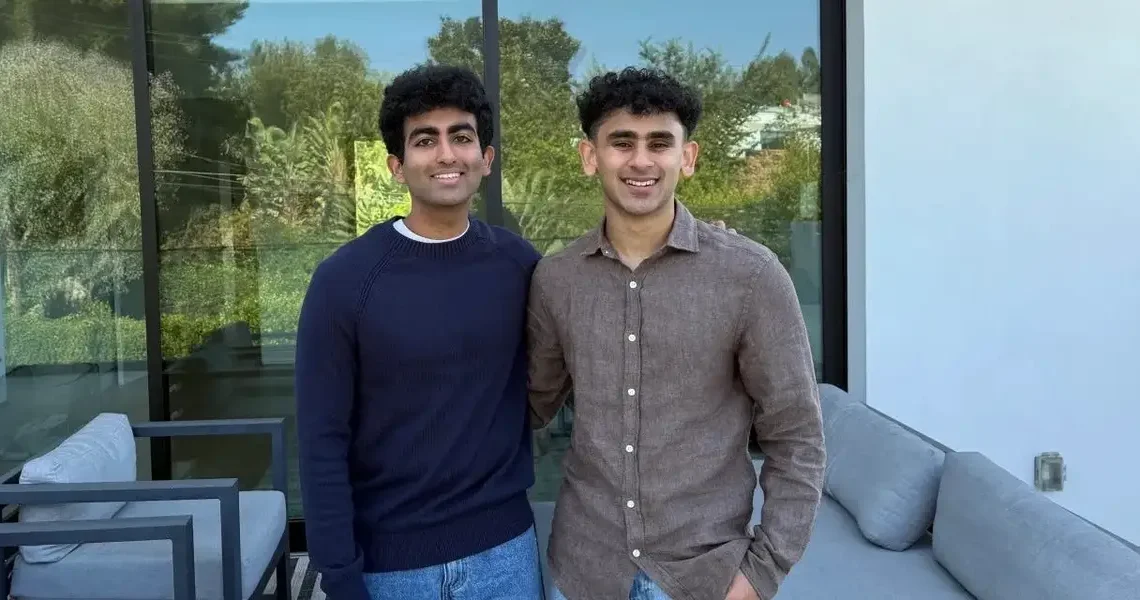
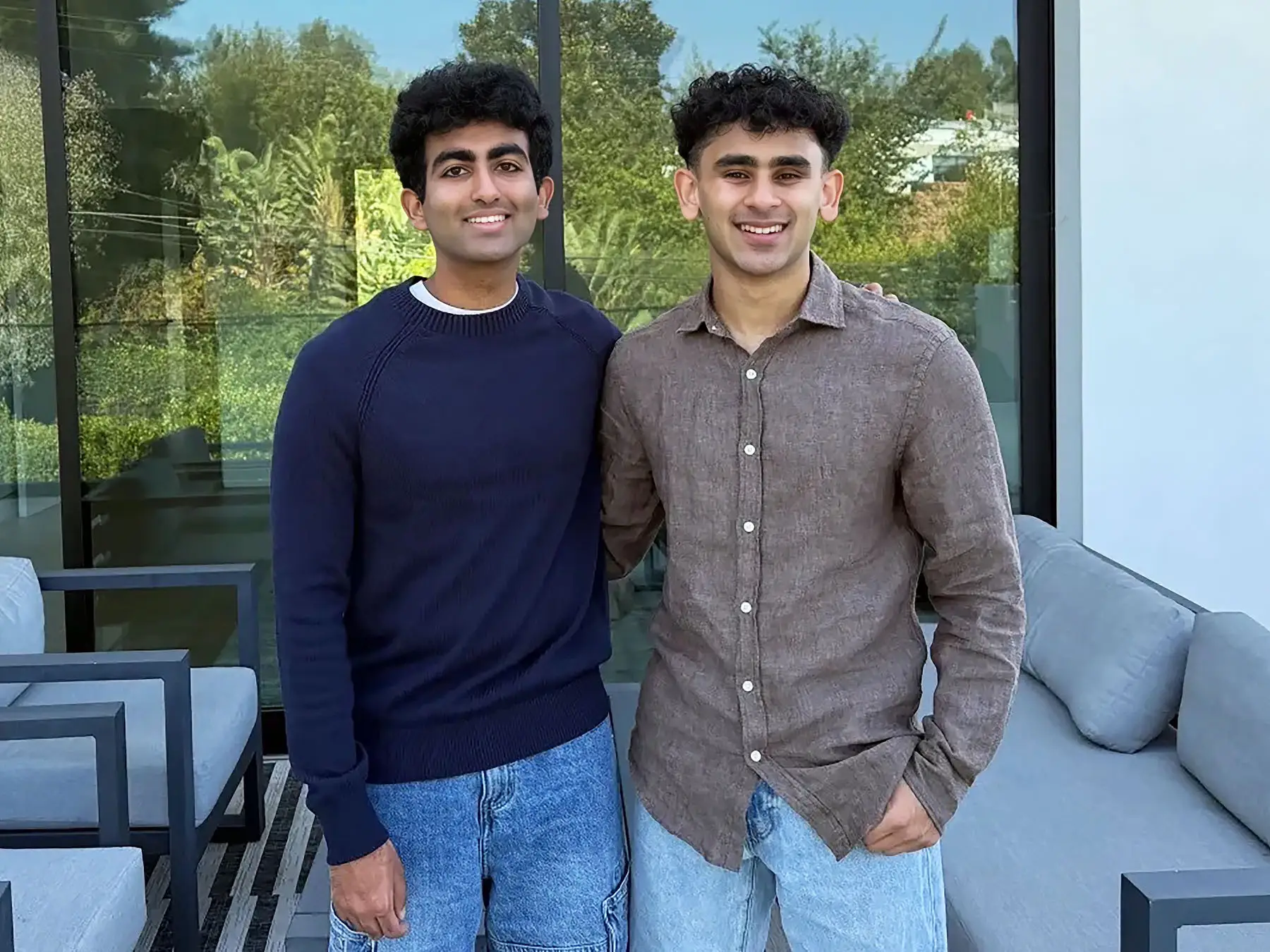
This as-told-to essay is based on conversations with 21-year-old cofounders, Rudy Arora and Sarthak Dhawan, based in New York. Their words have been edited for length and clarity.
Rudy Arora: The goal wasn’t to build a million-dollar company we’d drop out of college for. We just wanted to create something we would find useful, maybe market it a little bit, and if it went well, pay for college with the profits.
Sarthak Dhawan: Rudy and I grew up in the suburbs outside Dallas and met in middle school. We were always tinkering with random things together and trying to build stuff.
Arora: Our app was born out of a problem we faced with taking good notes in class as we transitioned from high school to college in 2023. I was a freshman at Northwestern University, and Sarthak was enrolled at Duke.
Dhawan: We launched the app in January 2024, and by March 2025, the app was generating almost $500,000 a month. We knew our parents would think it was crazy to drop out since we were both at good schools, but it made sense for us.
Arora: We went full-time with our app at the end of our sophomore year, last year. It honestly wasn’t a hard decision. Looking back, I think we dropped out a little late. Despite that, I think it can be a big mistake to drop out too early.
Our first business made $60,000 while we were in high school
Dhawan: My brother got me into coding when I was in third or fourth grade, and I was a freshman in high school when I built my first big app project. It was my own version of my school district’s grade-checking app, which ended up getting pretty popular across Texas.
The feeling of satisfaction I got when I saw people getting value from what I built was so awesome. I knew I wanted to do that for the rest of my life. Fast forward a bit, Rudy and I started our first business in our sophomore year of high school.
Arora: We built a marketplace to help people find Christmas light installers. My family was struggling to find an installer, and when I talked to my neighbors about it, they were having the same issue.
We learned a lot about navigating how to build something people wanted, interviewing our customers, and iterating on the app idea.
Dhawan: Both my grade-checking app and the Christmas lights business fizzled out because we stopped working on them.
We came up with our current app from having a personal problem
Arora: One of the first things we realized when we got to college in fall 2023 was that listening to a professor lecture and taking good notes at the same time was a bit hard. If you wanted to focus on the professor, you might not jot down everything they said.
We knew AI was good at turning dense text into more digestible formats because we had used it to help us with studying before. So we decided to make a product that combines all of this into a single workflow. Users can either record their lecture or add something they want to study, and we’ll use AI to turn it into a variety of aids, such as notes, flashcards, and quiz questions.
TikTok helped us scale our AI startup to millions
Dhawan: From ideating to product launch took about three or four months.
The app runs on a freemium model. Our first thousand users came from me taking some cookies from the dining hall, handing them to students around campus, and saying, “Hey, if I give you a cookie, can you download my app?
Arora: I decided to try posting videos about our app three to four times a day on TikTok. Eventually, one video went super viral. I doubled down, more videos took off, and our growth accelerated.
I didn’t want to keep making TikToks all day, even though we knew it was our most effective strategy, so I hired a couple of friends and creators with smaller followings to do it. We made some money on the app because of my viral videos. So when we asked our friends to make content, we paid $5 per video, and if their video went viral, there was a bonus.
We grew from 10 of my friends posting content for us to hiring people whose entire job was to post content, and they would repeatedly go viral talking about the app, which is how we scaled growth.
We built our AI app manually, but now we barely write our own code
Dhawan: When we started coding the app, AI code-generation models were pretty terrible. I wrote the code myself from scratch. The way AI was involved in the coding process was simply by asking the GPT questions.
Arora: We used APIs on the backend to turn the transcripts into notes, and those were kind of meh. It’s crazy how drastically coding has changed since then.
Dhawan: My favorite model to use now is Claude Code. A year and a half ago, I started realizing that more of my day-to-day was trying to plan and describe how things are working at a high level and reviewing the AI-generated code than actually writing my own.
The main problem with this is that, over time, as AI writes your code, the code base shifts into this entity that you don’t understand. I can feel my coding skills atrophying, and I think every engineer who uses Claude Code knows it’s doing that to them. At the same time, we can’t avoid using it, because then we’re going to be way less productive.
We scaled to millions in revenue with a small team
Dhawan: We’re at six full-time engineers right now, but the amount of product and code we’re able to ship weekly is genuinely unreal. It wouldn’t have been imaginable a couple of years ago, when we started.
Arora: There are two main costs for a company like ours: employee salaries and marketing costs. Because of AI, we can stay super lean and produce the output of a team 10 times the size.
We only have 10 full-time employees, and in terms of lifetime revenue, we’ve crossed $13 million. Because we’ve stayed lean, we don’t need to fill expensive roles that come with scaling. For example, we don’t have a COO.
We dropped out only after our startup had real traction
Arora: As a founder, having access to a college for recruiting helps. Going to college is one way of making connections with future employees or cofounders. We both got people from our colleges to join our company.
Dhawan: I loved college as an environment, and there wasn’t one catalyst moment for us dropping out. It was sort of built up over time. I made the mistake of trying to be a math major while also building our app, but school ate up so much time.
Arora: Before we dropped out, we couldn’t hire people and expect them to work full-time for us when we, as the founders, were still enrolled full-time in college. Once we dropped out, we were able to move a lot quicker because we could hire other people to work full-time on this.
Still, I would caution against dropping out without any real payoff. I see way too many people dropping out with only an idea or at a very early stage of building.
Do you have a similar story to share? If so, please reach out to the reporter at [email protected].
Read the original article on Business Insider
The post We’re childhood friends who scaled our startup to $13M by age 21. Dropping out of college was the right move — if anything, we did it too late. appeared first on Business Insider.