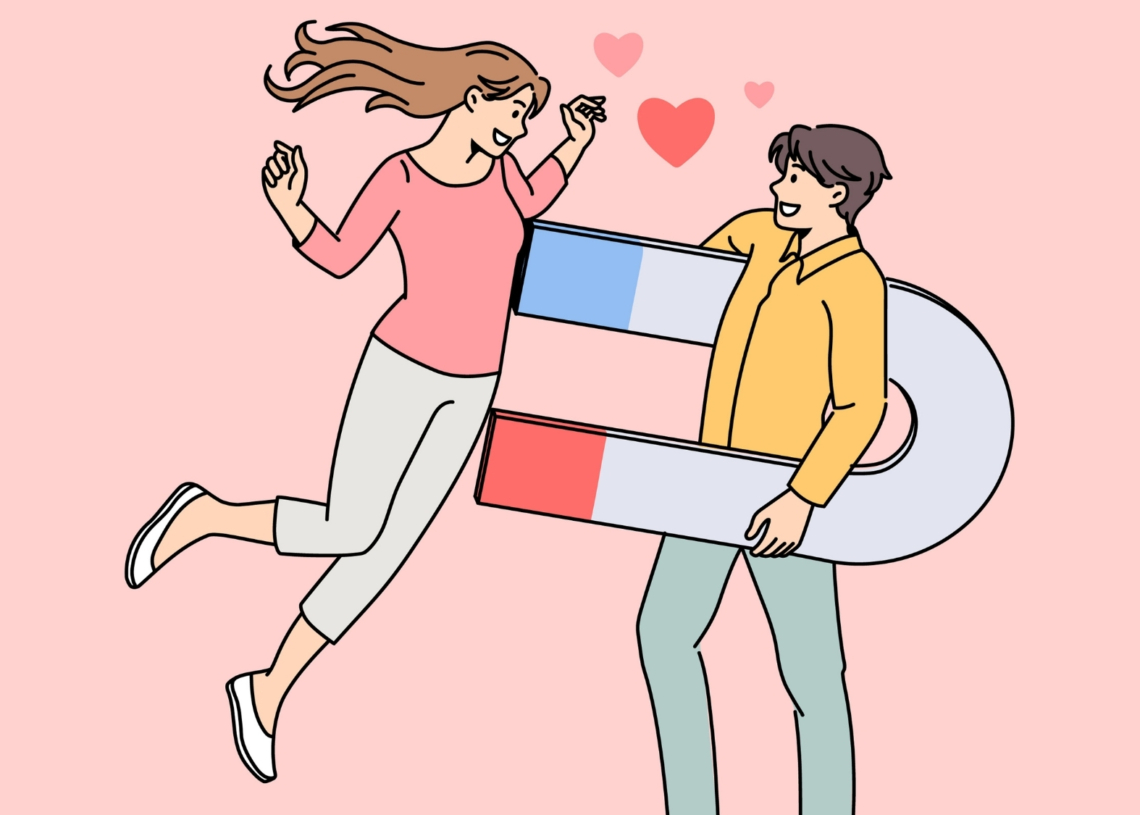
Most people will tell you they don’t have a type. They’ve dated a lawyer, a musician, a guy who ironically loved NASCAR, and a woman who really loved Matthew McConaughey movies. Completely different people. No pattern whatsoever. Researchers beg to differ.
According to a study published in the Proceedings of the National Academy of Sciences and highlighted by Psychology Today, people’s exes and current partners share more personality traits than chance would predict. Researchers at the University of Toronto tracked 332 adults over nine years, having each person and their romantic partners complete the Big Five personality inventory, which measures openness, conscientiousness, agreeableness, extraversion, and neuroticism. The overlap between partners was measurable and consistent. People weren’t just gravitating toward someone similar to themselves—they were gravitating toward the same type of person, repeatedly.
The physical attraction piece applies to physical attraction as well. A separate study published in the Journal of Personality and Social Psychology found that people’s past partners clustered around similar physical traits, including attractiveness and masculinity, at rates well above what random chance would produce. Both the personality type and the physical type appear to be operating, consciously or not.
A New Study Found That Most People Keep Dating the Same Type of Person
There are exceptions. People who scored high in extraversion and openness to experience showed less consistency across partners, which makes sense. Extroverts naturally meet a wider pool of people, and those high in openness are simply more willing to try something different. For everyone else, the consistency is hard to dismiss.
What this means practically is still being worked out. Knowing your type could make dating more efficient—if you know what you’re drawn to, you can pursue it with more intention. A strong type can also work against you, screening out perfectly compatible people who don’t fit the established mold.
The larger implication, per Psychology Today, is that romantic attraction may be far less spontaneous than it feels in the moment. We experience it as unpredictable, as if chemistry either exists or it doesn’t. But the data suggests we’re operating on a more consistent internal algorithm than we’d care to admit. The exes we’d rather forget and the partners we’d do anything for have more in common than we’ve probably ever let ourselves acknowledge.
The post Scientists Found Evidence That People Really Do Have a Dating Type appeared first on VICE.