Historically, being ultra-wealthy meant that there was an obligation to share a chunk of it with the world. Gilded Age industrialists like John D. Rockefeller and Andrew Carnegie made lasting cultural and philanthropic contributions, many of which still bear their names. But increasingly, our modern billionaires don’t seem inclined to follow suit.
To show just how little they’ve given, let’s look at the Giving Pledge. Over 15 years ago, some of America’s ultra-rich promised to give at least half of their wealth to charity throughout their lives or when they died. Even Elon Musk, briefly the first-ever trillionaire in history, signed it. That pledge is now on life support.
Bella DeVaan is the director of the Charity Reform Initiative at the Institute for Policy Studies, where she co-authored a study looking at how the pledge is impossible to fulfill. To explain the study’s findings, DeVaan spoke with Today, Explained co-host Sean Rameswaram about why the pledge isn’t the road to a more equitable future and how philanthropy should be done instead.
Below is an excerpt of the conversation, edited for length and clarity. There’s more in the full podcast, so listen to Today, Explained wherever you get podcasts, including Apple Podcasts, Pandora, and Spotify.
Can you remind us what the Giving Pledge was and who signed it?
The Giving Pledge was a voluntary philanthropic commitment founded by Bill Gates, his then-wife Melinda French Gates, and Berkshire Hathaway chair Warren Buffett in 2010. Since then, north of 250 people in the world have signed onto this pledge. And it’s people with tons of money who feel like signing onto something like this is something that they could do, or at least want to be seen as pledging to do.
The Giving Pledge is now 16 years old. My team did a study at 15 — old enough for a driver’s permit. And we feel like there’s a significant body of evidence that the pledge is unfulfilled and unfulfillable. Of the 32 original signers who are still billionaires, they had collectively gotten 283 percent wealthier — or 166 percent adjusting for inflation — since they signed onto the pledge, and only one couple in the group fulfilled their pledge.
So the idea is to get poorer over time, and meanwhile, almost everyone, or if not everyone, has gotten significantly richer.
That’s exactly right. Mackenzie Scott, who is one of the most prolific and generous pledgers, has given away $26 billion. [But] she’s decreased her wealth by less than $6 billion since her separation from Jeff Bezos. So if that’s what the most generous philanthropist is struggling to keep up with, everybody else is faring far worse.
Is it because they don’t genuinely want to give their money away, or is it because they’re simply doing so well all the time and getting exponentially richer all the time that it is really hard to do?
If we want to give them some credit, yes, it is mathematically incredibly challenging to give away as much money as their skyrocketing wealth. But I definitely think these billionaires are not stepping up to the plate and giving as much as they should and even as much as they’ve committed to.
A great caveat of the Giving Pledge is that you get to fulfill it upon your death in your will. That could look like giving your children control of your charitable intermediaries. A big part of our study was finding out that 80 percent of all the gifts that these pledgers have given go into private foundations, often that they control.
That’s what it looks like when you can make a donation that seems like you’re parting ways with your wealth and delivering some kind of benefit to the public, but actually that money doesn’t reach public charities or public works or on-the-ground aid until it leaves the foundation, and there’s a significant lag time in there.
And what’s wrong with all the money going to their foundation that then goes and distributes money to, I don’t know, needy children, medical research firms, whatever it might be?
A weigh station lengthens the journey, right? We figured out that out of all of the living pledgers who are still billionaires, when they signed on, their median foundation payout rate was 9.2 percent a year.
If you’re getting so much wealthier and your foundation is only giving away a single-digit percentage of your foundation’s wealth every year, and you’ve gotten a tax incentive and reduction up front for your gift — which the general public is subsidizing up to 73 cents per dollar — that’s a very significant investment. You’re asking the public to shoulder it and that money is trickling out back to the public. It’s not keeping pace.
Is there any good news here, Bella? Have we accomplished anything? Have we eradicated any diseases? Have we cured any diseases?
It depends who you ask, but I would say no. I think that the great indignity of philanthropy and concentrated wealth at this scale is that multiple things can be true at once.
It can be true that billionaires overexert their power, that they are able to influence the state of science, innovation, the deliverance of public aid, the shape of housing policy, and that can make significant inroads and deliver benefits to people. There’s no arguing with that. But at the same time, they can be hoarding wealth, not doing enough, resting on their laurels, banking on this idea that the reputational benefit of signing the pledge is enough.
That those two things can be true at the same time, while regular people are struggling to make ends meet, means that the system is in need of a dramatic overhaul. And if the billionaires who promised to give half their money away are doing this poorly at it, that tells us everything that we need to know.
Tell us about an overhaul. If you designed the Giving Pledge or a system that’s altogether different, what would it look like?
If it were up to me, the number one most meaningful intervention is to figure out how to tax wealth, figure out how to restructure our economy so that people can’t accumulate these fortunes in the first place, over which they can exercise such plutocratic control.
But knowing that we live in a society that has all these billionaires already and has all these foundations with piles of money that haven’t been deployed for the public benefit, I think we have to increase transparency so that donors can’t use donor-advised funds and other popular intermediary and foundations to conduct dark-money giving or play shell games to change the timing of tax benefits, so that philanthropists have to make the gift and then see their tax benefit instead of getting it upfront without having any obligation to move money.
I’m hearing tax the Rich, I’m hearing reform tax code, I’m hearing change public policy. But as you could admit, less likely to happen. And I just wonder, have all of those things become less en vogue 15 years down the road?
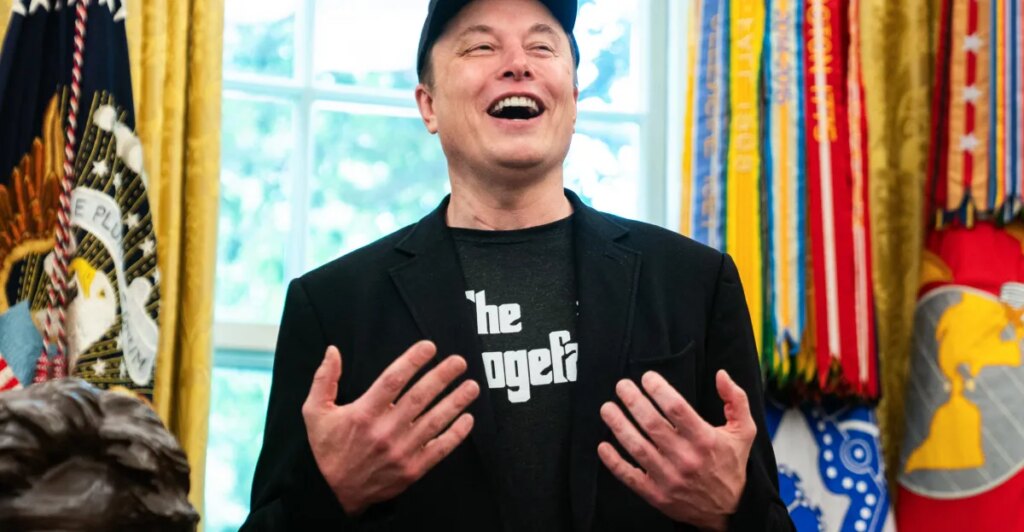
Elon Musk talks about empathy as a weakness. He made cuts to USAID programs that directly resulted in hundreds of thousands of people dying. And people still love him and want to invest in his companies and make him even richer! Do you think we’ve seen a cultural shift around giving around empathy itself?
Yes. In these political conditions, the Giving Pledge is what we’re stuck with. We’re stuck with waiting for a voluntary effort to reshape society instead of knowing that we’ll get structural reform that would be guaranteed to deliver it.
These are all very concerning trends. Philanthropy in America has always been an expectation of the wealthy people in the country. Reaching back to Andrew Carnegie and Rockefeller, that is what is expected of a rich person in America. That value is no longer closely held at all.
Regular people are as generous as they can be. We see this in remittances. We see this in small donations to your local food bank, to your religious institution. Everyday people are as generous as they can be, and I think that our ultra-wealthy people need to take after them more.
The post How the rich got stingy appeared first on Vox.