KYIV — Traveling with a delegation of American journalists here this month, I saw the results of Russia’s brutal war up close in one city near the front. But it was a mundane town much farther from the fighting that shook me most.
Bucha is a suburb of Kyiv. Aside from an occasional cookie-cutter Soviet-style apartment bloc, it looks and feels like a middle-class suburb of any Midwestern American city. Local stores and fast-food places along the main drag. Neighborhoods with sidewalks, yards and fences. People walking dogs and pushing strollers. Lots of trees. There’s a big shopping mall nearby.
Bucha is also a site of atrocities. It’s where, over a month in 2022, occupying Russian forces massacred hundreds of civilians. The Ukrainian military liberated the city so quickly that the Russians couldn’t cover their tracks, and the world witnessed what Russian occupation means. Raided homes. Bodies in the streets. Torture chambers. There was a mass grave in a churchyard.
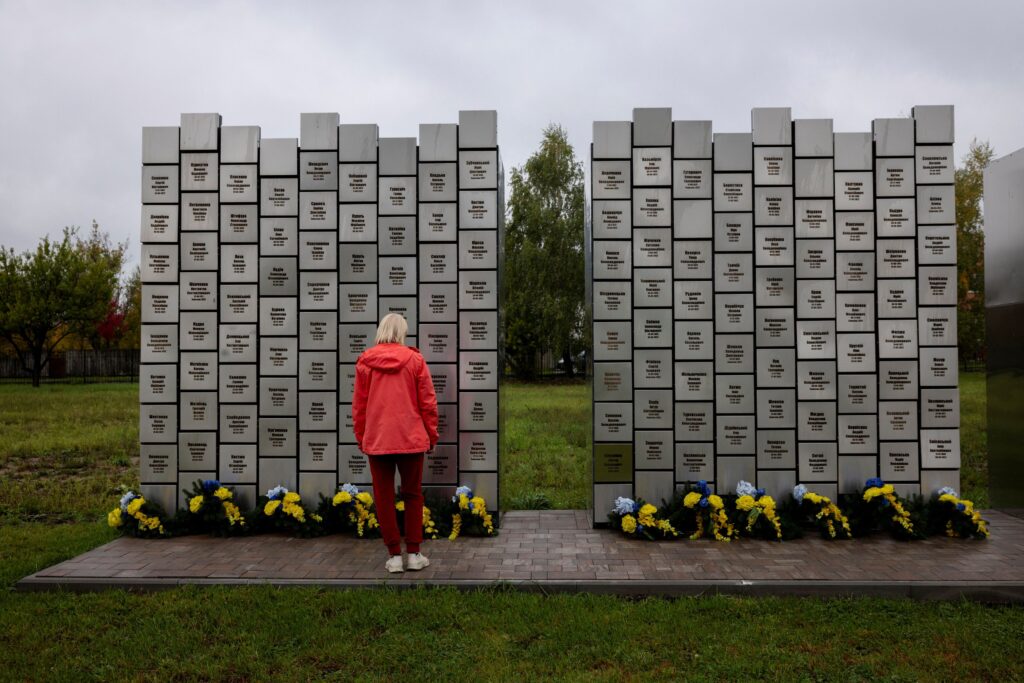
Bucha has built a monument bearing the names of those killed. Monuments like that, in towns like that, should have names of local soldiers killed in some far-off place, not civilians.
Russia’s claims about what was found there have oscillated between maintaining that the murders didn’t happen and that they were a false-flag operation. Ukraine says it was genocide.
I’ve been to Dachau concentration camp in Germany, which is terrifying as a purpose-built facility for genocide. Bucha is a place where people live normal lives, commuting to their jobs in the city while their kids go to good schools and then come home to play outside and watch TV before going to bed.
That it could be a site of genocide, too, is terrifying in a different way.
In Kharkiv, Ukraine’s second-largest city, the war is present in a more expected way. Kharkiv’s center is about 25 miles from the Russian border. I’d estimate that about every eighth building there has been damaged by war, but I didn’t see the worst parts of the city.
Kharkiv is known for arts and science, and the city’s art museum is one of Ukraine’s finest. The first night I was in Ukraine, a Russian drone attack damaged it. Walking through the wreckage a few days later, during another active air raid alert, I saw that the fire from the attack burned so hot that it bent I-beams like pipe cleaners.
The Ukrainians who live in Kharkiv know such attacks will happen. Some people have stayed since before the full-scale invasion began. (“Full-scale invasion” has become a term of art, describing the Russian effort that began in February 2022. “The war” began with the invasion of Crimea in 2014.) Others have left to go either abroad or, more commonly, to parts of Ukraine farther from the front.
And some residents — roughly 200,000, according to an estimate from the mayor last year — moved to Kharkiv because it is safer than where they lived before.
I visited an educational center for families from Kurylivka, a village about 70 miles away, where fighting is ongoing. Many of the kids have never had a normal school experience; before war, there was pandemic. The kids gave us crafts they made as gifts. It didn’t quite feel right to accept them.
We also met with Nataliya Zubar, the no-nonsense woman who leads Maidan Monitoring, a group that documents Russian war crimes like the one that took place in Bucha. Russia’s stock response to its many bombings of schools and medical facilities is denial. Zubar and her volunteers meticulously document these crimes with time-stamped photographs.
She is primarily helping the Ukrainian government’s investigations, a reflection both of her skepticism about the reliability of international organizations and her faith in Ukraine’s eventual victory. That faith appears to be on a firmer foundation in recent days, as Ukraine has struck Moscow hard and besieged Crimea with drone attacks cutting off Russian supply lines.
Still, fighting could continue for years. Ukrainians are aware of that, yet they stay in places like Kharkiv and oppose accepting Russian occupation of any more of their territory as part of any peace deal. Seeing Bucha helped me understand why. Because what happened there is certainly happening in other areas taken over by Russia — areas that once were normal, and that determined Ukrainians want to make normal again.
The post What Bucha taught me about Ukraine’s will to fight appeared first on Washington Post.