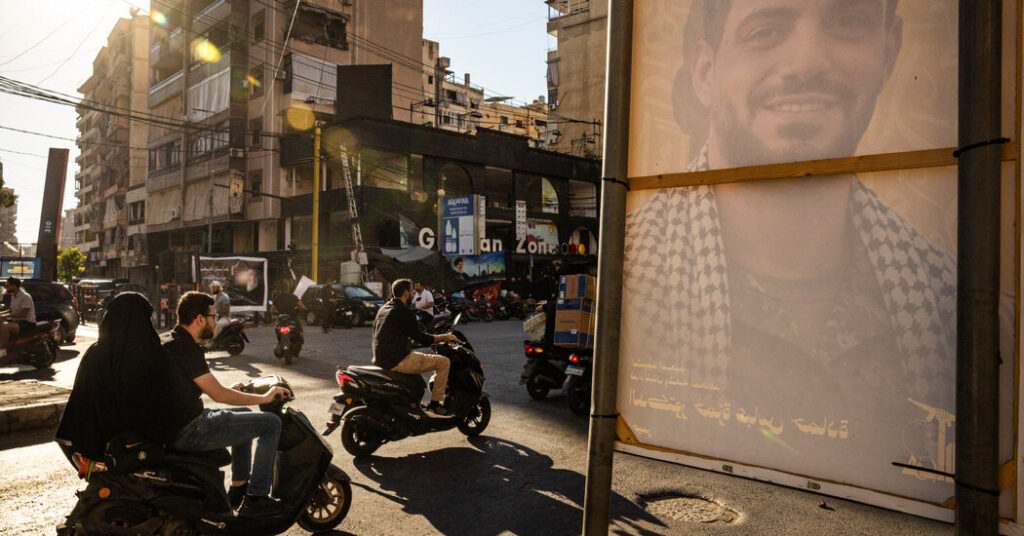
In Dahiya, a maze of neighborhoods south of Beirut where the Iran-backed militant group Hezbollah holds sway, traffic jams are back. Bakeries again pull trays of Lebanese flatbread from ovens. Cafes, draped in the flags of the nations competing in the World Cup, are filled with men and women watching the matches and lingering late into the night.
For more than three months, the fighting between Israel and Hezbollah brought airstrikes, evacuation warnings and an exodus of tens of thousands of people from these densely populated commercial and residential neighborhoods. Now, after a series of stop-and-start cease-fires, and the signing of a U.S.-brokered preliminary deal between Israel and Lebanon, life is returning almost as quickly as it vanished, even as mounds of rubble remain between buildings blown open to the sky.
“We are back,” said Mohamed Trad, 45, who manages a coffee and hookah shop. “This is the best place in Lebanon.”
The first Israeli strikes that thundered across Beirut, the Lebanese capital, after the start of the U.S.-Israeli war on Iran hit Dahiya in early March. The United States and Israel had attacked Iran, and Hezbollah had fired at Israel in response. Now, Israel was retaliating.
It was the middle of the night. Families were preparing suhoor, the predawn meal before the Ramadan fast. Instead, they packed and fled — to the beachfront, to other neighborhoods and cities, to relatives and friends who would take them in. Some turned their cars into temporary homes, parking just blocks from homes they could see but dared not enter. The exodus brought back memories of 2024, when residents had to flee their homes during the war between Israel and Hezbollah.
After a cease-fire was announced in mid-April this year, they rushed back, only for Prime Minister Benjamin Netanyahu of Israel to order the Israeli Army to attack Dahiya weeks later, sending many fleeing once again. After the United States and Iran announced a cease-fire in mid-June, people began trickling back. And yet, Israeli strikes have hit the area again, even angering President Trump.
Israel issued 27 mass evacuation warnings for Dahiya from March to May, according to Amnesty International, which this month said the military’s expanded use of such warnings violated international humanitarian law. Israel has said it is targeting Hezbollah infrastructure and members in the area, as well as retaliating for Hezbollah’s launch of drones and rockets toward northern Israel.
“People are not obliged to live here,” Mr. Trad said. “But they want to come back here. They want to live here.” He said he lost up to $27,000 after a strike targeting a nearby building destroyed his store.
On any given day, Dahiya hums with bustling city rhythms: commuters heading to work, shoppers hunting for discounts, friends and families gathering in restaurants. Many in the area are supporters of Hezbollah, and the group’s yellow flags, murals of its leaders and banners commemorating fallen fighters are woven into the landscape. The result is a layered place — at once intensely local, deeply political and emblematic of the broader tensions and aspirations of modern Lebanon.
Those layers were sharply exposed for Issa Fahs, 51, who runs a cosmetics shop in Dahiya.
The war upended his life. He fled his home, his workers were displaced and the store’s glass front was blown out. His relatively low prices had drawn customers from other neighborhoods and towns, he said, until he had to close for months. He estimates that he was losing as much as $4,000 a day in perfume and makeup sales before reopening. The war in Iran also disrupted imports he relies on from countries including China and Turkey, he said.
“This war has brought so much loss,” he said on a recent afternoon as customers trickled into the store. “But we always want to be positive.”
For many in Dahiya, one reason for that optimism is that they were able to return for Ashura, a holy time in Shiite Islam that commemorates the killing of Imam Hussein, the Prophet Muhammad’s grandson, in A.D. 680. Across the neighborhoods, volunteers dressed in black hand out cold water and coffee along the roadside and take turns stirring giant pots of harissa, a slow-cooked porridge of wheat and shredded meat that is cooked in cauldrons and distributed to friends, neighbors and the poor.
For 10 nights, residents also gather in neighborhood squares to pray, chant and listen to speeches, including from Naim Qassem, Hezbollah’s leader.
Ali Alawiyeh said he was relieved to be back; he could not imagine being away from Dahiya during Ashura. The commemorations have also carried a sense of grief, he said, unfolding after years marked by war and the loss of major Shiite figures tied to the region’s conflicts, including Ayatollah Ali Khamenei, Iran’s former supreme leader.
“Ashura teaches us not to be afraid and to stand up for what’s right,” said Mr. Alawiyeh, 39, who recently returned to Dahiya with his wife and two children. “We have to keep going.”
Not everyone has come back. Many residents remain displaced because their homes were damaged, while some elderly people have chosen to stay away, unwilling to risk another cycle of packing, fleeing and returning before a more durable agreement is reached. Israel and Hezbollah recently began to observe a tense cease-fire, as mediators in the U.S.-Iran talks announced a mechanism intended to keep the truce in place.
There are also the migrant workers — from Bangladesh, Ethiopia, Sudan, Syria and elsewhere — who were drawn to Dahiya by cheaper rents and lower living costs. As they fled, many were stranded, suddenly without work, income or anywhere to go. Many continue to sleep in overcrowded apartments or shelters.
Others say landlords are demanding rent payments before allowing them to retrieve the belongings they left behind, said Banchi Yimer, an Ethiopian who founded an organization supporting migrant workers, including those living in Dahiya.
“It’s been hell for them,” Ms. Yimer said.
For now, life keeps pressing forward.
Excavators claw through piles of rubble, fruit vendors stack peaches and watermelons at roadside stalls and motorbikes squeeze through traffic. An Israeli drone has also returned, its familiar buzz hanging over the neighborhood and the larger city.
On a recent evening, Mr. Trad sat with friends and employees in his newly renovated cafe. “There is no place like Dahiya,” he said between puffs of shisha smoke and bites of cheesecake. “Dahiya is the foundation of Beirut.”
The post In Beirut’s Southern Outskirts, Life Slowly Returns Amid Ruins appeared first on New York Times.