A street corner in the South African coastal city of Durban has become a bustling scene of desperation.
Thousands of migrants crowd around colorful plastic sacks, boxes and trash bags carrying what belongings they could salvage before fleeing the country. Women tuck their babies under blankets. Vendors hawk solar-powered cellphone chargers and potato chips. Portable toilets, large green water tanks and makeshift showers fashioned from gray tarps are the only sanitation available.
The people in this encampment, like the handful that have popped up around the country, have been stuck out here for days, sometimes weeks, after anti-immigration activists called on undocumented foreigners to leave South Africa by Tuesday, or face untold consequences.
The activists have not explained what they plan to do to the immigrants who stay after the deadline, but even the threat has led thousands of immigrants, mostly from other African nations, to leave South Africa.
Some immigrants have turned to consulates for help in leaving the country, overwhelming foreign missions and South African immigration authorities racing to process paperwork for families, many of them undocumented. Mobs have already attacked many immigrant homes and businesses.
Fearing for their safety as the deadline approaches, thousands of migrants waiting to leave South Africa have resorted to sleeping outside government offices, foreign missions or, here in Durban, an old park just a block from a picturesque beach on the Indian Ocean.
“It’s a humanitarian disaster in the making and the state authorities seem to be asleep at the wheel,” said Dale McKinley, an immigrant rights activist in South Africa. “It’s outrageous.”
The government has said the unfolding crisis has been the result of years of migrants taking advantage of the country’s immigration policies.
South Africa is the continent’s wealthiest nation. When people come to South Africa as refugees, the government does not put them in refugee camps but instead allows them to integrate into society. But many immigrants manipulate the refugee system to stay in the country longer, said Njabulo Nzuza, the deputy home affairs minister, while others who come for economic opportunities often overstay their visa.
Since 2008, South Africa has battled waves of deadly xenophobic violence, with immigrants often being blamed for the country’s high unemployment and high crime. But the country has never seen such large, spontaneous migrant camps cropping up on the street, Mr. Nzuza said.
The largest camp started several weeks ago when thousands of Malawians began sleeping at a park in a residential community in suburban Durban while waiting for their government to repatriate them. The police at one point clashed with the migrants and fired tear gas.
About a week ago, those Malawians were moved to an old fairground. Large white tents have been set up on a massive paved lot surrounded by a barbed wire fence. Inside, aid organizations are providing food and medical care. But the demand has been so high that thousands of Malawians have been forced to wait outside before they are let in to be processed and put on buses to return to Malawi.
The government said that at least 8,000 people were at the camp, and that at least 7,000 Malawians had already been sent back.
Trump Administration: Live Updates
Updated
- D.C. settles a suit with a protester arrested after playing a ‘Star Wars’ villains’ theme song.
- Yale, under pressure on its admissions practices, is seeking a deal with the Trump administration.
- Prosecutors say citations have been issued at the reflecting pool, but no records are available.
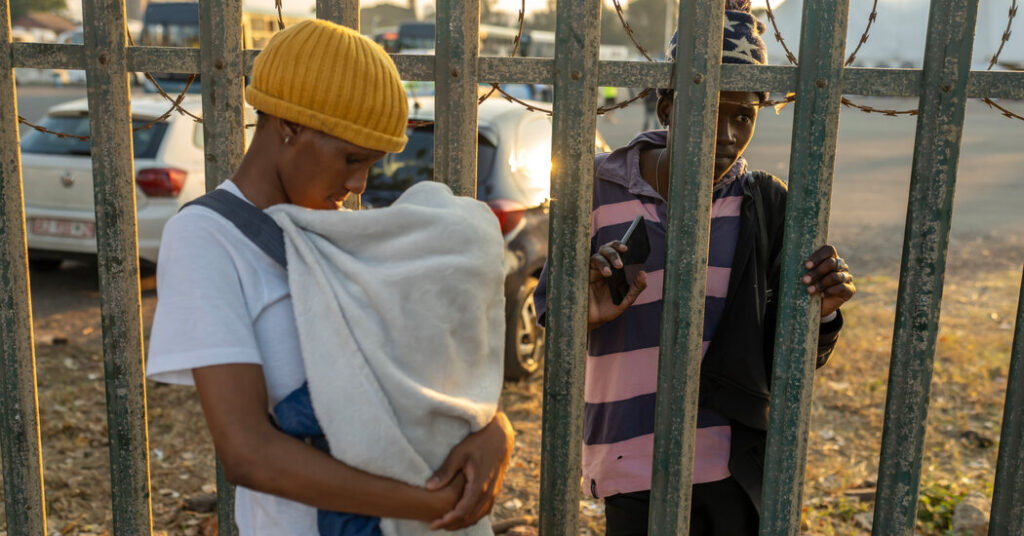
On Thursday afternoon, Charles Paul, from Malawi, reached between an opening in the fence to caress his 2-month-old son, Kwakhanya, who was strapped to the chest of his girlfriend, Sanelisiwe Nxili.
It was almost time to say goodbye. After seven years in South Africa, Mr. Paul, 24, has decided to return to Malawi because of the threats against foreigners. Ms. Nxili, 23, is South African, so she is staying behind with their child. She too is nervous about what comes next.
The family survived on Mr. Paul’s monthly salary of about $365 as a carpenter. Ms. Nxili said she would have to send her son to live with her mother so that she could find a job.
“They must not chase them all away,” Ms. Nxili said of the anti-immigrant activists threatening migrants in South Africa. “They must document them.”
Even those who are in the country legally say they are not being spared. At another camp in Durban, hundreds of refugees have been cramped on a sidewalk in front of a home affairs office. Most of the refugees say they were attacked by South Africans who told them to leave the country, even though they are here legally as refugees.
Government officials have told those in the camp that they must return to their communities or will be taken to an immigration detention center. The refugees have refused, arguing that neither option is safe.
On a recent evening, children bounced on foam mattresses on the sidewalk next to a convenience store as their mothers sat by wrapped in blankets. Cars sped past on the busy road as 37-year-old Valerie Ngabo pondered the unthinkable: returning to her war-torn village in the Democratic Republic of Congo.
She has been in South Africa since 2008, and during a previous wave of xenophobic violence in 2015, the mother of four was forced to spend six months sleeping outside, she said. More recently, she said, South Africans have attacked the hair salon she owns, beat her and her colleagues and told them to leave.
Life might be better in Congo, she said.
“There’s no hope,” said Ms. Ngabo, adding that she had been approved for resettlement in the United States in 2024, but has been unable to go after President Trump froze the refugee program when he took office last year. “There’s nowhere I can go,” she said.
Gladys Irakoze, 26, was born in South Africa to refugee parents from Burundi. She always thought she could blend in among South Africans, but that no longer seems possible, she said. Things have gotten so hostile toward immigrants that even her 10-year-old son has been threatened by his classmates.
Ms. Irakoze, also staying in the camp, said she did not recognize her country anymore. “I didn’t expect this to actually happen in South Africa,” she said.
The post Thousands Flee South Africa as Anti-Immigrant Attacks Grow appeared first on New York Times.