The Supreme Court’s decision yesterday could expose more than 330,000 Haitians in the U.S. to the risk of being returned to one of the world’s most dangerous humanitarian crises. The Trump administration argues that Haiti is now safe enough to end Temporary Protected Status (TPS). But the facts on the ground tell a different story.
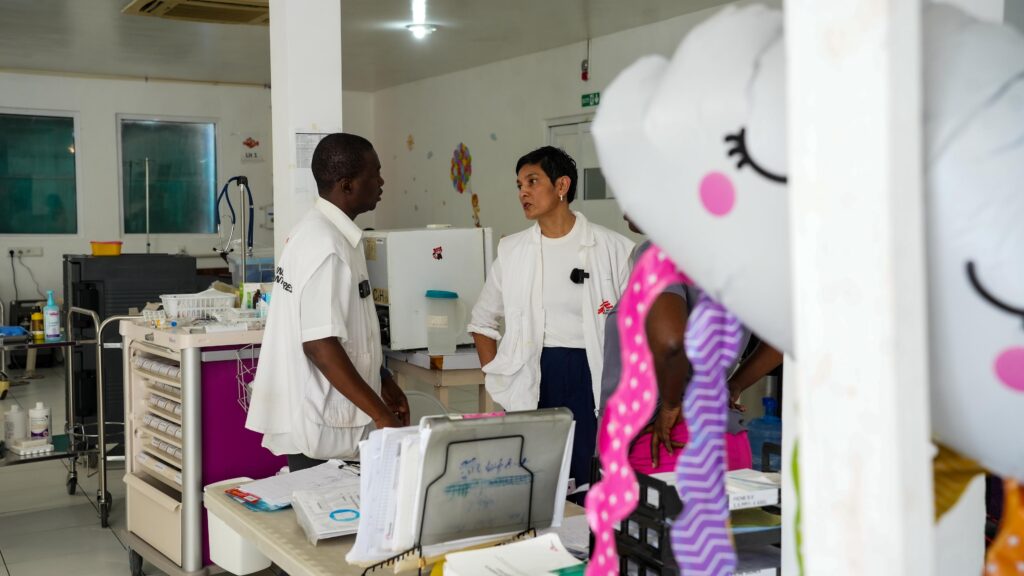
I recently visited Haiti to connect with my Doctors Without Borders colleagues and patients in several medical programs. What I witness is a humanitarian crisis. Public services have all but collapsed. Entire neighborhoods of Port-au-Prince have fallen within the control of violent armed groups.
One woman I met went into labor as one of Port-au-Prince’s frequent gun battles raged near her home. She was forced to wait until the next morning, when shooting stopped, to find a motorcycle taxi driver willing to navigate around barricades and checkpoints to reach the maternity hospital. Fortunately, she received the care she needed, and her baby daughter was born healthy and beautiful.
But this story is not unusual in Haiti today. Many residents have fled the capital altogether, while those who remain face chronic insecurity and diminishing access to essential services, including water, sanitation, and medical care. Residents are subjected to violence on all sides, caught in the crossfire, killed at checkpoints, or attacked in their homes. UN Secretary-General António Guterres has warned that Haiti is facing the worst humanitarian crisis in the Western Hemisphere. Guterres himself has called attention to the more than 2,300 people who have been killed in Haiti this year alone.
This is the situation that the Trump Administration wants to send people back to.
TPS is a long-standing government program that allows people to remain in the country when conditions in their home countries make a safe return impossible. It has historically been applied in situations of armed conflict, natural disasters, or severe instability—such as Haiti today. Ramping up deportations to Haiti after the cancellation of TPS would not mark the end of a crisis. It would force hundreds of thousands of people back into one.
The situation in Haiti has deteriorated since armed groups took control of most of Port-au-Prince in 2024. The World Health Organization estimates that more than 60% of medical facilities in Port-au-Prince have been closed or are only partly functioning. Some have been looted, burned, and abandoned, while others face critical shortages of supplies, medicines, or staff. Many people are too afraid to seek health care, even if they have an urgent need. Fighting often forces people to stay home for days, and they can’t even find safe passage to receive care if they have been hit by stray bullets (a frequent occurrence) or after sexual assault.
When patients can reach health facilities, the needs are immense. On some mornings, hundreds of people line up outside Doctors Without Borders’ Cite Soleil hospital, seeking everything from emergency care to follow-up appointments for chronic conditions like diabetes or hypertension. Admissions to our main sexual violence clinic in Port-au-Prince have nearly tripled since 2022, to more than 250 per month.
Nearly 1.5 million people have now fled their homes because of violence and are sheltering in other locations across Haiti, according to UN estimates. Groups of families with up to 40 people are sharing single rooms in public buildings such as schools. Others are living in makeshift camps.
Our teams, who provide care to displaced people through mobile clinics, have also seen a rise in scabies linked to the lack of clean water and poor living conditions.
Before the Supreme Court, the Trump Administration argued that Temporary Protected Status for Haitian nationals should be terminated, despite the severe insecurity and humanitarian crisis that persist in Haiti today. As an organization of doctors, nurses, and humanitarian aid workers, we see firsthand what people in Haiti face every day. Our message is clear: people should not be returned to places where violence and insecurity make it unsafe to live, work, or access basic services, including medical care. That reality should guide any decisions about the future of TPS.
The post The Crisis I Witnessed in Haiti appeared first on TIME.