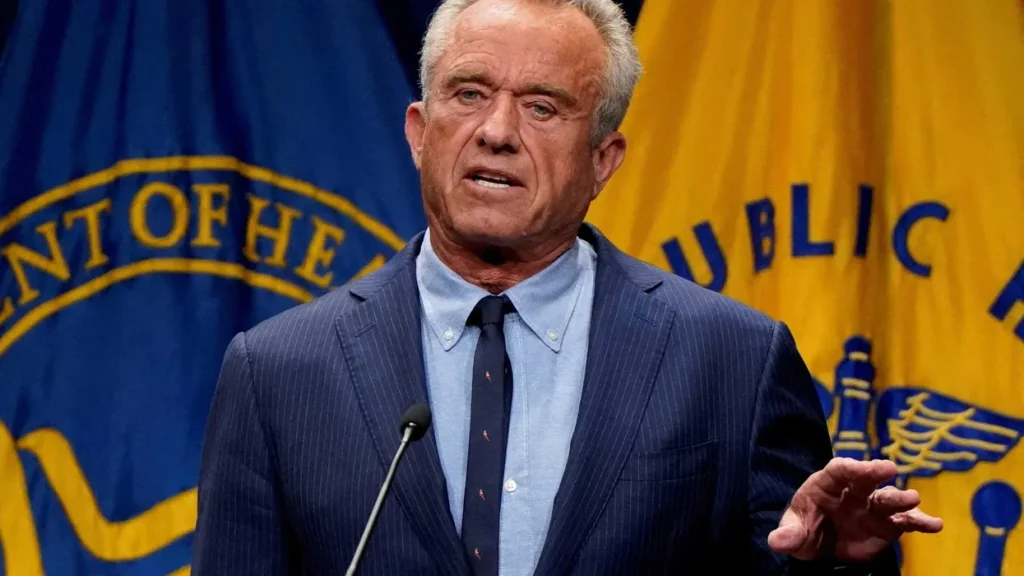
Health Secretary Robert F. Kennedy Jr. has built much of his public health platform around exposing what he calls regulatory failures in the American food system, but that crusade appears to be running into an unexpected complication.
Among his targets is the “generally recognized as safe” (GRAS) designation, a mechanism that allows food manufacturers to introduce new ingredients without review by the Food and Drug Administration simply by self-declaring them safe. Kennedy has called this loophole a “scandal,” NOTUS reported, but that loophole he wants to close for processed foods is deeply embedded in the dietary supplement industry he champions.
Steve Mister, president of the Council for Responsible Nutrition, suggested the administration may not have fully grasped this overlap when it began pursuing the regulation. “I think it’s quite possible [the administration] was not aware of how important GRAS is to dietary supplements,” he said.
“If done wrong, this could create a really big mess,” David Spangler, a senior vice president at the Consumer Healthcare Products Association, told the outlet. The group represents over-the-counter medicines.
GRAS isn’t just a food-industry mechanism that supplements happen to touch – it’s foundational to how supplement makers operate, allowing them to quickly bring new vitamins, protein powders and other products to market without the delays of formal FDA review.
Kennedy’s own daily routine includes supplements like vitamin D and omega-3s. His adviser, Calley Means, co-founded a company that helps people purchase supplements using tax-free health savings accounts. Prominent wellness influencers aligned with the MAHA movement, including Andrew Huberman and Mark Hyman, regularly promote supplement use. Yet these same circles often criticize the food industry for lacking oversight — without acknowledging that supplements rely on identical regulatory gaps.
Harvard Medical School professor Pieter Cohen described the perception of the GRAS loophole as “cognitive dissonance,” saying the same regulatory laxity that horrifies critics when used in processed food is treated as unremarkable, even beneficial, when supplements do it.
“This has been morphed and twisted into a way to introduce any type of chemical the company wants into a dietary supplement,” Cohen said.
The post RFK Jr.’s sparks fears he’ll create ‘a really big mess’ with loophole crackdown appeared first on Raw Story.