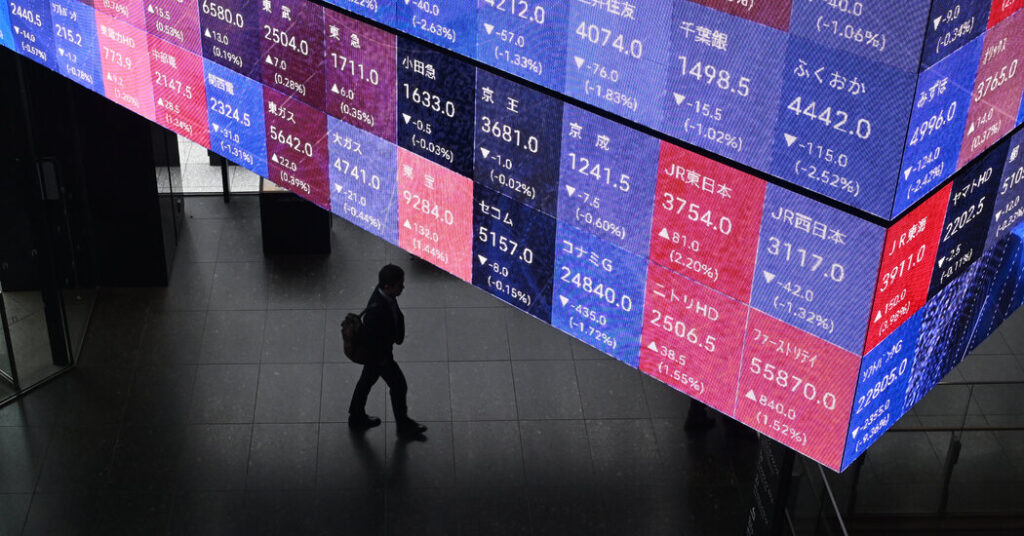
Stock markets across Asia tumbled on Friday, pulled lower by the region’s biggest technology shares as investors continue to wrestle with whether the boom in artificial intelligence spending is all but done or just beginning.
South Korea’s KOSPI fell 8 percent. The benchmark index has increasingly become a proxy for investor sentiment for artificial intelligence because of the outsized influence of the country’s two chip giants — Samsung Electronics and SK Hynix — in dictating the direction of the broader market. Shares of Samsung dropped 9 percent, while SK Hynix plummeted 10 percent.
It capped a bruising week for the South Korean equities, which had been the world’s best-performing major stock market since the start of last year. The KOSPI plunged 10 percent on Monday and has since whipsawed between steep losses and gains — at times reversing direction in the same trading session.
In a research note earlier this week, Morgan Stanley said the KOSPI’s strong run has attracted a wave of retail investors, contributing to greater market liquidity but also increased volatility.
Japan’s Nikkei 225 fell nearly 5 percent, while shares in Taiwan fell 3 percent. Also, stock markets in Hong Kong and mainland China were lower.
Earlier on Friday, futures tied to the S&P 500 pointed to a modest gain when U.S. markets reopened. But as losses deepened across Asian markets, sentiment soured, sending futures markets down 0.7 percent.
Oil prices slide.
-
The price of Brent crude, the global benchmark for oil, fell nearly 2 percent to about $74 a barrel for September delivery, the most actively traded contract.
-
West Texas Intermediate crude, the U.S. benchmark, fell by similar amount to $70 a barrel.
-
Oil markets gave back some of the gains from Thursday when prices jumped after Iran struck a container ship in the Strait of Hormuz, halting shipping traffic through the crucial waterway.
Gasoline prices retreat.
-
Gas prices fell again on Thursday, sliding by a penny to a national average of $3.92 a gallon, according to the AAA motor club. Gasoline prices have risen more than 30 percent since the war began.
-
Gas prices don’t move in lock step with crude, usually trailing increases or drops by a few days.
-
The average price of diesel fell to $4.96 on Thursday, up 32 percent since the start of the war.
The post Asian Stocks Tumble as A.I. Uncertainty Jolts Tech Shares appeared first on New York Times.