Oil and gas chiefs may have quietly cracked a smile when Donald Trump won the 2024 presidential election. Oil billionaire Harold Hamm, founder of Continental Resources, called it “the most important election in our lifetime” as he made calls urging energy executives to donate to Trump’s campaign. Vicki Hollub, who heads up Occidental Petroleum, also called Trump’s win “very positive” for the oil and gas sector. And for his part, Trump similarly wooed the industry during the campaign, pledging environmental rollbacks and lax tax structures.
But the special relationship between the president and the country’s fossil fuel industry has been frosty as of late. After months of increased gas prices and concerns of inflation and affordability, Trump has started pointing fingers at some of his closest industry backers who have courted him just years earlier. Writing in a Truth Social post Wednesday morning, Trump seemed to blame the industry for the sky-high gas prices Americans are feeling at the pump.
“The big Oil Companies are not dropping their price at the pump commensurate with the sharply lower prices they are paying for Oil,” he wrote. “In other words, customers are being ‘gouged,’” he continued, adding he had instructed the Justice Department to investigate the issue, although offered no details on timeline.
Speaking to reporters on Wednesday, Trump explicitly accused Chevron, ExxonMobil, BP, and Shell of not cutting gasoline prices despite oil costs having fallen in recent weeks. Less expensive oil does generally translate to lower prices at the pump, but that process can take weeks to months, given the various additional costs that go into determining the final price consumers pay.
For months, the economy has been saddled with sticky gasoline prices stemming from the conflict in the Middle East and resulting energy shock. The situation benefited energy companies for a time, as the six largest oil and gas firms saw their market capitalization soar $130 billion in the first two weeks of the war alone, according to the Guardian. Now with midterm elections looming, high gas prices risk turning into a political drag for a Republican Party that has slender majorities to protect in both chambers of Congress. In the first month of the war alone, Americans paid $8.4 billion extra in gas costs, according to research from the Joint Economic Committee’s Democratic minority.
Prices have only lightly declined since then, and Trump is starting to point fingers. His latest target: the oil and gas industry that helped him return to office less than two years ago. Trump has accused major oil and gas companies of artificially inflating their prices as a result of the war.
In a statement to Fortune, a Justice Department spokesperson did not comment on the proposed investigations, but said rising gasoline costs—now sitting at an average of $3.91 a gallon, up from $3.22 a year ago—was a challenge for the administration.
In a statement to Fortune, a Justice Department spokesperson did not comment on the proposed investigations, but said rising gasoline costs—now sitting at an average of $3.91 a gallon, up from $3.22 a year ago—was a challenge for the administration.
“The price of fuel is not only a national security issue, it impacts the wallet of every American. We will always commit to ensuring affordability in this nation,” the spokesperson said.
A White House spokesperson similarly did not comment directly on the potential investigation, though reiterated the administration’s position that oil and gas prices would decline “as soon as the Iran situation is resolved.”
“President Trump has a proven track record of bringing gas prices to historic lows, and the Administration continues to be laser-focused on delivering economic relief for the American people,” the spokesperson said.
Fortune has contacted representatives from each of the energy companies named by Trump. A Shell spokesperson declined to comment. On Thursday, Eimear Bonner, Chevron’s chief financial officer, told CNBC oil and gas firms were “doing everything we can” to bring gas prices down, though any significant changes are unlikely to happen immediately.
“It’s going to take time,” Bonner said. “There is a lag between, you know, oil prices and reductions in oil prices and when that shows up at the pump, but we expect that prices will come down as things continue to normalize.”
A falling out with Big Oil
It’s a sharp reversal from the way Trump closely courted the industry in the run-up to the 2024 election. During his campaign, Trump advocated for extensive rollbacks to Biden’s green energy agenda, and championed scrapping several anti-pollution regulations. At a private campaign event in April, the then-candidate requested $1 billion in donations from oil executives to help him return to the White House, a sum Trump reportedly called a “deal,” given the tax and regulatory breaks energy companies would enjoy should he regain the presidency. Representatives from Chevron, Continental Resources, ExxonMobil, and Occidental Petroleum were present at the event, according to the Washington Post.
Trump may have fallen short of that lofty goal, but still made away with a respectable war chest. Between January 2023 and November 2024, oil companies such as Continental and Occidental funneled $96 million directly into Trump’s re-election campaign, according to a 2025 report from Climate Power, an advocacy group. The largest oil majors primarily donate through corporate PACs, although these also tended to benefit Republicans during the last election cycle. Chevron, for example, donated around $10 million during the 2024 elections, almost all of which went to conservative organizations or affiliates, according to OpenSecrets.
Taking into account spending on advertising, donations to down-ballot Republicans, and Congressional lobbying efforts, large oil and gas companies invested $445 million during the 2024 election cycle, the Climate Power report found.
The bet has turned out well for fossil fuel companies as well. Trump’s deregulatory campaign has fattened energy firms’ margins, while the industry has also benefited from the sweeping tax breaks included in Trump’s signature One Big Beautiful Bill Act legislation package passed last year. In addition to rolling back clean energy incentives, the bill led to around $18 billion in tax breaks specifically designed to benefit oil and gas companies, according to a report by the Joint Committee on Taxation.
The conflict in the Middle East has also proven a boon to energy interests. When the U.S. and Israel first began their coordinated attack on Iran in February, the Revolutionary Guard quickly responded by threatening most oil and gas tankers that dared to cross the critical Strait of Hormuz, sending energy prices soaring.
Trump’s impossible choice
But while periods of high oil prices can be good for suppliers, it’s pain for everyday consumers. National gasoline prices have hovered around the $4 per gallon mark for months, and Americans have had to adjust their habits accordingly, often driving less or budgeting more tightly. A Gallup poll published Thursday found two-thirds of Americans surveyed earlier this month say their household has experienced financial hardship due to fuel costs.
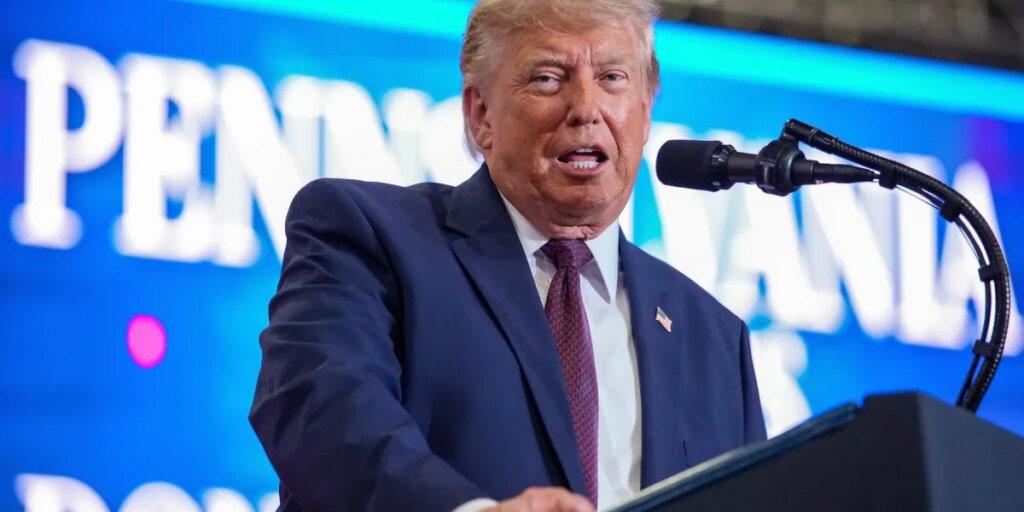
With Republicans hoping to preserve narrow majorities in both chambers of Congress later this year, high prices at the pump threaten to act as political spoiler. Incumbent parties tend to be more vulnerable in midterm elections, a risk magnified by high gasoline prices. Trump has campaigned hard on the energy front, declaring at a rally in Pennsylvania this week: “Oil is going to come charging down. And with oil comes everything else.”
Oil prices have indeed dipped significantly since their April peak, with Brent crude—a global pricing benchmark—recently returning to pre-war levels. Gasoline prices can take longer to normalize. While crude oil is a globally traded commodity, a long list of factors influence the price drivers ultimately pay at the pump, including any supply chain lags, refinery costs, and local inventory levels. The gasoline price paid on any given day is usually tied to crude purchased six weeks earlier, if not longer.
Even the American Petroleum Institute, the industry’s primary trade association, reiterated the disconnect between crude oil and regular gas costs: “Gasoline prices don’t move in lockstep with crude oil, especially during a major global disruption that is still affecting supply, refining and inventories,” Bethany Williams, a spokesperson with the organization, told Fortune.
“Our industry shares the goal of delivering relief at the pump and restoring stability to global energy markets,” she said. “Our focus remains on supporting market stability and delivering the energy consumers need.”
Trump will hope gasoline prices might normalize long before elections, but whether oil and gas giants are taking advantage of drivers or not, the economics of gasoline pricing might work against the Republican Party this midterm season.
The post Trump turns on Big Oil donors who spent nearly $100 million to get him elected—now he wants the DOJ to investigate them for price gouging appeared first on Fortune.