Iraq’s new prime minister has met with significant resistance as he attempts to bring the Iran-backed militias in his country under state control, after intense pressure from the Trump administration to rein in the armed groups.
Prime Minister Ali al-Zaidi came to power in late April, shortly after the United States suspended shipments of dollars to Iraq that it had earned from its own oil sales and halted funding for the country’s security services. The measures reinforced U.S. demands for a crackdown on militias that operate outside of government control and for Iraq’s government to distance itself from Iran.
Iraq has been caught in a tug of war for years between its two main allies — the United States and Iran. At times, the two foreign powers have turned the country into a proxy battlefield.
And this is not the first time Iraq has tried to bring the militias under tighter government control, but previous attempts have failed.
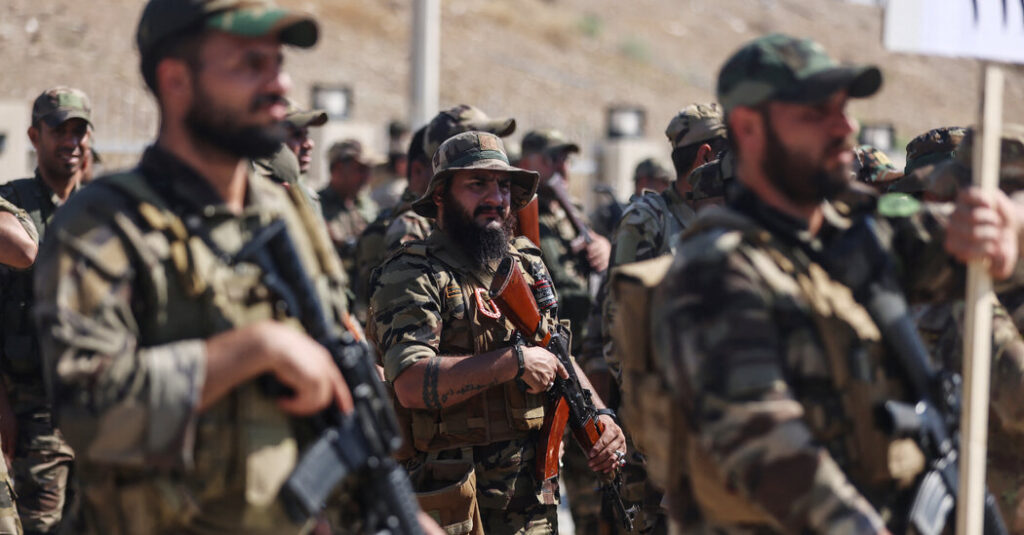
Mr. al-Zaidi, a political newcomer, ordered all armed groups last month to come under direct state authority. Some of the most powerful Iran-linked militias rejected the demand.
Chief among them is Kataib Hezbollah, a group that has attacked U.S. targets in Iraq in recent months and has claimed responsibility for high-profile kidnappings, including that of a U.S. journalist in Baghdad this year.
The prime minister’s directive did not call for disbanding the militias completely, as the U.S. administration has insisted. And analysts said they doubted the move would appease Washington, with one comparing it to little more than shifting a gun from one hand to another.
“This is more of a veneer of going after the militias,” said Renad Mansour, an Iraq analyst at Chatham House, a research institute based in London. “Because the devil is in the details, and once you get to the details, it is still far from an ideal state where there is a clear and clean chain of command.”
Iraq’s Shiite Muslim majority came to power after the 2003 U.S.-led invasion of Iraq toppled the dictator Saddam Hussein and ended government control by the country’s Sunni Muslim minority. Successive Shiite-dominated governments over the years have forged closer ties with Shiite-majority Iran.
A number of mostly Shiite militias banded together in 2014 under an umbrella group known as the Popular Mobilization Forces, or P.M.F. It was intended to counter the Sunni extremist group Islamic State, which had seized large parts of Iraq.
Some of the militias within the P.M.F. received military and financial backing from Iran.
In recent years, the P.M.F. agreed to come under the authority of the national security forces. But it has never been fully integrated, and some of its militias, including Kataib Hezbollah, continue to operate with a large degree of independence.
Some prominent militias have agreed to heed the prime minister’s order.
The powerful Shiite cleric Muqtada al-Sadr, who leads a large political bloc in Parliament, said he would fully integrate his Peace Brigades militia under the authority of the Iraqi military “out of concern for the public interest and in order to avoid the dangers threatening the country.”
The groups who rejected the order are demanding that the United States stop interfering in Iraq both militarily and politically.
The Guardians of the Blood Brigade, a militia which has previously claimed responsibility for attacks against U.S. targets in Iraq, said any move to exert tighter control over militias “must be accompanied by real steps that guarantee Iraq’s sovereignty and independence of decision-making.”
The prime minister’s efforts come at an especially sensitive time for Iraq, which for the past few years has seen economic growth owing to the relative stability of the country. It has remained mostly insulated from the wider conflicts gripping the Middle East over the past few years, which grew out of the Hamas-led attack on Israel on Oct. 7, 2023, and the war in Gaza that followed.
Even as other Iran-backed groups across the Middle East carried out attacks on Israel, Iraq’s armed militias remained mostly on the sidelines. But that changed with the launch of the U.S.-Israeli war on Iran in late February.
This time, Mr. Mansour said, Iran’s Islamic Revolutionary Guards Corps, which oversees that country’s regional proxies, moved swiftly to draw the Iran-linked Iraqi militias into the war as part of its strategy to launch counterattacks against the United States and Israel across the region.
“The Iraqi government suddenly lost its ability to stay out of the war,” he said.
Since late February, the militias have claimed responsibility for several attacks on U.S. interests in Iraq, including the U.S. Embassy in Baghdad. The strikes came in response to an airstrike that hit the headquarters of one of the militias in the first days of the war and killed three people.
The militias blamed the strike on the United States and Israel.
At the same time, Iraq was going through a precarious political transition while forming a new government, a process that the Trump administration sought to influence.
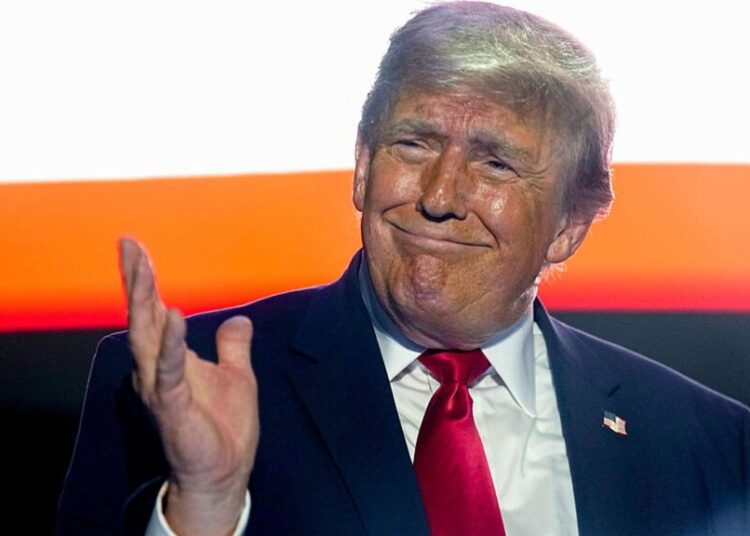
This year, President Trump threatened to withdraw U.S. support for Iraq if a leading Shiite politician, Nuri Kamal al-Maliki, was appointed as prime minister. Mr. al-Maliki is a former prime minister who used to have U.S. backing.
But the relationship soured over the course of his eight years as prime minister as the United States increasingly saw him as aligned with Iran.
As a result, Mr. al-Zaidi, a wealthy businessman with no experience in international affairs, was appointed prime minister in late April, representing the largest political bloc in parliament. The Trump administration welcomed his nomination.
That did not stop the United States from ramping up pressure further on Iraq to distance itself from Iran and crack down on the militias.
After a meeting on June 15 between Mr. al-Zaidi and the American diplomat Tom Barrack, they released a joint statement about Iraq carrying out “plans for ensuring the complete disarmament and disbandment of all armed groups and formations operating outside the authority and control of the Iraqi state.”
The statement said this was to “ensure that Iraqi territory cannot be used by any side to threaten regional peace.”
The post Iraq’s New Leader Faces Resistance Trying to Bring Militias Under State Control appeared first on New York Times.