A year ago, Zohran Mamdani and the army of left-wing organizers he inspired stunned the Democratic establishment by beating back a bevy of better-known and better-connected rivals to win the primary for mayor in New York City.
The party’s leaders wishfully treated the result as a one-off and looked ahead to the midterms. Mr. Mamdani was a unicorn, they said, a master of social media with a great ground game and a better smile.
Then it happened again.
On Tuesday, Democrats backed by large labor unions, their House leader and the party’s longstanding (and more moderate) Black and Latino old guard were drubbed up and down the ballot by left-leaning insurgents whom the mayor threw his weight behind.
This time, the losses were so deep that New York’s long-vaunted political power elite was forced into a painful reckoning, as prominent Democrats from Brooklyn to Washington tried to account for how their candidates had lost the pulse of voters preoccupied with rising costs and Israel’s wars, while being outmaneuvered by the Democratic Socialists of America, an organization with about 14,000 members.
“They out-organized us,” said Letitia James, the state’s attorney general, who called the results a “wake-up call.”
“Clearly we didn’t get out traditional Democrats,” she added. “They just didn’t come out. We didn’t provide them a reason to.”
Democrats across the country have shown for months that they are furious at their party leadership for failing to stop President Trump, and they have been willing to use their votes to show it by embracing populists and leftists.
But for New York, there were also particularly uncomfortable questions. Why were cash-rich unions seemingly unable to turn out voters at rates they once did? Why did the city’s youngest residents veer toward democratic socialism over more traditional progressive politics? And why didn’t Democratic leadership better respond to the engine of gentrification transforming swaths of the city that were once Black and Latino political strongholds?
The pressure to find a course correction is mounting. D.S.A. members began speculating on Wednesday about even more ambitious targets, like challenges to Representative Hakeem Jeffries and Senator Chuck Schumer, the moderate Brooklyn Democrats who lead House and Senate Democrats, in 2028.
The left had reason to be feeling emboldened.
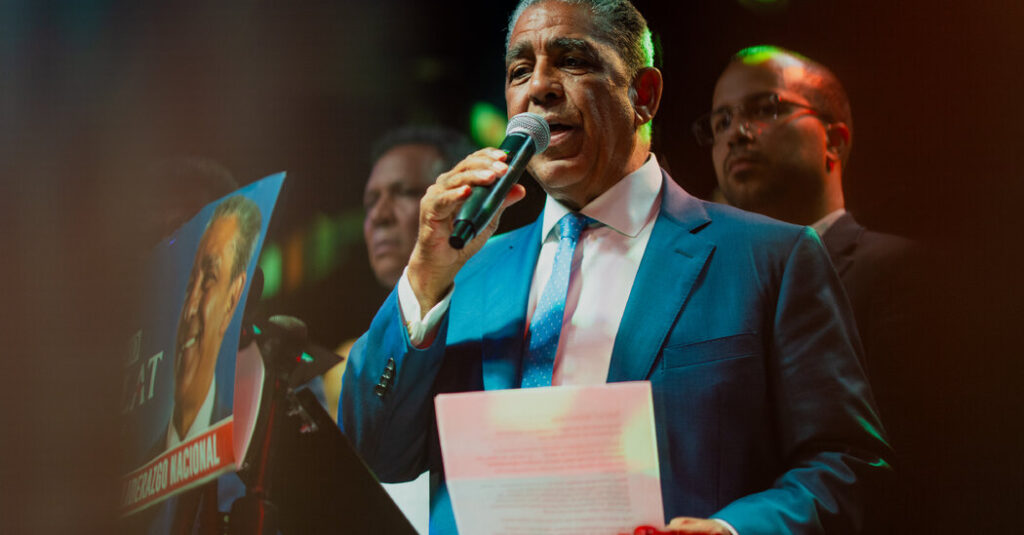
Mr. Mamdani’s candidates toppled two incumbents, Representatives Daniel Goldman and Adriano Espaillat, Jewish and Dominican Democrats who had the support of major labor unions, popular local politicians and Mr. Jeffries.
Claire Valdez, a little-known D.S.A. assemblywoman, easily defeated Antonio Reynoso, the Brooklyn borough president, in a race for a soon-to-be vacant seat, despite his support from the left-leaning Working Families Party, Ms. James and Representative Nydia Velázquez, who is stepping down at the end of the year. (It was not long ago that Mr. Reynoso himself was the progressive insurgent taking on an earlier iteration of the Democratic establishment.)
Down the ballot, Mr. Mamdani and the D.S.A. were also on track to pick up six new seats in the State Legislature, increasing its presence in Albany to 15 lawmakers from nine. In Brooklyn, the most Democratic borough, voters even appeared to be rejecting the low-level party officials aligned with the old guard.
“It was a bad night — I’m not going to deny that,” said Representative Gregory W. Meeks, the leader of the Queens Democratic machine and a close ally of Mr. Jeffries and Mr. Espaillat.
And when daylight dawned on Wednesday, Frank Carone, a longtime Democratic power broker in the borough and right-hand man to former Mayor Eric Adams, was arrested — a fitting exclamation point to a bruising 24 hours for the party’s establishment.
Mr. Mamdani offered his own assessment on Wednesday, saying his candidates had prevailed because voters were hungry for politics that gives priority to working people over foreign entanglements, particularly in Israel.
Referring to Darializa Avila Chevalier, who defeated Mr. Espaillat, Mr. Mamdani said, he expected the congressional candidates he backed to focus on “a vision, as Darializa often talks about, of investing in babies, not bombs.” That, he said, “is the kind of conscience, the kind of clarity, the kind of conviction that has been missing in our politics for far too long.”
In public remarks in Washington, Mr. Jeffries largely sidestepped questions about the election outcome, and his aides did not make him available for an interview. But in other interviews, politicians, union leaders, political scientists and operatives who have worked in Democratic politics identified a range of problems.
Big unions in the city — including building workers and health care workers — repeatedly hosted rallies and phone banks for their endorsed candidates. Some even spent millions of dollars on advertisements and mail pieces. The impact was clearly less than they expected.
Steven M. Cohen, a longtime Democratic operative and official who led a $40 million super PAC that tried and failed to stop Mr. Mamdani in last year’s mayoral race, said his side has made significant tactical mistakes.
Mr. Cohen recalled watching as traditional political networks, run first by local party machines then propped up by member-rich labor unions, slowly thinned and atrophied. The D.S.A., he said, has responded by building an army of committed volunteers who could talk to real voters for candidates like Mr. Mamdani, while more traditional Democrats fell back on free-spending super PACs.
“We deluded ourselves into thinking that contact by social media replaces contact in person, and it’s just not true,” Mr. Cohen said of the last two election cycles.
“I told people that the lesson of 2025 is not going to be learned until you lose and you lose and you lose,” he added. “I’d like to believe that this will wake people up, but I fear it will be dismissed again as an aberration.”
Henry Garrido, the executive director of District Council 37, the city’s largest union of municipal workers, conceded that groups like his “kind of ran away from” sending members out to knock on doors after the Covid pandemic — and regretted it. His union was on the losing side of all three big races on Wednesday.
“We need to concentrate more on, as I say, touching skin, talking to people one on one,” he said.
Others focused on the demographic changes rapidly reshaping areas of the city where Mr. Mamdani won among the younger, white voters supplanting older, more moderate voters of color who for decades undergirded the mainstream party.
“With 200,000 Black New Yorkers, including some of my family members who have migrated to the South, you’re losing the essence of what made these communities,” said Donovan Richards, the Queens borough president, who supported Mr. Reynoso in his failed race against Ms. Valdez.
In the 13th District, in Upper Manhattan and the Bronx, Ms. Avila Chevalier, the far-left organizer and a Ph.D. student who defeated Mr. Espaillat, got her votes largely from young white people, while Mr. Espaillat got his from older Dominicans, according to an analysis by John Mollenkopf, a professor of political science at CUNY Graduate Center.
“Espaillat might have won if he had had a better ground game to turn out the Dominican and Puerto Rican vote, which is generally lower turnout than other groups,” Mr. Mollenkopf said.
Mr. Espaillat also struggled to win over the district’s large Black population after he left a feud with the area’s Democratic leadership fester for nearly a decade until he realized he was in a hard race.
Brandon Mancilla, the regional director of the United Auto Workers, one of the few unions that backed both Ms. Valdez and Ms. Avila Chevalier, said that Democratic Party leaders had failed to understand how crucial opposition to Israel had become to Democratic voters.
“People have really had enough of the blank check to funding the Israeli military and support either materially or politically to the occupation in the West Bank,” Mr. Mancilla said. “That has become a real red line.”
Others on the losing side of Tuesday’s races were not as ready to concede the argument and let Mr. Mamdani and his faction target Mr. Jeffries or other incumbents who have achieved seniority in Congress.
“I’m not going to just sit back and let this city become divided, let this city lose resources that it needs to help people like my family,” Mr. Meeks said.
Sean Piccoli contributed reporting.
The post Why New York’s Democratic Establishment Fell to Team Mamdani appeared first on New York Times.