Marc A. Levin is chief policy counsel for the Council on Criminal Justice. Khalil Cumberbatch is the council’s director of engagement and partnerships.
For decades, politicians and pediatricians alike have warned that young people spend too much time engaged with their phones and video games and not enough time being physically active. In communities from D.C. to Orlando to the Bronx, some teenagers have delivered a perverse reply to both complaints: street takeovers.
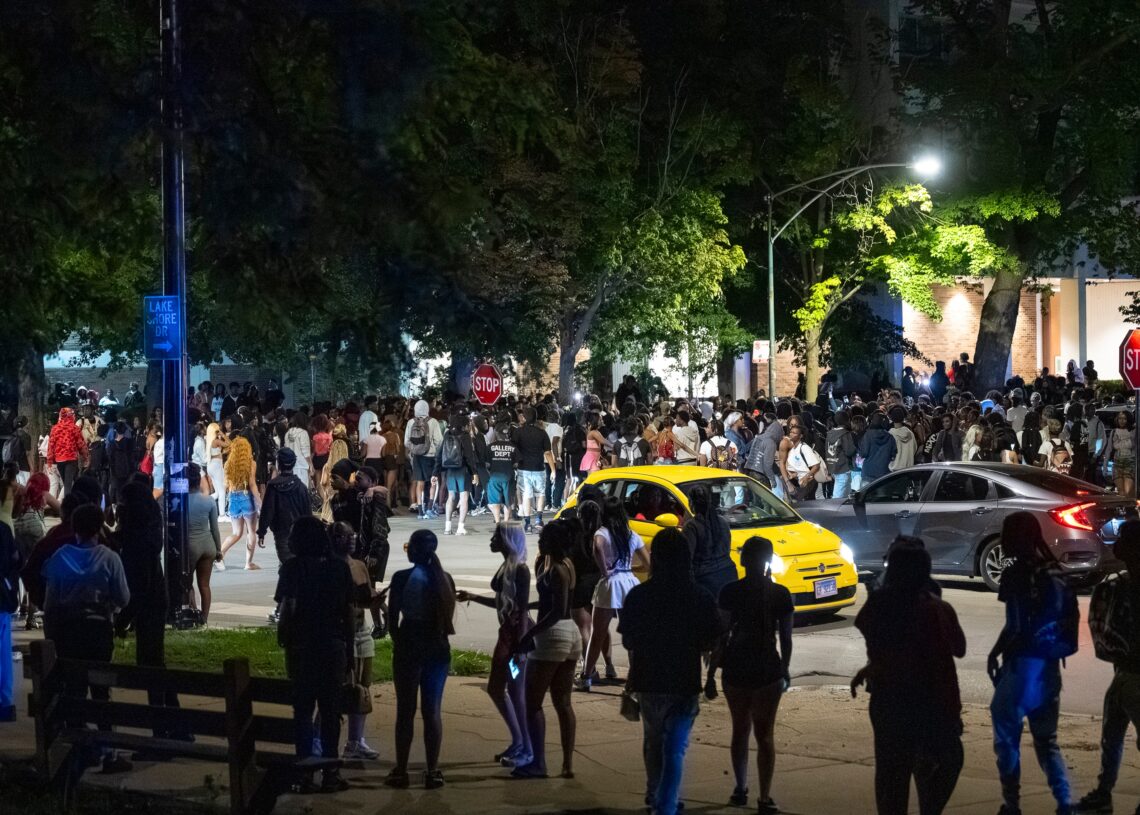
Coordinated in minutes via Snapchat or TikTok, these gatherings of hundreds of teens too often spiral into fights, robberies and assaults on police. The kids may be off the couch and out the door, but this is not what anyone asked for. And it’s certainly not what the doctor ordered.
Teen takeovers are a pernicious problem, but they are not part of a larger youth crime wave. Juvenile arrests for violent offenses are down 71 percent from their 1994 peak and have dropped 12 percent compared with 2019; detention admissions are similarly far below their peaks. Cities should not respond to highly visible youth disorder as though the country has returned to the juvenile-crime panic of the 1990s.
Takeovers feed that gap between perception and reality in a way ordinary juvenile offending never could. When a flash mob of hundreds swarms a plaza as it did in Houston on June 13 and the video ricochets around social media, residents start wondering if it’s safe to walk downtown at night, let grandma take public transit or keep a storefront open past dark.
This requires a response, but two recent approaches risk using a sledgehammer where a scalpel is needed. D.C. has extended emergency curfews, codified expanded curfew authority and designated special curfew zones across the city. Now federal prosecutors are going a step further, targeting not just teens but their parents.
As politics, U.S. Attorney Jeanine Pirro’s May announcement is understandable: Her office plans to prosecute parents of juveniles who violate D.C.’s curfew — a charge that carries up to six months in jail. “Parents, do your job, or we will do ours,” she said.
That line may poll well, but parent prosecution is a blunt instrument, unlikely to reach only the parent who actively enables misconduct and just as likely to sweep in families dealing with work schedules, housing instability and limited access to youth services. It does not create supervision or programming. It mainly adds instability to households already stretched thin, and decades of research have linked parental incarceration to higher rates of delinquency among youth.
None of this means parents are off the hook. A parent who hands a teenager car keys for a takeover or ignores repeated warnings from police warrants consequences. But the law should distinguish that parent from one who, despite genuine effort, could not stop a determined 16-year-old from taking off. Prosecuting the latter parent substitutes punishment for the social supports that are genuinely absent. Even setting aside fairness, prosecutions may prove difficult, unpopular with juries and counterproductive if they leave families with records or jail exposure without closing the supervision gap.
Takeovers fill a vacuum, and the cities that have made headway are the ones that changed what they offer. The most ambitious effort is Summer Night Lights in Los Angeles, which keeps city parks open four nights a week with free meals, sports leagues and conflict-mediation staff. The program grew to 110,000 participants last year and is associated with a significant decrease in gang-related homicides since 2023, at a cost to the city of just $64 per participant. New York and Chicago have adopted similar frameworks.
Cities also need strategies for the parks and plazas where gatherings keep forming. An experiment by the University of Chicago Crime Lab found that improved street lighting produced sizable reductions in nighttime outdoor crime without widening the net of the criminal justice system. Redesigning physical environments is cheaper and more durable than relying on law enforcement. In places like a Washington Navy Yard intersection or a downtown Houston plaza, cities can install better lighting, raise medians to prevent vehicle spinning at the center of these events, and use planters or bollards to break up open pavement.
Sweeping curfews also deserve more scrutiny. The leading systematic review of the evidence found that juvenile curfews did not reduce crime or victimization. Still, if curfews are enforced, they should at least be targeted to specific high-incident zones and hours, not applied as a broad dragnet against teenagers who may simply be heading home from work.
Beyond that, policymakers should strive to view street takeovers as a warped response to a legitimate question: What are young people supposed to do with their time, their energy and their need to belong? Cities will not find the answer by prosecuting parents. They will find it by making sure teenagers have something worth showing up for.
The post ‘Teen takeovers’ spread fear. Here’s how to stop them. appeared first on Washington Post.