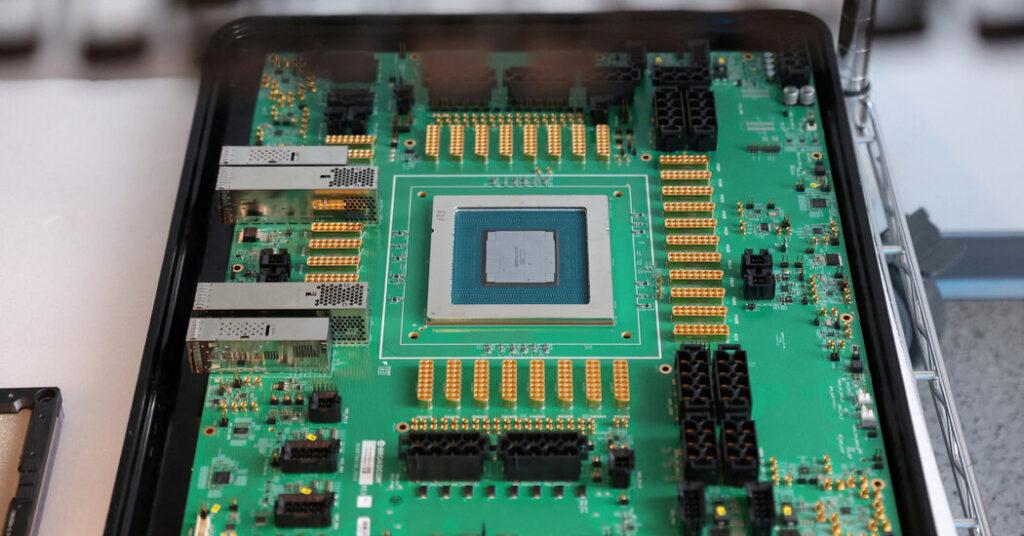
In October, the artificial intelligence start-up OpenAI said that it would work with the chip maker Broadcom to build custom computer chips suited to running A.I. technologies like its chatbot, ChatGPT.
On Wednesday, the two companies unveiled the design of their first chip, called Jalapeño, reaching a milestone in OpenAI’s efforts to install the technology in data centers to power A.I. across the globe.
OpenAI has said it plans to eventually use enough of these custom chips to consume 10 gigawatts of electricity, an amount that could power millions of households.
In addition to the company’s collaboration with Broadcom, OpenAI has also signed deals with the chip makers Nvidia and AMD and the start-up Cerebras.
OpenAI is among many tech companies that are spending hundreds of billions of dollars on the construction of new data centers for A.I. Amazon, Google, Microsoft and Meta have said they plan to spend roughly $700 billion on data centers this year alone.
OpenAI is already building its first facility in Abilene, Texas. It plans to build additional data centers in other parts of the United States, in Europe and in the Middle East.
Nvidia, the world’s most valuable publicly traded company, dominates the market for chips used to power A.I. technologies like ChatGPT. But many companies are now designing chips that aim to challenge its dominance, including tech giants like Google and Amazon, venerable chip makers like AMD and start-ups like Cerebras.
By designing its own chips, OpenAI can reduce its dependence on Nvidia and AMD and gain more leverage as it negotiates agreements with those companies. Google also partners with Broadcom in designing its A.I. chips.
The new Jalapeño chip is designed to run A.I. technologies and deliver them to businesses and consumers. OpenAI uses other chips that are capable of analyzing enormous amounts of data to build its A.I. technologies.
“Based on early testing, Jalapeño will efficiently execute our most important workloads close to the hardware’s theoretical limits,” Richard Ho, who leads OpenAI’s hardware efforts, said in a statement.
OpenAI and Broadcom said they had completed the design of the chip in just nine months, an unusually short timeline for a new chip. But because chip design is so complicated, even experienced chip makers often build several versions of a chip before being able to use it more widely.
The company did not provide more information on when the chips might be rolled out.
(The New York Times sued OpenAI and Microsoft in 2023 for copyright infringement of news content related to A.I. systems. The two companies have denied those claims.)
The post OpenAI and Broadcom Unveil Custom A.I. Chip Design appeared first on New York Times.