After hearing weeks of evidence about Jonathan Rinderknecht’s loathing of the kinds of wealthy elites who inhabit the Pacific Palisades, jurors on Tuesday began deliberating whether he should be convicted of setting a fire that grew to swallow the opulent enclave and became the worst blaze in Los Angeles history.
Prosecutors made their final pitch to the jury Tuesday afternoon, arguing that Rinderknecht, 30, intentionally set the Lachman fire last New Year’s Day in a bid for vengeance against millionaires he believed were “enslaving” common people like him.
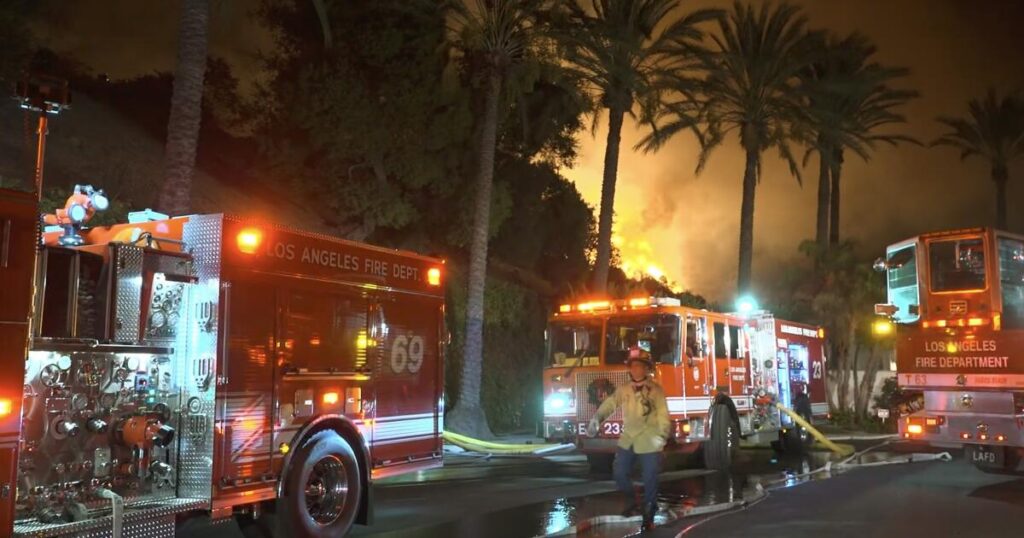
The Lachman Fire smoldered underground for a week before exploding into the deadly Palisades fire on Jan. 7, 2025. The secondary inferno killed 12 people, destroyed 6,500 structures across the Palisades and Malibu and cost billions in damage and insurance claims. If convicted, Rinderknecht faces up to 45 years in prison.
Over the course of the trial, prosecutors called more than 30 witnesses, including veteran arson investigators who told jurors they had ruled out fireworks, lightning, cigarettes and other potential instigators of the blaze — leaving only Rinderknecht, who they say admitted to bringing a lighter with him as he hiked to the Hidden Buddha clearing overlooking the Pacific Palisades, near where the blaze was first spotted just minutes into the new year.
While prosecutors contend Rinderknecht started the fire by burning some vegetation, they were unable to present any evidence proving how the fire started or an eyewitnesses who saw the 30-year-old do it. Defense attorney Steve Haney repeatedly seized on the idea that the Lachman fire crime scene had been burned away before investigators got near it, leaving prosecutors to focus on why Rinderknecht might have started the fire without proving that he actually did.
Texts, screen grabs, recordings and other records recovered from a search of Rinderknecht’s cellphones and presented in court portrayed a man who was by turns lonely and livid, angry at billionaires and ex-romantic partners while seemingly scared about his own declining mental health.
Prosecutors dug deep into Rinderknecht’s ChatGPT logs, where he argued with the chat bot while asking it to produce artwork displaying fire and railing against the wealthy. One video played in court, filmed days after the fire, showed an emotional Rinderknecht sitting in his car wondering if he was on the verge of a “mental breakdown.”
“The defendant at this time in his life blamed the rich and the powerful. The Pacific Palisades … represents all of that … He lit that fire to take back power … to feel some sense of control,” Asst. U.S. Atty. Danbee C. Kim said during a two-hour closing argument on Tuesday. “The Pacific Palisades and the Malibu area burned and thousands of people paid the price for the defendant’s unchecked anger on New Year’s Eve.”
Witnesses testified that he had researched the case of Luigi Mangione, the man accused of gunning down United Healthcare CEO Brian Thompson, in the months before the fire and also asked ChatGPT for information about the home address and security measured employed by Door Dash CEO Tony Xu.
Kim said Rinderknecht started the fire by igniting vegetation with the lighter. Despite the lack of physical or video evidence, Kim said Rinderknecht is the only person who could have sparked the blaze.
“He was the only one up there and the only one who could have lit that fire,” she said. “He had the motive to do it, he had the means to do it and he had the opportunity to do it.”
Rinderknecht has acknowledged he hiked up to the area on the night of the fire, and cell phone evidence shows he placed several 911 calls reporting the flames. Kim said Rinderknecht’s phone first pinged in a small gully near where they believe the fire originated.
Haney painted the prosecution’s case as heavy on circumstance but light on substance. No video evidence exists to show exactly how the Lachman fire started, much less that Rinderknecht was the one who lit the blaze. Haney badgered ATF investigators into admitting they had no access to the Lachman fire crime scene until after the Palisades inferno had burned it over and initially suspected fireworks.
“Most investigations, they begin with a crime and then follow evidence to a suspect. The evidence leads and the conclusion follows,” he said Tuesday. “This investigation moved, I submit to you, in an opposite direction. It began with a man who called 911 on a hill … and then over time the theories changed to fit him. But the evidence never did.”
Haney repeatedly asked jurors and witnesses why an arsonist would immediately call 911 after setting a fire.
He called several defense witnesses in an attempt to undercut the prosecution’s theory of the fire as well. A Palisades resident said he saw several teens leaving the hill after the fire started, acting “boastful.” A Los Angeles firefighter testified that he saw flashes of light and heard loud noises that sounded like fireworks around midnight near the neighborhood closest to where the blaze sparked. A defense expert told jurors the most likely cause of the blaze was fireworks.
“There’s no physical evidence that they found that connects Jonathan to the act of starting the Lachman fire,” Haney said.
The jurors — some of whom have loved ones who were impacted by the Palisades fire — are now left to decide whether Rinderknecht is responsible for the deadly blaze.
At the outset of the trial, Asst. U.S. Atty. Matthew O’Brien acknowledged to jurors that no one had witnessed a person starting the Lachman fire and said determining what caused the blaze required “a thorough investigation.”
“When investigating wildfires, the fire experts must rule out all other potential causes of a fire,” he said in his opening argument.
Fire experts conducted hundreds of experiments in which they tried to light a fire with a cigarette under the same weather conditions, O’Brien said. They consulted a Worldwide Lightning Location Network to rule out any lightning strikes within a 100 kilometer radius of Pacific Palisades on the night before January 1 through January 7. They looked for nearby power lines. Ultimately, they eliminated all natural and accidental causes.
“It was intentional,” he said.
Prosecutors also played clips of an interview with Rinderknecht where he confirmed he was alone on the hillside and repeatedly said he did not see any fireworks after he hiked up to the clearing.
Haney spent much of the trial focused on the unorthodox nature of an arson investigation that started after a second fire had consumed the initial crime scene.
While prosecution witnesses have refused to delineate between the Lachman and Palisades blazes, Haney has repeatedly described them as two distinct incidents that ignited days apart. During aggressive cross examinations of ATF agents, Haney peppered them with questions about what steps were taken to protect the integrity of the site of the Lachman fire.
Repeatedly, agents had to admit that no crime scene tape was laid out, and no other protective measures were taken until after the Palisades fire burned over the Lachman scene.
“Not one of those 9,000 videos shows my client on top of a hill, watching a fire burn … Not one of those 9,000 videos shows my client with a lighter in his hand,” Haney said.
Haney reminded jurors that despising the rich isn’t a crime, much less an abnormal opinion.
“You’re not to convict a man because you don’t like him. Being mad at the rich or hating the rich is not a crime. Half of America hates the rich,” Haney said. “You cannot convict Jonathan based on his character and you can’t punish him for his opinions because you don’t like him.”
The post Arson or stray fireworks? Jurors to weigh if Uber driver mad at elite set Palisades Fire appeared first on Los Angeles Times.