President Donald Trump accused Tehran of making “false statements” on Tuesday, after an Iranian official said his government had not agreed to allow international inspectors access to their country’s damaged nuclear facilities, despite U.S. claims.
Trump claimed that Iran had already agreed to the inspections for an indefinite period of time and suggested it was one of many points of progress in recent days. “If they did not agree to this, there would be no further negotiations!” Trump posted on Truth Social.
The clashing accounts suggested that there may still be considerable distance between the parties on the current terms of the negotiations. And it may be one of many still in dispute: Iranian officials also pushed back on other reported details regarding deliberations over Tehran’s ballistic missile program and how its government could use billions of dollars in unfrozen funds it expects to receive as a result of the peace talks.
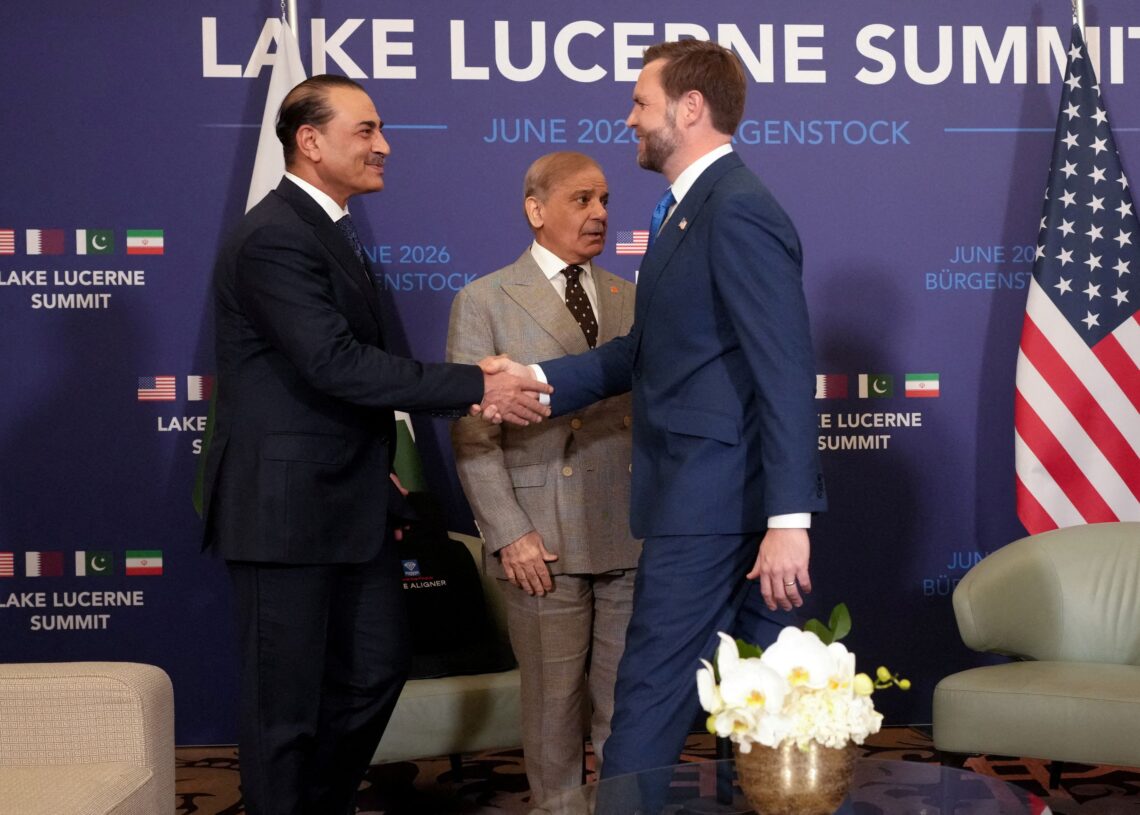
The dispute over inspections was sparked Monday, when Vice President JD Vance said Iran had agreed to grant the International Atomic Energy Agency access to its nuclear sites, telling reporters in Switzerland that it was a “major milestone for the American people, and the first step in permanently denuclearizing or permanently ending a nuclear weapons program in Iran.”
Iran, however, rejected the claim the following day, with Foreign Ministry spokesman Esmaeil Baqaei saying there was no plan for IAEA inspections of its nuclear facilities damaged by the war and that officials had not met with the director general of the nuclear watchdog.
“There is simply no established procedure for this matter,” Baqaei said in comments reported by state media, adding that Iran would “adhere to the standard procedures, which are already well-defined and transparent.”
U.S. officials, including Vance, have repeatedly said that Iran is being misleading in its account of the ongoing talks. Secretary of State Marco Rubio told reporters Tuesday that Iranian statements were driven by “domestic politics.”
“We know what they agreed to do, and now they’ll either do it or they won’t,” Rubio said as he arrived in Abu Dhabi, United Arab Emirates, to see Arab Gulf allies. “If they do, the process moves forward, and if they don’t, the president will have some decisions to make.”
Iran had been subject to regular inspections under the Nuclear Nonproliferation Treaty and agreed to more intensive monitoring under the Obama nuclear deal that Trump frequently condemned. After Trump terminated that agreement in 2018, Iran blocked IAEA access to some sites, while some inspections continued.
Since June 2025, Iran has prohibited the inspectors from visiting sites bombed by the U.S. and Israel.
Ali Bahreini, Iran’s ambassador to the United Nations, told reporters in Geneva on Tuesday that discussion of Iranian nuclear activities is set for the next stage of talks. The ceasefire memorandum that Trump signed at the Palace of Versailles on Wednesday gave the U.S. and Iran 60 days to resolve their hardest disputes, including over the fate of Iran’s uranium stockpile and the Strait of Hormuz.
In a news conference Monday at the Bürgenstock resort in Switzerland, Vance said conversations with inspectors from the IAEA could happen as soon as that day.
Baqaei’s contradictory comments Tuesday highlighted the difficulty of turning the fragile ceasefire into a more comprehensive peace agreement.
Baqaei also said Iran would be free to use unfrozen assets or revenue from oil sales as it sees fit, after Vance said that such funds, if unfrozen, would be subject to oversight and could benefit American farmers. “The important point is that Iran’s previously blocked assets are now available and can be used freely by Iran in accordance with its own priorities,” Baqaei said, according to Iranian state media.
The spokesman also pushed back on reports that Pakistan’s prime minister, Shehbaz Sharif, had said that talks would involve discussion of Iran’s ballistic missile program. Baqaei said that the program was “not part of the negotiations” with the U.S., state media reported.
Iranian President Masoud Pezeshkian traveled to Pakistan on Tuesday to meet with officials there who have been mediating the negotiations with the U.S. “The effectiveness of the talks depends on full commitment to the agreed obligations and their precise implementation,” he said in a post on X, in an apparent acknowledgment of the broad-brush nature of the 14-point memorandum of understanding.
“Statements outside the agreed text do not help advance the negotiations,” he added.
The ceasefire called for an end to Israeli attacks in Lebanon, which resumed over the weekend, again testing the fragile deal. Israeli Prime Minister Benjamin Netanyahu’s government has criticized the deal and is not formally a party to the agreement. The Washington Post previously reported that U.S. intelligence warned the Trump administration that Netanyahu would probably work to undermine it by continuing the attacks. On Sunday, Trump accused Iran-backed Hezbollah militants of “causing trouble” in Lebanon.
Overnight, Netanyahu, Defense Minister Israel Katz and Israel Defense Forces Chief of the General Staff Eyal Zamir issued a joint statement saying the IDF would “continue to act with determination in order to neutralize threats” and maintain what it calls a “security zone” in southern Lebanon.
The Israeli and Lebanese governments are currently holding direct negotiations brokered by the U.S. in Washington. A State Department official, speaking on the condition of anonymity to brief the media, said Monday that the shared goal for all parties was the ending the “cycle of violence for good.”
Though the Trump administration had initially rejected calls to formally include Lebanon in talks with Iran, Lebanese President Joseph Aoun said that he had held a call with Vance and Rubio on Tuesday in which they had agreed to set up a joint U.S.-Lebanese-Iranian cell to help “solidify” the ceasefire in Lebanon.
Rubio told reporters in Abu Dhabi that while the Lebanon talks were separate from the Iranian talks, Tehran played a critical role in that conflict due to “their support and sponsorship of Hezbollah.”
Taylor reported from Abu Dhabi.
The post Trump dismisses Iran’s rejection of nuclear inspections appeared first on Washington Post.