A Louisiana prison committed one of the most obvious violations of a man’s religious liberty that has ever made its way to the Supreme Court.
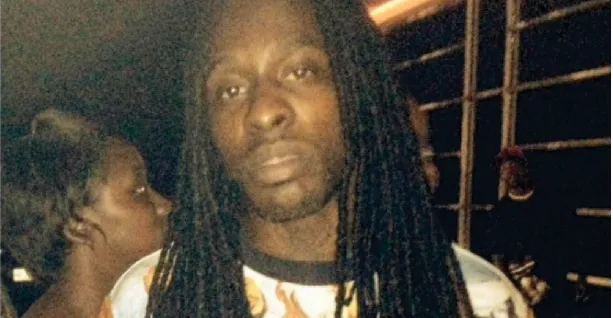
Damon Landor is a Rastafari who, for religious reasons, does not cut his hair — according to his lawyers, he kept this vow for more than two decades, until his dreadlocks grew nearly long enough to reach his knees. But then, in 2020, while he was serving a five-month sentence for a drug-related offense, prison officials handcuffed him to a chair, held him down, and shaved his head.
Incredibly, when Landor was transferred to the prison where this forced shaving occurred, he brought with him a copy of a federal appeals court decision, which held that it violates federal religious liberty law for Louisiana prisons to cut the hair of Rastafari prisoners, at least when those prisoners wish to keep it long for religious reasons. But, when Landor presented this decision to prison guards, they threw it in the trash and shaved his head anyway.
And yet, in its 6-3 decision in Landor v. Louisiana Department of Corrections and Public Safety, which the Supreme Court handed down on Tuesday, the Court’s Republican majority held that Landor has no remedy against these prison officials, despite their clear cut violation of federal religious liberty law.
The Court’s Republican majority is normally very sympathetic to religious liberty plaintiffs, especially when those plaintiffs are Christian. So Landor is a break from this Court’s broader efforts to read religious liberty law expansively. It’s unclear why the Republican justices broke from their ordinary pattern of favoring religious plaintiffs, though one explanation is that Landor could undermine civil rights and public health statutes that Republicans oppose.
Justice Neil Gorsuch’s decision for himself and his fellow Republicans rests on a hypertechnical distinction between how the federal law at issue in this case, the Religious Land Use and Institutionalized Persons Act of 2000 (RLUIPA), was actually drafted, and how it could have been drafted to protect people like Landor. In theory, Landor does little to limit Congress’s ability to protect religious liberty — or any other right. But it requires Congress to write laws in the way that Gorsuch prefers.
Indeed, it’s not even clear that Gorsuch’s opinion is wrong. Numerous federal appeals courts agree with Gorsuch’s approach to this case. Thus, one of the most baffling questions embedded in the Landor decision is why the Court decided to hear this lawsuit to begin with. Why take a case involving truly egregious facts, if all the justices planned to do was reaffirm existing law? They could have just let the lower court’s decision, which also ended in a loss for Landor, stand.
Instead, the justices decided to put their own prestige behind the shocking, if legally defensible, decision in Landor. The question is why.
One possible explanation is that the Court’s Landor decision most likely resolves an ongoing dispute about whether women in red states may receive emergency abortions, if one is necessary to save their life or to ward off serious health consequences. Although federal law requires hospitals to perform these emergency abortions, Gorsuch’s opinion in Landor could nullify that law — at least in states where abortion is illegal.
The Court’s Republican majority often reads the law in ways that are inconsistent with its precedents when doing so will shut down access to abortion. Additionally, Justice Ketanji Brown Jackson’s dissent in Landor lists other federal statutes, including one protecting nursing home residents, that could be undermined by Gorsuch’s opinion.
In any event, the immediate effect of the Court’s most recent decision is that Landor has no remedy, despite the fact that his religious liberty rights were clearly violated.
So what is the specific legal dispute in Landor?
As Gorsuch concedes, RLUIPA prohibits state prison systems that receive federal funding from “imposing ‘substantial burden[s] on the religious exercise[s]’ of state prisoners outside exceptional circumstances.” There’s little doubt that, by forcibly shaving Landor’s head, Louisiana’s prison system violated RLUIPA.
But Landor sought more than a mere judicial declaration that his rights were violated; he sued the prison officials who actually shaved his head, arguing that they should personally be liable to him. Gorsuch’s opinion holds that these officials are immune from paying money damages to Landor.
To reach this result, Gorsuch fixates on the fact that RLUIPA does not directly regulate prisons or prison guards. Instead, it imposes a condition on state prisons that accept federal grants. Those prisons are free to turn away that money if they wish, but if they take that money, they are required to comply with RLUIPA’s religious liberty protections.
This arrangement, Gorsuch argues, is similar to a contract, and thus can only bind the parties that agree to it. While the state prison where Landor was incarcerated agreed to comply with RLUIPA, Gorsuch claims, the employees of that prison did not. And thus they cannot be personally sued for violating RLUIPA.
On the surface, this is a narrow holding, because Gorsuch also writes that Congress could have made the prison guards liable to people like Landor if it had written RLUIPA slightly differently. “Congress,” Gorsuch writes, “could have said that, as a condition of federal funding to LDOC, its officers had to agree to enter separate contracts with the federal government consenting to answer suits under RLUIPA.” Or it “might have conditioned its funds on Louisiana’s agreement” to enact a state law permitting prisoners to sue prison guards who violate RLUIPA.
If the United States had a functioning Congress, it could fix RLUIPA tomorrow.
Indeed, Gorsuch draws such a fine distinction that Justice Ketanji Brown Jackson spends much of her dissent arguing that her Republican colleagues should have cut Congress more slack. “The Court’s ruling apparently boils down to dissatisfaction with the precise way Congress structured RLUIPA,” Jackson writes for herself and her fellow Democrats. She adds that this “hairsplitting undervalues Congress’s lawmaking prerogative; we ought not substitute our rigid contract-based preferences for Congress’s considered statutory design.”
Yet, for what it is worth, lower court judges have largely preferred Gorsuch’s formalism to Jackson’s more pragmatic approach. As Louisiana pointed out in its brief to the justices, many federal appeals courts have agreed that prisoners like Landor are not allowed to sue prison officials for money damages. So, while the Landor decision may shock nonlawyers, it is not really a surprise to anyone who has followed this case closely.
Landor will probably have very bad consequences for women who need an abortion to save their life
Given this consensus among lower courts, it’s very odd that the Court decided to hear this case at all. If the Court had turned Landor’s petition asking the justices to review his case aside, the lower court’s ruling against him would have stood, but the Republican justices would have avoided the embarrassment of having to sign their names to such a seemingly unjust result.
One possible explanation for the Court’s decision to take up Landor, however, is that it potentially allows them to dodge an ongoing dispute about an even more contentious issue: abortion.
The federal Emergency Medical Treatment and Labor Act (EMTALA), requires hospitals that accept Medicare funding (which is nearly every hospital in the US) to provide “such treatment as may be required to stabilize the medical condition” of “any individual” who arrives at the hospital’s ER with an “emergency medical condition.”
EMTALA contains no exception for abortion. So, under EMTALA’s text, federal law unambiguously requires hospitals to perform emergency abortions. EMTALA also says that state and local laws are superseded by EMTALA’s provisions “to the extent that the [state law] directly conflicts with a requirement of this section.” Red states, in other words, may not prohibit hospitals from performing emergency abortions that are required by federal law.
Nevertheless, Idaho refused to comply with EMTALA, and a dispute over whether Idaho’s broad abortion ban could restrict emergency abortions reached the Supreme Court in Moyle v. United States (2024).
Though a majority of the justices voted to dismiss the Moyle case without deciding it, Justice Samuel Alito wrote a dissenting opinion that closely resembles Gorsuch’s opinion in Landor. (Gorsuch joined most of Alito’s dissent.)
Alito argued that, much like RLUIPA, EMTALA operates like a contract — hospitals receive federal funding, and in return they agree to perform certain medical procedures. But the state of Idaho, Alito claimed, is not a party to this agreement much as the prison guards in Landor did not agree to be bound by RLUIPA’s provisions. And thus the state did not agree to have its broad ban on abortions limited by EMTALA’s provisions.
After Landor, it’s now fairly clear that Alito’s position should control Moyle. Indeed, after Landor, lower courts are likely to reject attempts to enforce EMTALA against red states, thus saving the Republican justices the trouble of having to nullify EMTALA’s protections for women who need emergency abortions themselves.
And thus, thereafter, women in red states who need emergency abortions to save their life will simply die.
The post The Supreme Court’s campaign to expand religious liberty now has a glaring exception appeared first on Vox.