Smart glasses are like public transportation, according to Peter Bristol, Meta’s vice president of industrial design. “People will use it when it’s good enough.”
To reach “good enough,” Meta is making its smart glasses more accessible, more customizable, and comfier to wear.
On Tuesday, the company revealed three new pairs of smart glasses: Adventurer, Fury, and Starfire. The price starts at just $299, and while that matches the original price of Meta’s first-gen smart glasses, the price is markedly cheaper than the Ray-Ban Gen 2 glasses Meta launched last year. How did it get the price so low? Well, instead of Ray-Ban or Oakley branding to entice customers, these are just called Meta Glasses.
It’s a big step for Meta as it tries to establish its own brand as the de facto name in smart glasses. Also, that lack of a luxury name tag means a more accessible price.
Meta is still partnering with eyewear mega-conglomerate EssilorLuxottica to manufacture and distribute the new Meta Glasses. This means you can still buy a pair from a glasses shop like LensCrafters, prescription or not (they support a power range of -12 to +2.25). They go on sale today.
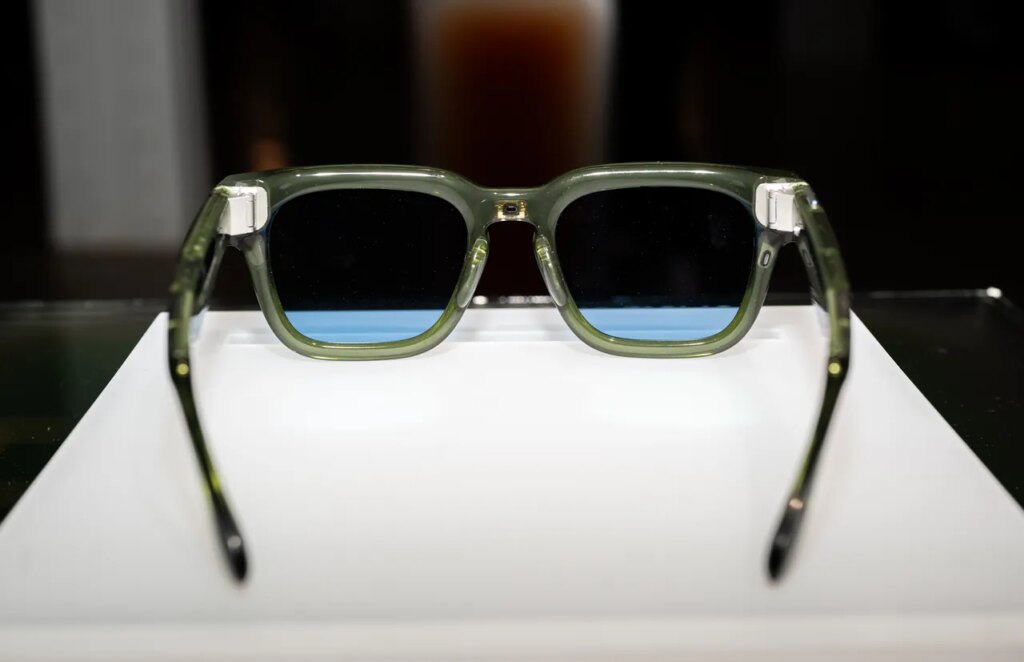
The three Meta Glasses frame have different shapes and unique styling. The Meta Adventurer has a classic rectangular shape and comes in standard and large sizes; the Meta Fury is similar but less boxy. These two designs feature 26 customizations buyers can choose from, like tinted lenses and various frame colors like Racing Green or Sandstone. But it’s the Meta Starfire that will surely turn heads.
Designed in collaboration with Kylie Jenner, the Starfire edition looks similar to the newly announced Google-powered Gentle Monster glasses launching later this year. (They also look like Prada sunglasses.) There’s a tiny gemstone on the lens for a bit of sparkle, the nose pad is metal to prevent absorbing makeup, and the Meta AI voice assistant will have an AI-generated version of Jenner’s voice, complete with other custom sounds unique to this model. The case even includes a note from Jenner and has a built-in mirror.
Meta says it did three things to make these Meta Glasses comfier to wear. First, adjustable nose pads. You can slightly tilt the nose pad in three directions (adjusting them by a millimeter), so they sit better on the bridge of your nose. The temple tips are also adjustable thanks to a core wire, meaning you can slightly tilt them in or out to suit your face shape. Then there are the overextension hinges, which mean the arms of the glasses flare out slightly when you put them on your head, making it easier for folks with wider heads to find a good fit.
Size, weight, comfort, and design are crucial components for smart glasses. Just look at the new Snap AR Specs announced last week. Comically huge and bulky, Snap drew ire with its expensive and girthsome spectacles, even if they’re more powerful and capable than Meta’s glasses. The disastrous launch saw the company’s stock plummet.
On Snap’s Specs, Meta chief technology officer Andrew Bosworth says it’s good for customers to have competition, and it’s good for Meta to have customers trying these kinds of products. “It’s a tremendous effort,” Bosworth says. “When someone takes different choices in weight and comfort, we get to learn from that and see how people respond to it. I’ve said too much.”
The rest of the hardware is largely the same as the Ray-Ban Meta Gen 2 glasses, with the ability to capture 12-megapixel photos and 3K video. There’s a five-microphone array to capture your voice commands, speakers in the arms so you can listen to music or podcasts, and touch controls for music playback. (I do want to note that my demo unit routinely had trouble hearing my “Hey Meta” command to wake the assistant, though I was in a loud environment.)
Like the Gen 2, they last around 8 hours on a single charge, though the included case can add an extra 40 hours of juice. Meta is also selling a new Meta Glasses Charging Stand, a simple stand for the glasses that sits on a desk or bedside table and frees you from having to rely on the case. The stand is compatible with Ray-Ban Meta, Oakley Meta HSTN, and Meta Glasses models.
Pressing the button on the arm snaps a pic, and a long press records a video. There’s an LED that indicates when you’re recording or taking a picture, though on previous models, people have found ways to disable or block the light for nefarious purposes. When asked about privacy concerns with cameras on smart glasses and people circumventing the LED, Bosworth says Meta Glasses use the same tamper-detection technology that’s in the Ray-Ban Gen 2 glasses, which can block camera access if it detects that someone’s messed with it. However, he stressed that it’s a “cat and mouse game with bad actors,” and that the company is doing everything it can generationally to introduce stronger privacy protections.
These Meta Glasses run the latest version of the company’s Muse Spark multimodal model, though this has already rolled out to existing devices via a software update in select markets. Meta says this version lets you talk to Meta AI more naturally, with smarter answers, and more supported languages for translation, including Japanese, Chinese, Hindi, and Korean. A new feature called “Dynamic Photo” will also capture multiple frames and recommend the best shot. There are also turn-by-turn directions coming soon for glasses without displays, so you can hear exactly when you need to make a left.
Speaking of, Bosworth says Meta has heard feedback that some folks don’t care for the camera capabilities on its smart glasses and would prefer audio-only glasses. “There’s a market demand for that product for sure.” Bosworth then said, “one thing at a time.”
Earlier this month, WIRED discovered code in the public-facing Meta AI app, suggesting that Meta was gearing up to debut a face recognition feature in its consumer smart glasses, technology that may have been trained by a company that builds surveillance tools for the US military and police departments. After WIRED’s report, Meta deleted the code, and none of this technology is present in the new Meta Glasses. Ankit Brahmbhatt, senior director of Product Management for AI Glasses at Meta, tells WIRED there are “no plans for facial recognition,” as it’s not the focus for what the company is building here.
Meta’s goal with these glasses is to get them onto more faces. “It’s more than just whether they fit—fit and comfort are extremely critical to get right—but it’s also your personal brand,” Bristol says. “It’s a really important decision if we want people to wear them as daily driver glasses.” If more people start wearing these Meta Glasses, that means more people are using Meta AI.
Bristol and Bosworth both lamented that with many of today’s AI tools, you have to supply the context manually, whether by providing a picture, document, or search query. With smart glasses, the AI assistant sees what you’re seeing, and that’s one less burden on your part. “It’s not that the thing isn’t smart enough—sometimes that’s a problem—it’s the amount of work I have to do to get it up to speed,” Bosworth says.
But making smart glasses comfier is just one step. Many people are still concerned about the privacy oversteps made possible by wearable cameras that can discreetly record the user’s surroundings. Bosworth believes such anxieties are akin to what happened when smartphones first put high-quality cameras in our pockets.
“There’s this social norming thing that has to happen,” he says. “The glasses are very popular … that doesn’t mean we aren’t worried about every corner case.”
The new Meta Glasses arrive at a turbulent time for the company’s relationship with its workforce. Bosworth himself sent an internal memo to employees last week promising better communication, stability, and workplace perks to improve morale, which is at an all-time low.
The post Meta’s Very Own Smart Glasses Go on Sale Today for $299 appeared first on Wired.