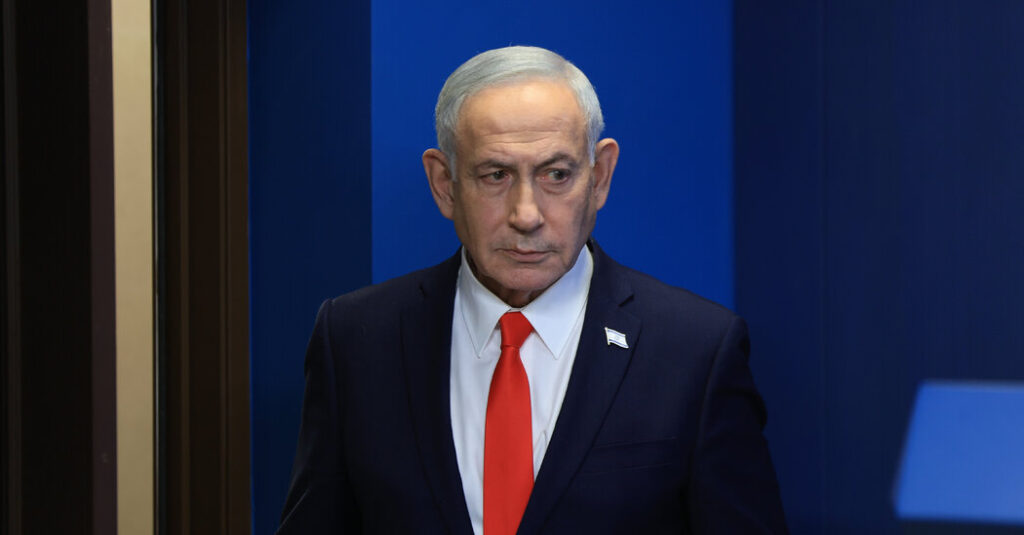
Some 60 days from now, when President Trump is supposed to have finalized his peace agreement with Iran, Israel will be weeks from a national election.
On the surface, the timing could hardly be worse for Prime Minister Benjamin Netanyahu of Israel.
After three years of inconclusive, on-again-off-again wars in Gaza, Lebanon and Iran, and now with the emergence of a peace deal that Israel is not a party to, Mr. Netanyahu is fighting for his political survival.
Mr. Netanyahu, Israel’s longest-serving prime minister, has staked his career on preventing Iran from developing nuclear weapons, which Israel views as an existential threat. But Israelis across the political spectrum, who have denounced the preliminary peace deal as an American capitulation to Iran, are deeply skeptical that any final agreement will answer their major security concerns.
The agreement seeks to curtail Israel’s freedom of action in Lebanon, where the Israeli military has been fighting Hezbollah, the Iran-backed proxy militia on its doorstep. The deal makes no mention of curbing Iran’s ballistic missiles, which Iran has used to attack Israel and U.S. Gulf allies during the wars. And it leaves the nuclear issue to be addressed in further negotiations.
In another sting, Mr. Trump has recently taken to demeaning Mr. Netanyahu in public, saying that the Israeli leader “gets a little excited sometimes” and that “he’ll do whatever I want him to do.” Mr. Trump also confirmed that he had called Mr. Netanyahu “crazy” in a recent, expletive-laden phone call.
Only weeks ago, the two leaders had seemed like the closest of allies, waging war together against Iran in the first such joint military campaigns in their countries’ history. Mr. Netanyahu had long banked on his partnership with Mr. Trump as a potentially winning card in the election this fall.
“Quite a plot twist,” Mazal Mualem, an Israeli political commentator and the author of a biography of the Israeli leader, said of the turn of events. “It’s the biggest political challenge Netanyahu has ever faced.”
Still, Ms. Mualem said, Mr. Netanyahu has absorbed plenty of slights and setbacks in the past and had always adapted to difficult situations.
The diplomatic debacle over Iran would be of only limited use by Mr. Netanyahu’s rivals as a political cudgel, she said, given that many Israelis were now most likely more afraid of Iran than interested in making it purely a Netanyahu issue.
Nevertheless, analysts said, the deal represents a colossal failure in a string of them on Mr. Netanyahu’s watch, including the intelligence and policy lapses that preceded the deadly Hamas-led attack on Israel on Oct. 7, 2023, that ignited the war in Gaza and other conflicts across the Middle East.
“Netanyahu didn’t deliver the goods, so everything gets viewed through the prism of failure,” said Mitchell Barak, an Israeli pollster who worked as an aide to Mr. Netanyahu in the 1990s.
Hamas is still in Gaza, Hezbollah is still in Lebanon, and the hostile Iranian government has come out strengthened, he said, with the preliminary agreement granting Iran an economic windfall while delaying any tough concessions on its nuclear program.
Mr. Netanyahu had long ago abandoned the idea of shoring up the traditional bipartisan support for Israel in the United States, which previous Israeli leaders saw as an important strategic asset. And now, at least when it comes to achieving Israel’s war goals in Iran, Mr. Netanyahu may have lost Mr. Trump.
“This is what you get when you put all your foreign policy eggs in Trump’s basket,” Mr. Barak said. “Trump was viewed as the savior of Israel, and now Israelis feel he threw us under the nuclear-powered bus.”
The post Netanyahu faces one of the biggest challenges of his career. appeared first on New York Times.