GUADALAJARA, México — While Mexico defeated South Korea at Guadalajara Stadium on Thursday in front of an elated crowd, protesters outside expressed a very different view of the World Cup’s impact on the city.
Community leaders, climate advocates and workers took to the streets to protest what they describe as “greenwashing through sports” by one of the official sponsors of the World Cup amid allegations of irregularities in its supply chain.
The protest organizers argue that Hyundai-Kia should hold its supplier, Ternium, accountable and issue it a “red card.” Protesters accuse Ternium of human rights violations, including alleged links to the disappearance of two environmental activists.
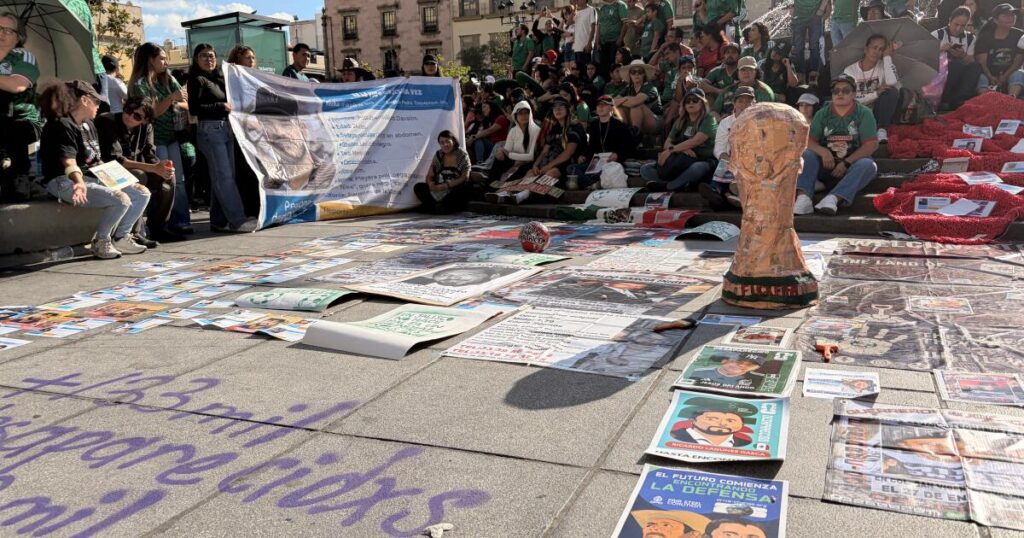
The demonstrations began with a rally at 5 p.m. in Plaza de la Liberación. Participants sought to draw attention to cases of missing persons in Guadalajara, stating they went missing after protesting Ternium’s iron ore mining activities.
A 2025 report by the environmental group Mighty Earth criticized Hyundai’s involvement in what it described as a “dirty steel supply chain,” as the South Korean automaker is one of Ternium’s main buyers of iron ore for use in steel production. Ternium has been the target of repeated criticism from activist groups for its alleged destructive environmental impact and corporate governance policies, as well as for the disappearance of activists Ricardo Lagunes Gasca and Antonio Díaz Valencia, which occurred three years ago in Mexico.
Ternium did not respond to the protesters’ allegations, while Hyundai did so in a statement.
“At Hyundai, we are committed to requiring our suppliers to meet the highest standards, and we enforce a strict Supplier Code of Conduct. Both we and our subsidiaries continue to conduct ongoing training, audits, and due diligence processes throughout the supply chain to identify and address potential issues across all our global operations,” said Michael Stewart, Hyundai’s director of communications.
Protesters carried signs bearing the names and photographs of environmentalists who disappeared.
More than 130,000 people have disappeared in Mexico in the past 20 years, according to the National Registry of Missing and Unlocated Persons. The kidnappings have been linked to run-ins with drug cartels and corrupt government officials, while there have also been cases involving young women who worked at the country’s many factories.
“[Hyundai] is trying to clean up its image through its sponsorship of the World Cup. But the facts are clear: Hyundai is linked to human rights and environmental abuses in Mexico, Brazil, the United States and other countries. By partnering with steel suppliers like Ternium, its slogan of ‘doing the right thing for humanity’ loses credibility,” said Diana Figueroa, a representative of the Fair Steel Coalition, one of the organizers of Thursday’s protests. She said the disappearance of a half dozen environmental activists in southern Mexico and deadly air pollution in Rio de Janeiro and Monterrey are attributed to Ternium.
The group plans to stage more protests throughout the World Cup.
On July 5, a symbolic soccer match and a concert will be held in Monterrey’s Fundidora Park to protest Ternium as one of the city’s most polluting companies.
On July 9, ahead of a World Cup quarterfinal match in Los Angeles, protests will focus on alleged human rights and labor rights violations in Hyundai’s supply chain, including reports of child labor, labor trafficking and documented prison labor.
Protesters also questioned Hyundai’s use of robots at World Cup venues and the tournament’s impact on local workers, including allegations of labor exploitation and rising housing costs in host cities. The organizations Public Citizen and Jobs to Move America demanded transparency from Hyundai regarding the type of data collected by the robots at World Cup stadiums.
Hyundai, in response to the allegations of data collection, said in a statement that it is focusing on the “Next Starts Now” campaign, in which it is “using mobility, robotics, technology, and engagement programs to connect people with the excitement of the event.”
The post Guadalajara protesters accuse Hyundai of using World Cup to hide ‘dirty supply chain’ appeared first on Los Angeles Times.